Who was the longest serving NASA administrator?
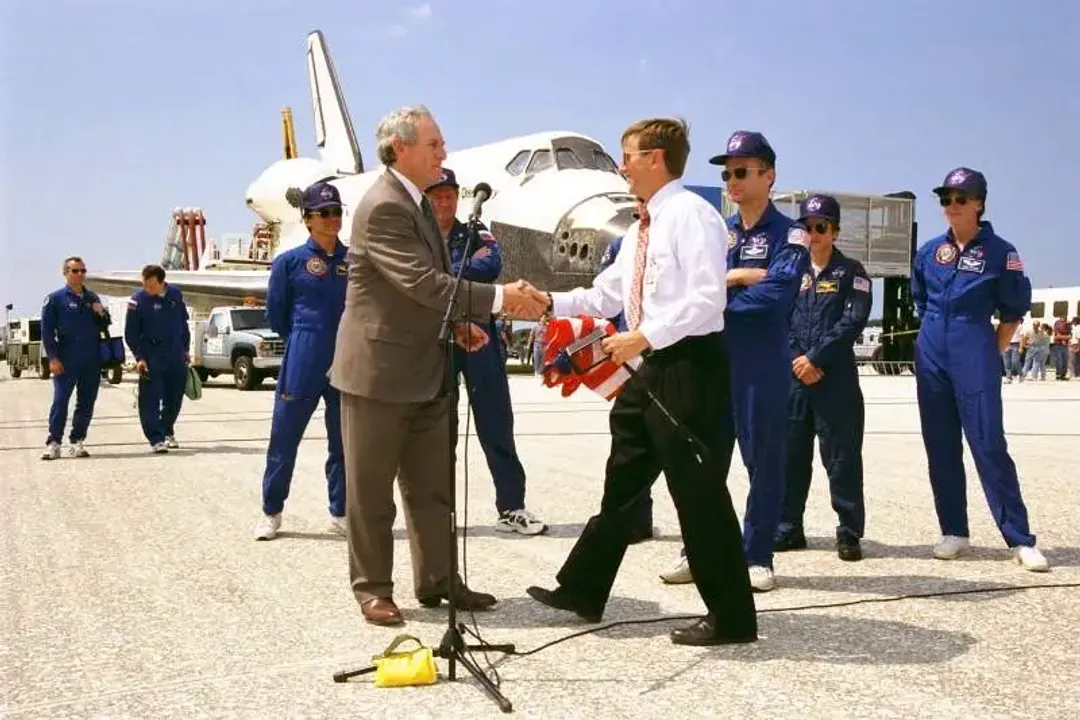
The individual who holds the distinction of being the longest-serving administrator at the National Aeronautics and Space Administration (NASA) is Daniel S. Goldin. [1][5] His tenure spanned an impressive nine years, commencing when he was sworn in as the agency's ninth administrator on April 1, 1992, and concluding with his sudden resignation in November 2001. [2][5][6] This period covered nearly a full decade of American space policy and exploration, a span that often exceeds the typical appointment length for such a high-profile government position. [5] To manage an organization as complex and politically sensitive as NASA for such an extended period, especially across shifting political climates, suggests a level of effectiveness or indispensability that few predecessors or successors have matched. [5]
# Pre-NASA Career
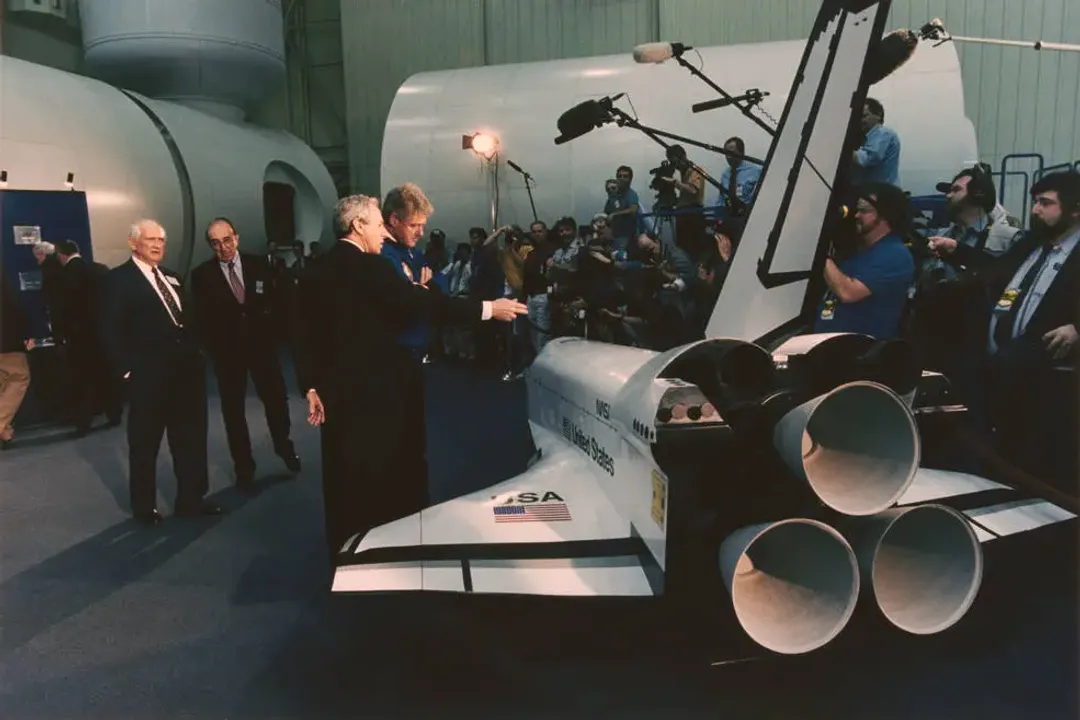
Before taking the helm at the space agency, Goldin had already accumulated substantial experience in the aerospace sector, demonstrating a background rooted in engineering and high-level management. [1][5] He began his association with NASA back in 1968, serving as an engineer. [1] This early experience provided him with an intimate, ground-level understanding of the technical challenges inherent in space exploration, which he would later draw upon in his executive role. [1]
By the time of his appointment to the top job, Goldin had ascended to the position of Vice President and General Manager of the TRW Space and Electronics Group. [5] This history in the defense and aerospace industry meant he entered the agency not as a purely political appointee, but as a seasoned executive familiar with contracting, project management, and the technical realities of building space hardware. [5] His background positioned him well to tackle the bureaucratic inefficiencies that had often plagued large government projects throughout the agency's history. [5]
# A New Managerial Philosophy

When Daniel Goldin arrived at NASA in the spring of 1992, the agency was perhaps ripe for change. His administration is frequently characterized by the introduction of a profound managerial shift aimed at streamlining operations and cutting costs. [5] He sought to address what he perceived as excessive bureaucracy and sluggish processes within the massive organization. [5]
Central to his operational mandate was the famous maxim: "Faster, Better, Cheaper". [1][7] This phrase became the unofficial mantra of the Goldin era, representing a philosophy that aimed to deliver more scientific results with fewer resources and in shorter timelines. [1][5] The intent was to foster an environment where smaller, more nimble teams could execute missions, thereby reducing the overhead traditionally associated with large, government-run programs. [5] He was known for pushing decision-making authority down to lower levels, believing that empowering smaller groups was the key to agility. [5]
The concept of "Faster, Better, Cheaper" was revolutionary for an organization accustomed to massive scale and deliberate, multi-decade development cycles. [1][7] It signaled a move away from the monolithic project structures that characterized the Apollo era, favoring instead a more iterative, results-oriented approach, particularly for robotic missions. [7] His push was to maintain the agency's constant presence in space while simultaneously reducing the operational burden. [5]
It is worth noting the implied tension in this philosophy. While Goldin aimed to inject business-like efficiency, the inherent risks in space exploration do not shrink with management philosophy changes. [5] Successfully implementing a high-speed, cost-conscious approach in an environment where engineering margins are thin requires an extraordinary level of internal discipline and risk acceptance. [5] The nature of exploration means that failures are possible, and a managerial revolution that prioritizes speed must carefully balance that against the absolute necessity of mission success. [1]

# Stability Across Administrations
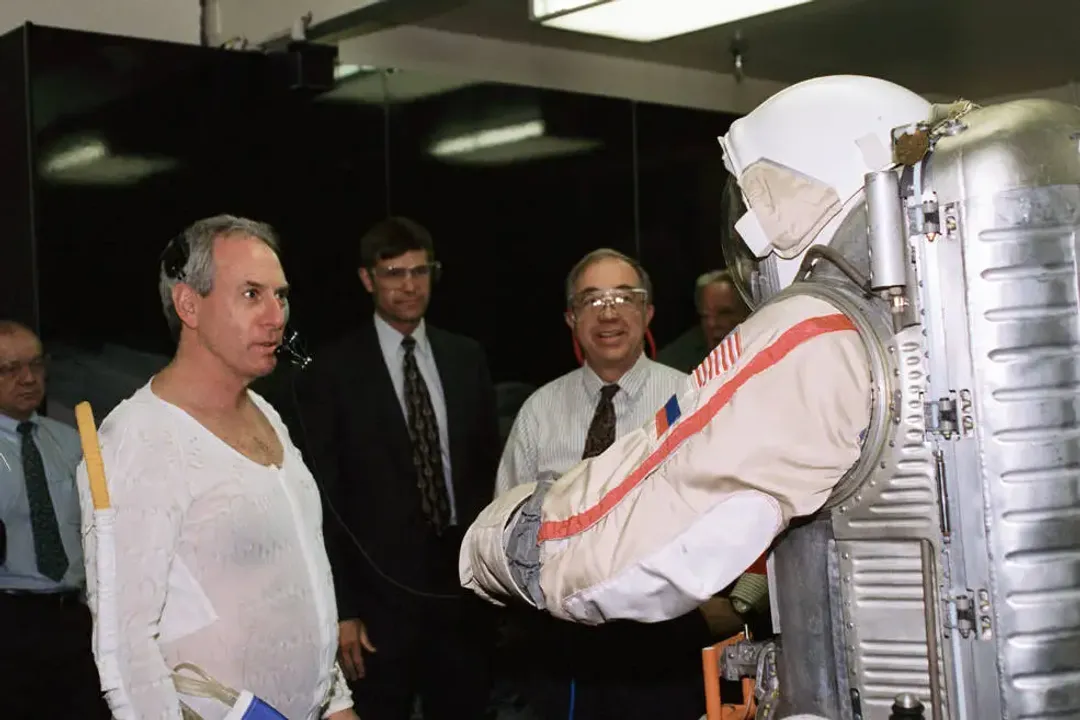
One of the most significant yet subtle aspects of Goldin's long service is that he occupied the administrator’s chair through the final years of the George H.W. Bush administration and the entirety of the Bill Clinton administration. [2] In Washington D.C., where political appointees often change with presidential cycles, a nine-year tenure is remarkable. [5] This extended period provided NASA with a degree of programmatic continuity that is rare in Washington. [5]
This sustained leadership likely proved instrumental during the challenging, multi-year undertaking of building the International Space Station (ISS). [5] The ISS represented an unprecedented international partnership and a massive engineering undertaking that required consistent diplomatic and financial backing over many years. Having a known quantity, a leader with established relationships and a long-term vision, at the helm during its critical design and early construction phases provided a steady hand for the international consortium involved. [5]
Consider the implications of this stability for large-scale projects. If an administrator were to change every two to four years, the agency would constantly be re-briefing new political leaders, justifying past decisions, and potentially having priorities shifted mid-stream. [1] Goldin’s lengthy tenure allowed him to shepherd the ISS through its most formative years, establishing its budgetary footing and navigating the political complexities inherent in a multinational effort, an achievement made more likely by his extended stay. [5] This stability contrasts sharply with the frequent turnover seen in many other cabinet-level or agency leadership roles. [5]
# Programmatic Focus: Shuttle and Beyond
During Goldin's time, the Space Shuttle fleet remained the workhorse of the agency, and his administration was tasked with keeping the aging fleet operational while simultaneously planning for the future. [5] He oversaw its continued use for deploying satellites, conducting science, and crucially, beginning the assembly of the ISS. [5]
While the Faster, Better, Cheaper philosophy seemed particularly well-suited for the robotic, smaller-scale missions—often leading to successes like the Mars Pathfinder mission [1]—the sheer logistics of the Shuttle and the complexity of the ISS required a different kind of management. [5] The success of Pathfinder demonstrated that the new efficiency mantra could yield tangible results on the interplanetary scale. [1] However, maintaining the Shuttle program meant managing a high-risk, high-cost legacy system while simultaneously trying to prove that the agency could achieve more with less elsewhere. [5]
Goldin’s leadership saw NASA actively working to reduce operating costs across the board. [5] This involved streamlining contracting procedures and demanding better performance from its industrial partners, leveraging his private sector experience to reform internal NASA processes. [5] He pushed hard against the traditional mindset that space exploration must be astronomically expensive, showing a commitment to fiscal responsibility that resonated with Congress and the White House. [5]
# Departure from the Helm
The end of Goldin's nearly decade-long service came somewhat abruptly. In November 2001, he announced his resignation. [6] While his tenure was marked by significant accomplishments, including managing the growth of the ISS and implementing managerial reform, the atmosphere surrounding his departure suggested a sense of culmination or perhaps exhaustion from the constant pressure. [5][6]
Reports noted that his resignation came suddenly, catching many observers by surprise. [6] Such sudden exits from long-serving, high-profile agency heads often suggest underlying policy disagreements, exhaustion from the high-stress role, or simply the decision to step aside after seeing major phases of a program through completion. [6] For an administrator who had fought to bring about a managerial revolution and navigated the complexities of the post-Cold War space era, leaving after nine years marks a definitive close to a distinct chapter in NASA's institutional memory. [5] His departure opened the door for a new leader to set the tone for the post-Shuttle transition years. [6]
# Reflecting on the Goldin Years
The legacy of Daniel Goldin is multifaceted, defined by a tension between old-school governmental overhead and new-school efficiency demands. [5][7] For those who worked closely with him, he was remembered as a candid figure who demanded accountability. [5] His insistence on getting results, coupled with his direct, sometimes abrasive communication style, was a hallmark of his leadership. [5]
The Planetary Society, reflecting on the period, noted the transformative nature of the Goldin years, especially concerning the development path for future missions. [7] The implementation of Faster, Better, Cheaper fundamentally changed the risk calculus and project selection processes at the agency. [1][7] While it undeniably led to cost savings and inspired innovation on specific missions, it also inevitably led to discussions about whether cutting too deeply into margins created vulnerabilities in other areas. [1][5]
Looking back from the perspective of subsequent years, the Goldin era serves as a crucial case study in bureaucratic reform within a public institution dedicated to long-term, high-stakes engineering. [5] His commitment to keeping the agency active and relevant during a period when national space priorities were being recalibrated post-Cold War is undeniable. [5] He managed to keep the human spaceflight program moving forward with the ISS while simultaneously pushing robotic exploration into a new, more cost-effective gear. [1][5] His tenure was an extended exercise in doing more with less, forcing NASA to fundamentally re-evaluate how it budgeted, managed, and executed its vast portfolio of scientific and exploratory work. [5]
# The Administrator Tenure Spectrum
To fully appreciate Goldin’s near-decade at the helm, it helps to consider the broader context of NASA leadership service lengths. While the agency has had many temporary or acting administrators, the number of individuals who served a full term, let alone nine years, is small. [2]
| Administrator | Start Year | End Year | Approximate Tenure (Years) | Key Focus/Era |
|---|---|---|---|---|
| T. Keith Glennan | 1958 | 1961 | 3 | Founding Years |
| James E. Webb | 1961 | 1968 | 7 | Apollo Program Apex |
| Daniel S. Goldin | 1992 | 2001 | 9 | ISS Construction, FBC |
| Michael D. Griffin | 2005 | 2008 | 3 | Constellation Planning |
Goldin’s nine years place him substantially ahead of most others in terms of continuous service, second only perhaps to the foundational administrators who served during the intense formative years of the Mercury and Apollo programs. [2] This extended tenure allowed him to embed his managerial philosophy deeply within the agency's structure, a legacy that likely influenced decision-making long after he left. [5] The impact of such a long service is that the personnel, contracting procedures, and mission architectures implemented under his watch became the status quo for the subsequent decade, shaping the agency’s operational habits well into the 21st century. [5]
Following his time at NASA, Goldin transitioned into roles such as a public speaker, sharing his experiences and insights on leadership and innovation with external audiences. [4] His continued professional presence, visible even through platforms like professional networking sites, suggests an ongoing engagement with the industries he once led. [9] Ultimately, Daniel Goldin’s lengthy tenure as NASA Administrator represents a significant and definable era—a nine-year period characterized by a determined push for organizational efficiency against the backdrop of one of humanity's greatest construction projects in orbit. [5]
#Videos
Daniel Goldin: 9th and Longest-Tenured NASA Administrator
The 50/50 Rule with ex NASA Chief, Dan Goldin - YouTube
Related Questions
#Citations
Daniel Goldin - Wikipedia
30 Years Ago: Daniel Goldin Sworn in as NASA's Ninth Administrator
Daniel Goldin: 9th and Longest-Tenured NASA Administrator
Book Daniel S. Goldin for Speaking, Events and Appearances
Daniel Goldin | Biography, NASA, & Facts - Britannica
NASA Chief Suddenly Resigns | Science | AAAS
Planetary Society Reflects on Goldin Years at NASA - SpaceNews
Dan Goldin - Advancing Deep Tech Innovation | 9th NASA Chief