What happened to Buzz Aldrin's Omega?

The Omega Speedmaster Professional chronograph is more than a timekeeping instrument; it is a legend forged in the crucible of space exploration, forever cementing its status as the “Moonwatch”. When Apollo 11 landed on the Sea of Tranquility in July 1969, its Lunar Module Pilot, Edwin "Buzz" Aldrin, stepped onto the dusty surface wearing his Omega, becoming the second human to do so and marking the first time a wristwatch had graced the Moon. This achievement secured the watch’s place in history, yet the story of that specific timepiece—Aldrin’s mission watch—is shrouded in a decades-long mystery of disappearance, government property disputes, and even federal litigation.
The core of the legend rests on a simple, yet extraordinary fact: Aldrin’s Speedmaster was the only one of the three Apollo 11 crew members’ watches confirmed to have left the Lunar Module (LM) Eagle and touched the lunar soil. While Neil Armstrong also carried a Speedmaster, a malfunctioning board clock inside the LM prompted him to leave his chronograph inside as a backup timer, meaning it never accompanied him on the Extravehicular Activity (EVA). Michael Collins, orbiting above in the Command Module Columbia, kept his watch safe within the command module as well. This distinction meant that Aldrin’s watch, bearing the NASA identification number 43 (though the reference number and manufacturer serial number are still debated by enthusiasts), carried the unique provenance of having been worn on the Moon.
# The Missing Artifact
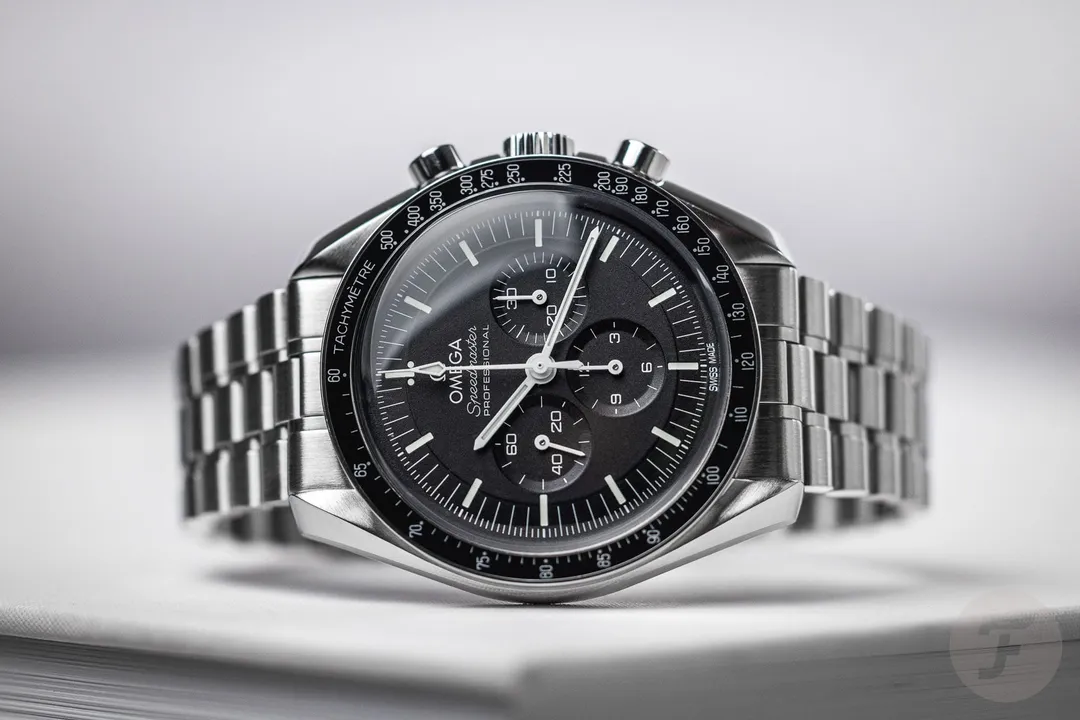
Following the triumphant return to Earth, the expected procedure for these historically significant pieces was cataloging and eventual display at the Smithsonian National Air and Space Museum in Washington, D.C.. Aldrin, reportedly fond of his watch, arranged for its transfer to the Smithsonian for what was intended to be a permanent exhibition.
However, this transfer, orchestrated in the early 1970s, never reached its intended destination. A team contracted by NASA oversaw the shipment of Aldrin’s watch, along with other personal artifacts and medals, but when the inventory was checked, the Speedmaster was nowhere to be found. It had vanished while in transit, effectively becoming stolen property.
The loss caused considerable dismay within NASA, leading to an immediate security investigation aimed at recovering the irreplaceable artifact. The situation quickly escalated beyond the agency’s internal concerns when the Government Accounting Office (GAO) became aware of the missing item. The GAO issued what Aldrin later described as a “rather narrow-minded decision,” ordering that all flown Omega watches be returned to NASA custody. This order created an awkward situation, as the tradition among astronauts was to keep their mission watches as unique souvenirs of their monumental accomplishment. Aldrin noted that nearly all his colleagues were audibly discontented by the demand to surrender their timepieces, but NASA ultimately acquiesced to the GAO's directive, avoiding confrontation. Aldrin began filling out paperwork detailing the loss, a process that continued for a year before the matter was effectively dropped by the agency.
# Ownership and the Law
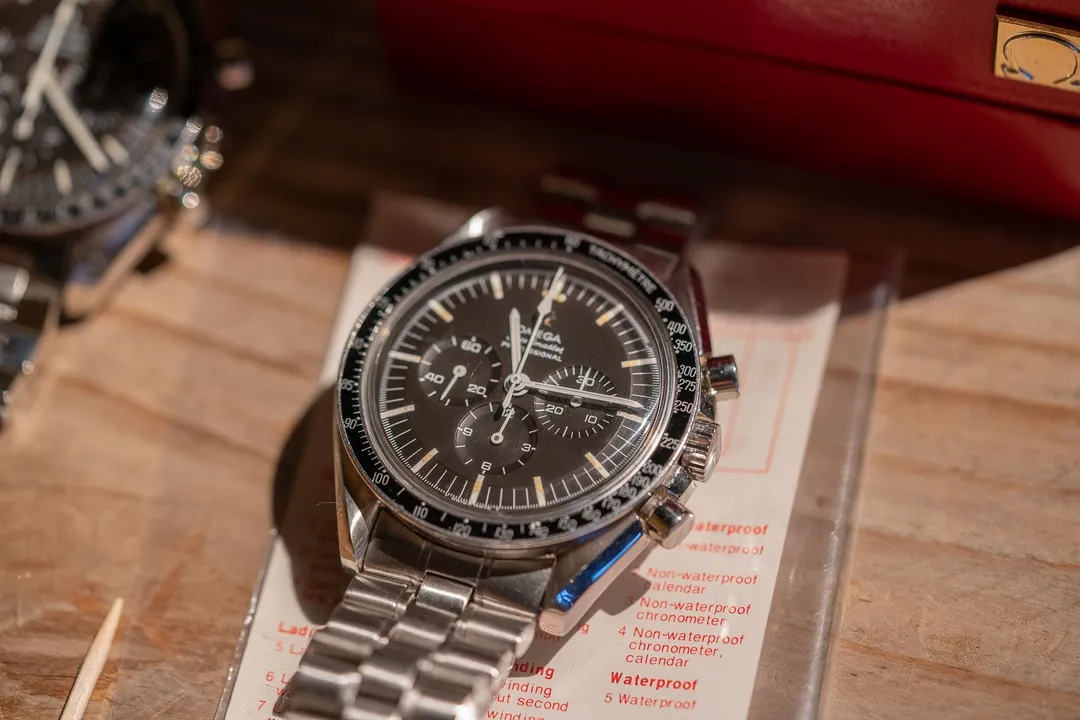
The confusion surrounding the missing watch was compounded by NASA’s official stance that all equipment taken into space and returned was considered government property. Even as other astronauts’ watches were eventually placed in the Smithsonian on "permanent loan," Aldrin’s specific piece remained unaccounted for, creating a legal and ethical quandary should it ever resurface.
The fact that the timepiece was missing provided the perfect environment for speculation, and the story became the “greatest mystery” in the watch collecting world. The ambiguity over ownership—Aldrin, the U.S. Government, or the Smithsonian—remained theoretical until 2003 when a man stepped forward claiming to possess the very watch.
Stephen Morely, a resident of Long Beach, California, filed a federal lawsuit to assert himself as the rightful owner of the watch he believed to be Aldrin’s Moonwatch. Morely claimed he had acquired the watch in the early 1990s for only $175 after responding to a classified advertisement placed by a college student. The student’s father, Morely asserted, had discovered the watch on a beach near Santa Barbara, California, in the early 1970s—a timeframe that seemed suspiciously close to the watch’s disappearance from transit.
Morely based his claim on a small engraving he found inside the caseback: the number 43. Since the Apollo 11 watch assigned to Aldrin was known publicly by its NASA designation number 43, Morely believed he held the historical artifact. His intent, he stated, was not just to secure ownership, but to “bring legitimacy to the watch and its potential owners,” suggesting a desire to share any potential financial windfall with Aldrin and the Smithsonian, comparing the potential situation to disputed high-value sports memorabilia.
However, the government and Aldrin quickly moved to challenge the watch’s authenticity. An expert opinion report commissioned by NASA, coupled with an FBI interaction and Aldrin’s lawyer’s statements, ultimately led to the conclusion that Morely’s piece was not the authentic Moonwatch. NASA’s filing to dismiss the suit cited an investigation, including the deposition of a former NASA employee involved in the Apollo program, concluding that the watch was not the one Aldrin wore. Morely subsequently dropped the federal case. The mystery of the number 43 engraved on the caseback of Morely’s watch remains, though it has been speculated to be nothing more than a regular service marking.

# Data Archaeology and Distinctions

The story of the missing watch is deeply intertwined with the granular details of NASA’s procurement process and the technical evolution of the Speedmaster itself, a complexity that often muddies the waters for enthusiasts.
NASA required astronauts to use chronographs that could withstand extreme conditions—temperatures ranging from -18°C to 93°C, high humidity, vacuum, vibration up to $8.8$ g, and intense shock resistance. While Rolex and Longines-Wittnauer submitted watches that failed these tests, the Omega Speedmaster (initially the 105.003) was qualified in 1965.
For the Apollo 11 mission, the crew received fourth-generation models featuring the asymmetrical case with crown guards. The specific configuration of the Apollo 11 crew’s watches is often detailed by space history aficionados:
| Astronaut | NASA Reference Number | Likely Omega Reference | Approximate Serial Number Band | Current Location (as of 2003) |
|---|---|---|---|---|
| Neil Armstrong | 46 | 105.012-65 | Smithsonian (NASM) | |
| Buzz Aldrin | 43 | $105.012-65$ (Inferred) | (Inferred) | Missing |
| Michael Collins | 73 | $145.012-68$ | Smithsonian (NASM) |
The existence of multiple references—the $105.012$ and $145.012$—for the moonwalkers, and the variance in NASA numbers, shows that the assignment wasn't perfectly standardized across the mission, even though they all shared the same internal NASA reference number SEB1210039-002 for the mission. The very fact that the truly flown watch (#43) disappeared while Armstrong’s (#46) was temporarily misplaced with Collins’ (#73) during the transfer process highlights a fascinating divergence in provenance tracking. It suggests that the chaotic movement of artifacts between the astronauts, NASA technicians (like Norman Morris in New York who serviced them), and the Smithsonian created a vulnerability that a more rigorous, unified tracking system—perhaps one where the manufacturer’s internal serial number was cross-referenced immediately with the external NASA assignment—might have prevented. The intense focus on Aldrin's watch may, in part, be due to the fact that his seemed to vanish entirely from the established chain of custody, whereas the others, despite initial mix-ups, were eventually recovered by the Smithsonian.
# Enduring Enigma

Today, the fate of Buzz Aldrin’s Omega Speedmaster Professional remains officially unresolved. While one source suggested that an Omega contact suspected it might be in a private safe deposit box, the consensus points toward it being truly lost, perhaps permanently. The black market for genuine space artifacts is robust, meaning that if it were to resurface, it would be an immediate high-security risk for whomever possessed it.
The watch’s estimated value is difficult to pin down, but given the astronomical prices fetched by other historically significant pieces, it would command a sum easily reaching into the millions on the open market, far surpassing its intrinsic value as a luxury watch. This incalculable worth, derived not from gold or jewels but from being a silent witness to human history, is precisely what makes its absence so compelling. Even now, Aldrin occasionally receives calls from individuals claiming to have found the elusive timepiece, though these leads have invariably proven to be hoaxes.
The Speedmaster itself continued its relationship with NASA, being requalified for the Space Shuttle program in $1978$, demonstrating the model’s enduring mechanical capability, though later missions relied more heavily on digital or quartz timing systems like the X-33 for mission planning. For the general reader interested in horology, the saga of Aldrin’s watch serves as a profound, real-world case study on artifact provenance. If such a high-profile, government-entrusted object can vanish, it underscores the fragility of history that isn't rigidly documented and secured. Any vintage Speedmaster bearing markings or characteristics aligning with the known Apollo 11 batch warrants careful scrutiny, though authenticating a "Moonwatch" is notoriously difficult as the critical serial number is hidden inside the caseback, requiring disassembly. The watch that walked on the Moon with Buzz Aldrin continues its own silent orbit somewhere out there, waiting for the final chapter of its incredible story to be written.
#Videos
who has Buzz Aldrin's Omega Speedmaster Moonwatch - YouTube
Related Questions
#Citations
Unsolved Mystery: The Story of Buzz Aldrin's Omega Speedmaster
Lawsuit filed to claim Buzz Aldrin's missing moon landing watch
Buzz Aldrin & The Missing Moon Watch - Country and Town House
【F】 How The Omega Speedmaster Became The Moonwatch
Apollo 11 Speedmasters, where's Buzz's? - WatchUSeek
Buzz Aldrin's misplaced Omega Speedmaster Professional was ...
who has Buzz Aldrin's Omega Speedmaster Moonwatch - YouTube