Is a supernova good or bad?
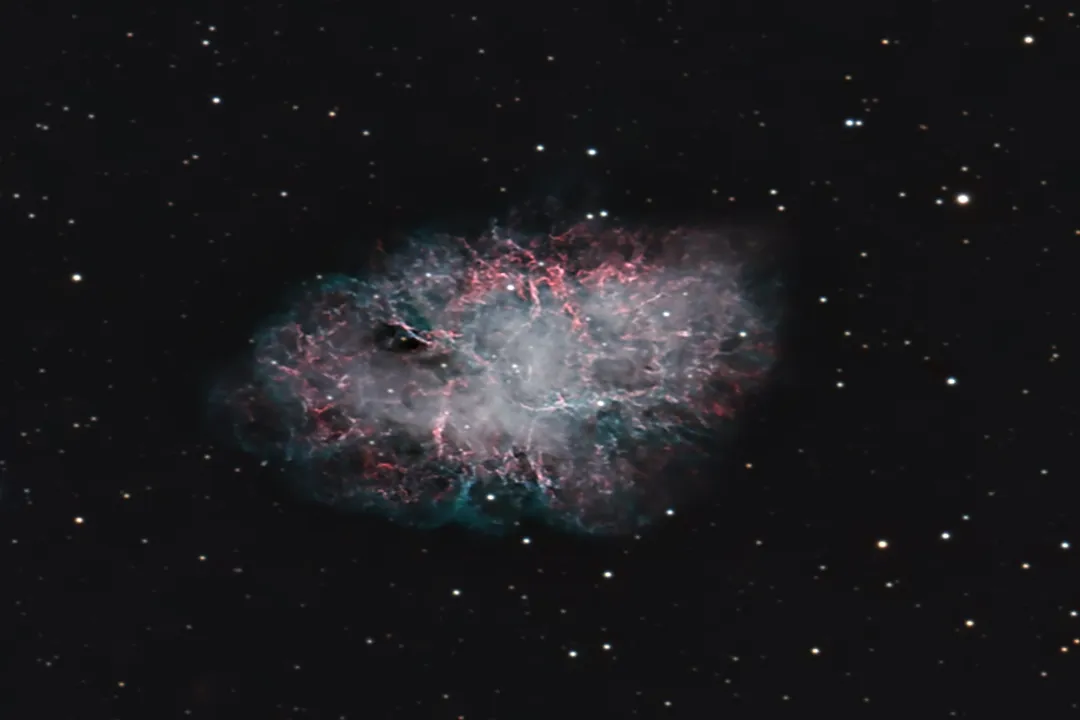
A supernova is one of the most violent and energetic events in the universe, marking the dramatic death of a massive star. [7][8] It is not merely a single explosion, but rather the culmination of a star's lifecycle where it runs out of fuel and collapses under its own immense gravity. [8][9] This process is so powerful that a single supernova can briefly outshine an entire galaxy, radiating as much energy in a few weeks as the Sun will produce over its entire ten-billion-year lifespan. [6][8] When asking if this event is good or bad, the answer depends entirely on your perspective—both in terms of time and distance.
# Cosmic Hazards
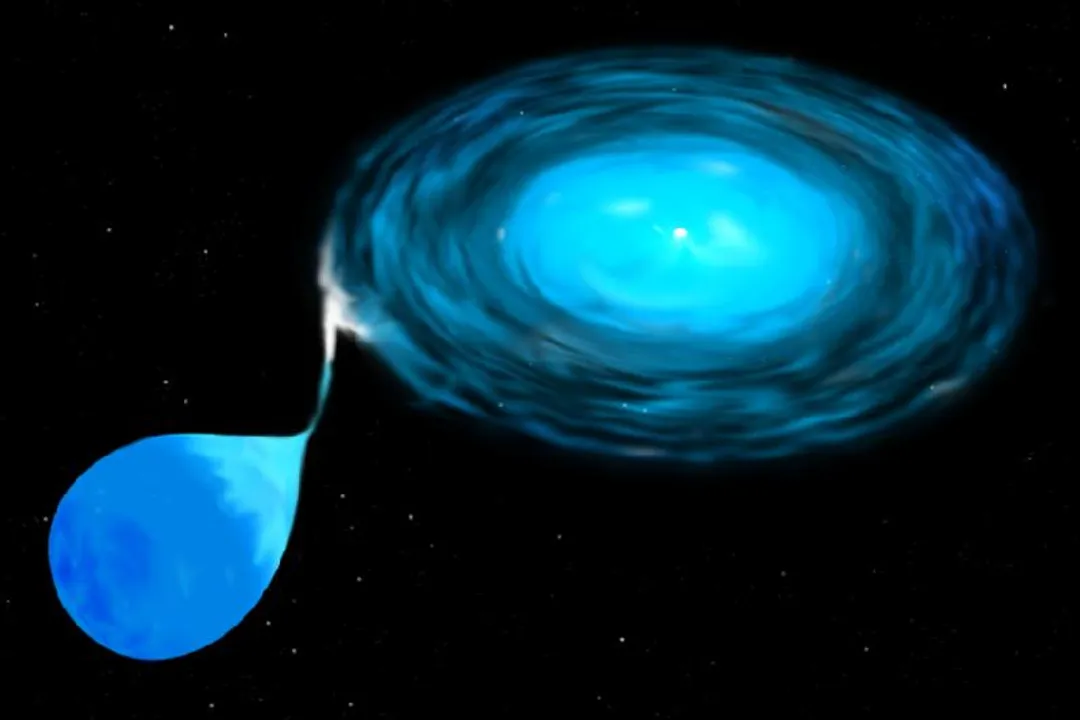
When a star explodes, it releases an incredible amount of energy in the form of electromagnetic radiation, neutrinos, and high-energy particles known as cosmic rays. [2][4] If you happen to be standing too close to the blast, the results are undeniably catastrophic. The primary threat from a nearby supernova is ionizing radiation. [1][4] Intense gamma rays and X-rays could strip a planet of its protective ozone layer, leaving the surface vulnerable to ultraviolet radiation from its own sun. [2][4] This would likely lead to widespread biological damage, potentially causing mass extinctions. [2]
Scientists generally agree that a planet would need to be within a "danger zone"—roughly 25 to 50 light-years—to face severe consequences from a supernova. [4] Beyond this distance, the intensity of the radiation drops off significantly, making the event far less threatening to life on a planetary surface. [2] It is important to note that these events are relatively rare in our galaxy, happening perhaps a few times per century. [6] The statistical likelihood of a star close enough to Earth going supernova within a timeframe relevant to human civilization is remarkably low. [4]
To visualize the scale of the impact based on proximity, consider the following breakdown of effects:
| Proximity | Potential Impact |
|---|---|
| 0–25 Light Years | Extreme risk of atmospheric ozone depletion and mass extinction events |
| 25–100 Light Years | Significant increase in cosmic radiation but likely manageable for life |
| 100+ Light Years | Minimal to no impact; primarily a spectacular visual event |
The destruction is not just about the flash of light. A supernova also acts as a giant particle accelerator, sending shockwaves through the interstellar medium. [2] These shockwaves can travel for thousands of years, compressing gas and dust clouds, which can inadvertently trigger the collapse of nearby nebula and birth new stars. [8] This is where the narrative shifts from destruction to creation.
# Elemental Origins
If the supernova is the "bad guy" for its potential to wipe out life, it is simultaneously the "good guy" because it is the primary engine of creation in the cosmos. Before the first stars exploded, the universe was composed almost entirely of hydrogen and helium. [6] These elements alone are not enough to build planets or the complex biological life we recognize today. Heavy elements—like oxygen, carbon, iron, and calcium—are forged in the hearts of massive stars. [2][8] When these stars die, they perform a final, selfless act by scattering these heavy elements throughout the cosmos. [6][8]
Think of a supernova as the universe’s way of recycling matter. The iron in your blood, the calcium in your bones, and the oxygen you breathe were all manufactured in the core of a star that exploded billions of years ago. [6] Without these stellar cataclysms, the raw materials necessary to form rocky planets and, eventually, living organisms, would not exist. [8] The universe would be a boring, gaseous void rather than the complex, vibrant environment we inhabit.
This process is fundamentally efficient. A supernova does not just destroy; it enriches the interstellar medium with the "seeds" for future solar systems. [8] Every planet with a solid surface and every complex molecule is, in a very literal sense, the product of a past stellar death. If you find the existence of life to be a "good" thing, then you must accept that supernovas are a necessary requirement for it. [6]
# Observation Spectacles
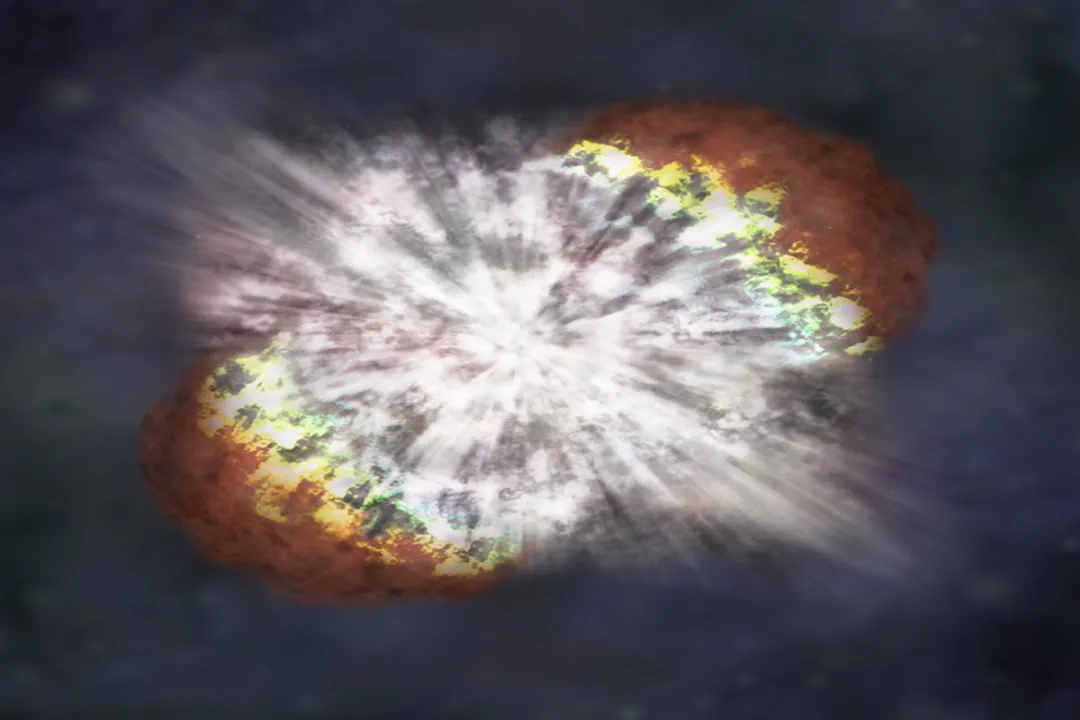
For astronomers and those who enjoy watching the night sky, a supernova is one of the most exciting events imaginable. [6] Unlike the slow, imperceptible changes of most celestial objects, a supernova provides a dynamic, evolving event that can be studied in real-time. [5][6] When a star explodes, it creates a "light echo" and a lingering remnant, such as a neutron star or a black hole, which can be observed across the electromagnetic spectrum. [7]
Watching a supernova from a safe distance allows scientists to understand the internal workings of stars, the mechanics of fusion, and the origin of elements. [6][7] It is essentially a high-energy physics experiment occurring in space, providing data that could never be replicated in a laboratory on Earth. [5] Because these events are so bright, they can be seen from massive distances, allowing us to map the expansion of the universe and study galaxies billions of light-years away. [6]
# Earth Safety
A common concern involves whether we are currently in danger from a known star. [4] The good news is that we have a very clear view of our stellar neighborhood, and there are no stars within the critical danger zone that are poised to go supernova soon. [4] The most famous candidate often discussed in popular media is Betelgeuse, a red supergiant in the constellation Orion. [4]
Betelgeuse is indeed a massive star that will eventually end its life in a supernova. [4][5] However, it is located roughly 600 light-years away. [4] Even if it were to explode tomorrow—and it could be tomorrow or in the next hundred thousand years—the resulting light would be impressive and perhaps even visible during the day, but it poses absolutely no threat to Earth. [4][5] The radiation would not reach us at levels capable of stripping our atmosphere or harming life. [2][4]
It is helpful to view the risk of a supernova much like a forest fire. In a forest, a fire is destructive and dangerous to individual plants and animals trapped in its path. However, a forest fire also clears away dead brush, returns nutrients to the soil, and makes space for new, healthier growth. [8] A supernova functions on a galactic scale, clearing out old, spent fuel and distributing essential building blocks to the rest of the galaxy.
The duality of the supernova is a reminder of the harsh realities of space. It is a violent, high-energy event that can destroy anything in its immediate vicinity, but it is also an engine that keeps the universe fertile and dynamic. Without these stellar deaths, the chemical complexity required for life would never develop. When you look at the stars, consider that the ones that died long ago made it possible for you to exist today.
#Videos
What a Supernova Would Do to Earth if it Looks Like This - YouTube
Related Questions
#Citations
Could a supernova actually destroy (literally) a planet? : r/Astronomy
Life Safe From Supernovas? | Science | AAAS
What a Supernova Would Do to Earth if it Looks Like This - YouTube
Is Earth Safe from a Nearby Supernova? | Scientific American
Will it be safe for us to see the supernova/explosion? - Quora
What is a Supernova? Yes, It's Truly "Super" Cool.
What is a Supernova and How Does One Sound? - The Space Store
What Is a Supernova? | NASA Space Place – NASA Science for Kids
What Is a Supernova? Simply Explained A supernova is ... - Facebook