How far away is the Eskimo Nebula?
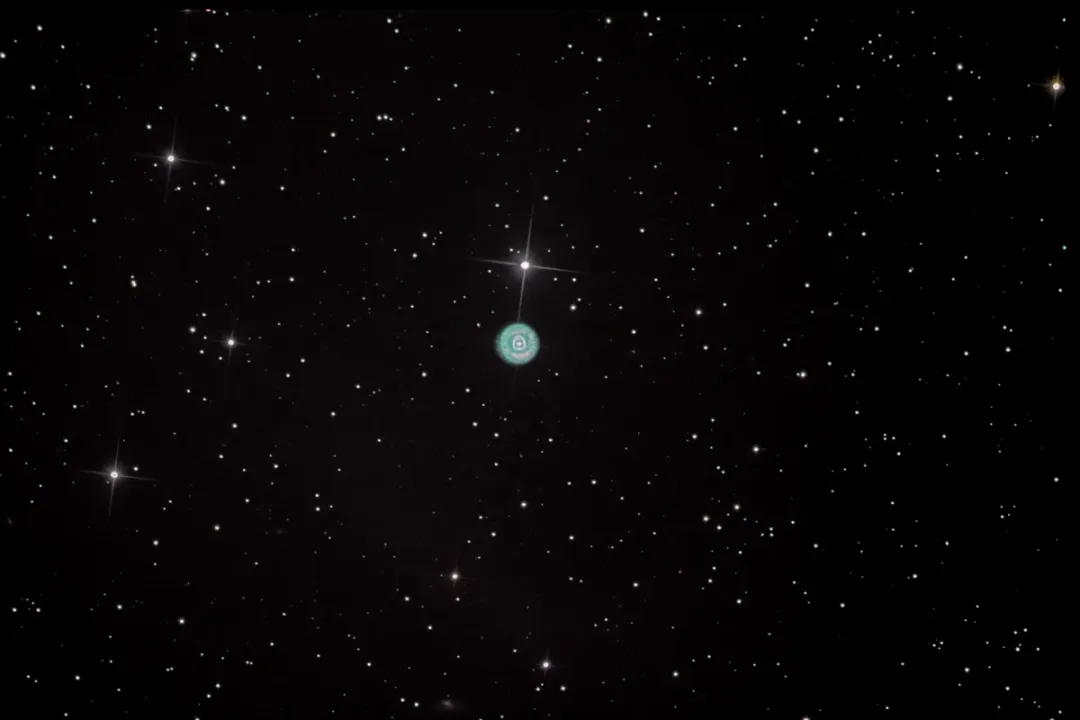
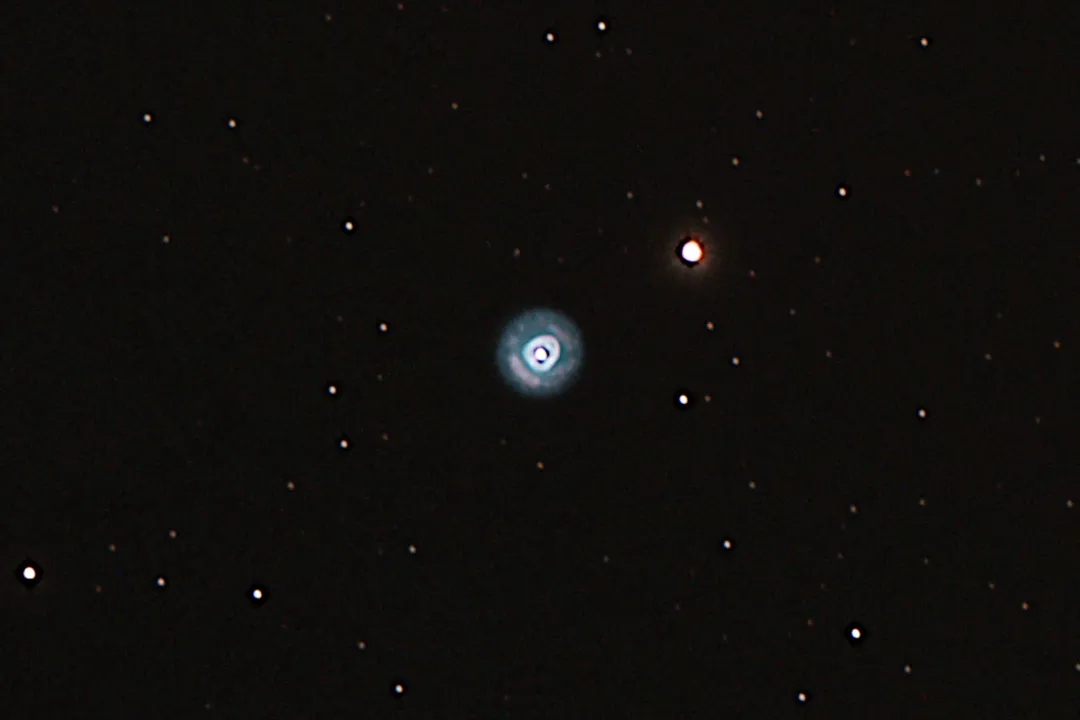
When looking at the constellation Gemini during the winter months, amateur and professional astronomers alike often set their sights on a distinct and mysterious object: the Eskimo Nebula. Formally cataloged as NGC 2392, this planetary nebula stands out for its complex, face-like structure that appears in long-exposure photographs. [1][3] The question of exactly how far away this object sits has been a topic of scientific refinement for decades. Based on the latest available data, the consensus places the Eskimo Nebula at a distance of approximately 4,000 light-years from Earth. [1][6]
# Cosmic Distance
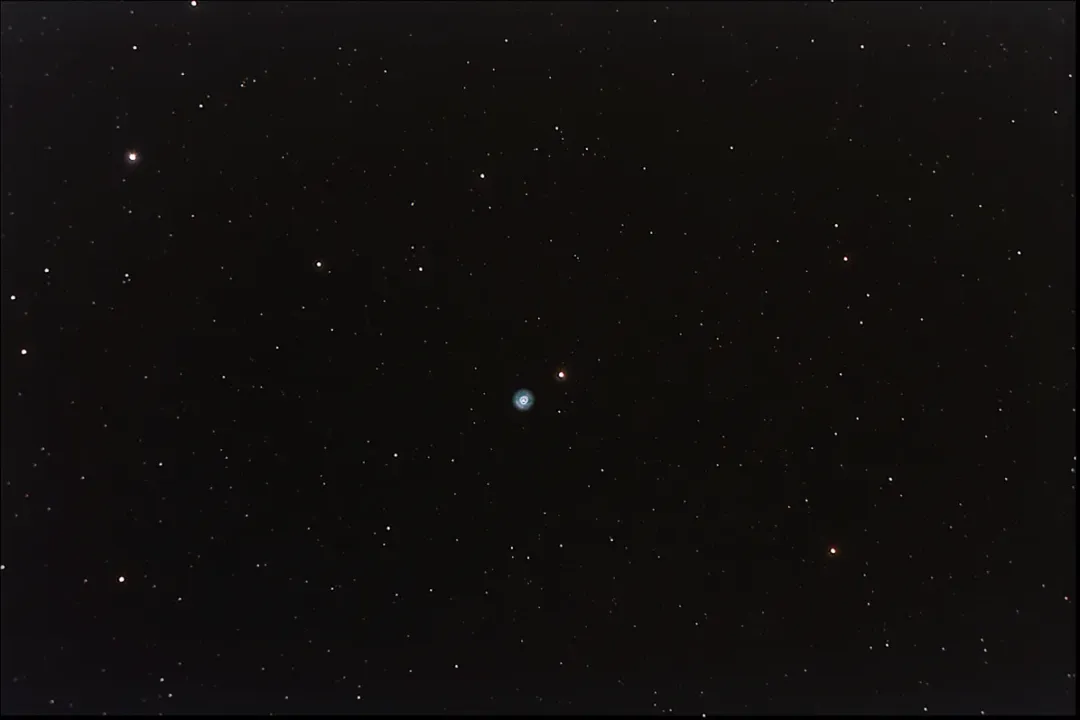
The figure of 4,000 light-years is not a static measurement, but rather a calculation that has evolved as our technology for gauging deep-space distances has improved. In astronomy, determining the distance to planetary nebulae is notoriously difficult because they do not always act as perfect "standard candles," which are objects with known brightness that allow us to calculate distance based on how dim they appear. [3] Older estimates occasionally drifted between 3,000 and 5,000 light-years, but 4,000 remains the widely accepted approximation used in current astronomical research. [3][6]
To visualize the scale of 4,000 light-years, consider the speed of light—roughly 300,000 kilometers per second. Even moving at this incredible velocity, a photon emitted from the Eskimo Nebula takes four millennia to reach a telescope here on Earth. If you were to board a spacecraft traveling at the speed of the Voyager 1 probe, which moves at about 17 kilometers per second relative to the Sun, the journey would take roughly 70 million years to cover that same distance.
The difficulty in pinning down an exact number arises from the way these objects are structured. NGC 2392 consists of a dying star that has ejected its outer layers, creating complex shells of gas and dust. Measuring the distance to this expanding shell requires precise parallax measurements or indirect methods like comparing its luminosity to similar, better-understood nebulae. [7] Recent advancements in space-based observatories have tightened these margins, bringing us closer to the accepted 4,000 light-year mark. [7][9]
# Stellar Identity
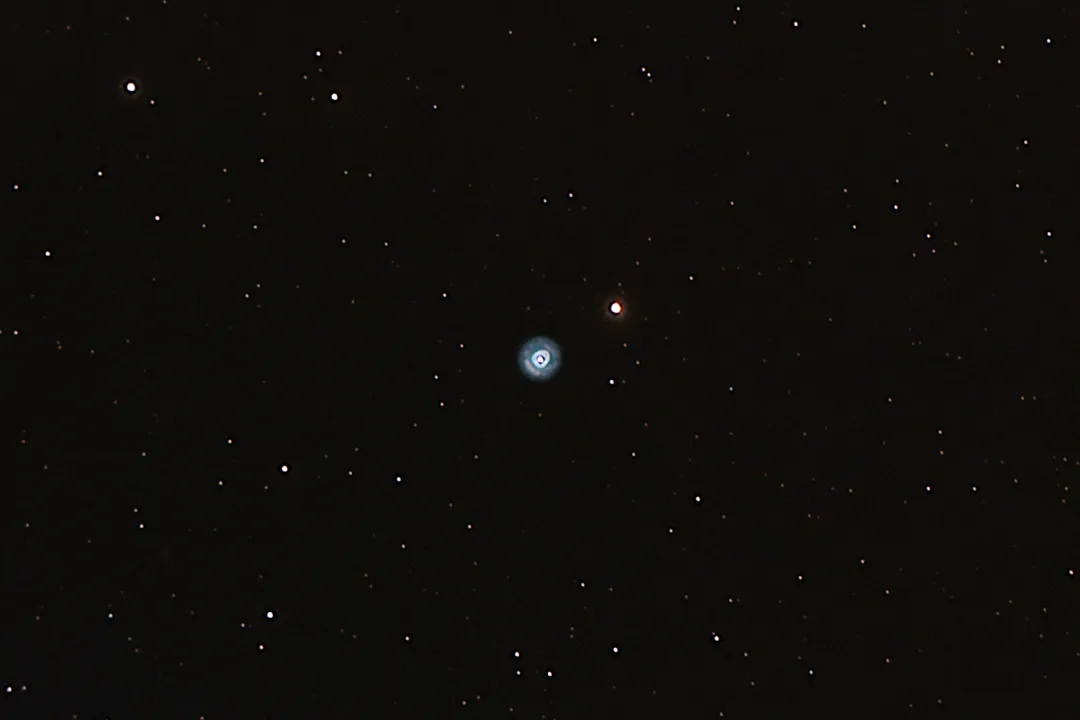
It is important to clarify that despite the name "planetary nebula," this object has nothing to do with planets. The term is a historical misnomer dating back to the 18th century when early astronomers, observing through smaller telescopes, thought these round, fuzzy objects resembled the gas giants in our solar system. [1] In reality, NGC 2392 represents the final stages of a star very similar to our own Sun. [2][7]
When a star like the one at the center of this nebula exhausts its nuclear fuel, it cannot maintain the delicate balance between gravity pulling inward and the energy of fusion pushing outward. It sheds its outer layers into space, creating the glowing, colorful shells we see today. [2] The core of the star remains, becoming a hot, dense white dwarf. [7][9] This white dwarf emits intense ultraviolet radiation, which causes the surrounding ejected gases to glow, producing the vivid colors captured by the Hubble Space Telescope and other instruments. [2][7]
The moniker "Eskimo" was originally applied because, when viewed through smaller optical telescopes, the central bright star surrounded by the ring of nebulosity resembles a person's face tucked inside a fur-lined parka. [3] Because of the sensitive nature of this term, it is increasingly referred to in scientific communities as the Clown Face Nebula or simply by its catalog designation, NGC 2392. [6]
# Observing Nebula
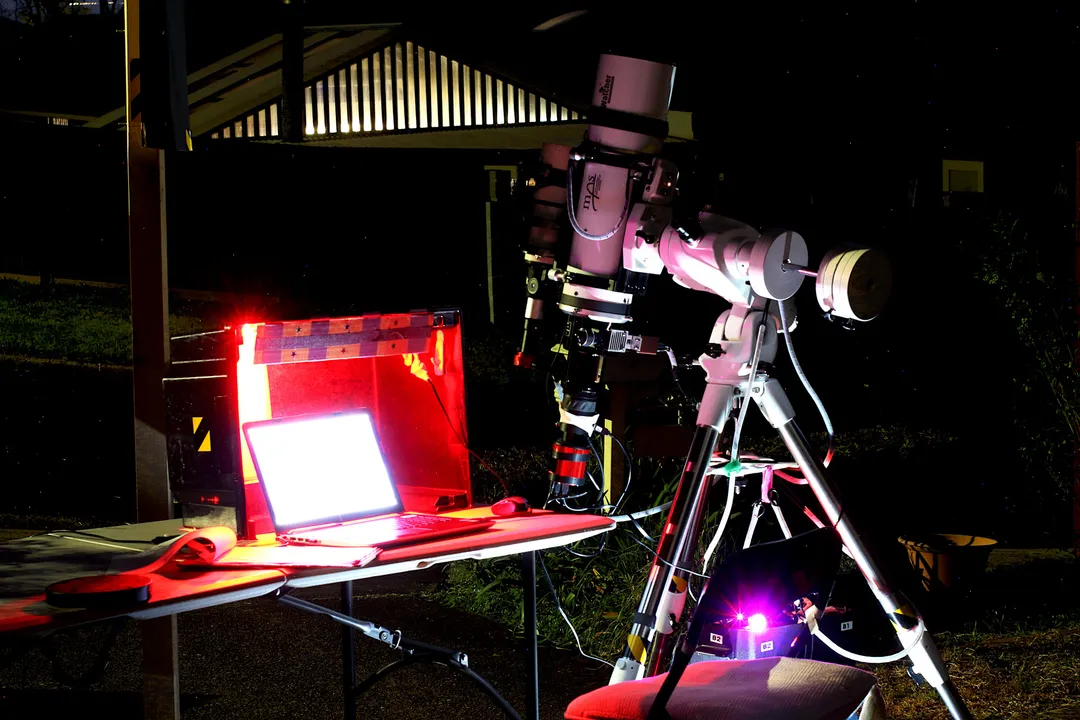
For those interested in viewing this object, NGC 2392 is a rewarding target for backyard telescopes. It is located in the Gemini constellation and has an apparent magnitude of approximately 9 to 10, meaning it is bright enough to be visible with amateur equipment, provided you have a relatively clear and dark sky. [3][6]
Because it is relatively small in the night sky, high magnification is usually necessary to resolve its structure. While you will not see the high-definition details visible in professional images, you can often discern a greenish-blue hue and the distinct circular shape of the nebula. [6] Using a small telescope, the nebula appears as a fuzzy star; however, an eyepiece with a narrow field of view and high focal length helps reveal its non-stellar nature. [4]
| Feature | Data Point |
|---|---|
| Catalog Number | NGC 2392 |
| Object Type | Planetary Nebula |
| Constellation | Gemini |
| Approximate Distance | ~4,000 Light-years |
| Apparent Magnitude | ~9.1 |
| Primary Identifier | Clown Face Nebula |
# X-Ray Analysis
The study of the Eskimo Nebula has moved into higher energy wavelengths thanks to observatories like the Chandra X-ray Observatory. [7][9] While visible light shows us the glowing gases, X-ray data reveals the high-temperature regions created by the interactions of the stellar wind—a stream of charged particles flowing from the central star—with the previously ejected material. [7]
These observations show a "hot bubble" of gas at the center of the nebula, reaching temperatures of millions of degrees. [7] This analysis provides insight into how the central white dwarf interacts with its environment. It turns out that the central star is quite active, constantly blowing wind against the slower-moving gas it discarded thousands of years ago. This collision creates the complex, layered appearance that makes the Eskimo Nebula so fascinating to study. [7][9]
By synthesizing both the optical and X-ray data, astronomers are painting a more complete picture of the star's life cycle. The shell structure is actually two-fold: an inner, brighter ring and an outer, more diffuse halo. [2] Each layer represents a different phase of the star's death, with the material moving outward at different speeds. [7] Understanding these dynamics not only helps us map the geometry of NGC 2392 but also gives us a preview of what might happen to our own Sun in the distant future. Although our Sun will eventually evolve into a similar object, it will not happen for another five billion years, providing plenty of time to continue studying these distant, cosmic remnants.
Related Questions
#Citations
Eskimo Nebula - Wikipedia
Eskimo Nebula - NASA
NGC 2392 (Eskimo Nebula) - Planetary Nebula in Gemini
Astrophotographer Ron Brecher captured the Eskimo Nebula (NGC ...
NGC 2392 (Eskimo nebula) - Sky-Map.org
Eskimo Nebula, Clown Face Nebula (NGC 2392) - Deep⋆Sky Corner
ESA - X-raying the Eskimo - European Space Agency
The Eskimo Nebula - Cosmic Focus
NGC 2392: A Beautiful End to a Star's Life | Chandra Blog
The Eskimo Nebula – NGC 2392 in Gemini : r/Astronomy - Reddit