Why did NASA pick Omega?

The Omega Speedmaster has earned a singular place in horological and aerospace history, often simply referred to as the Moonwatch. While many assume its selection was purely about brand prestige or marketing savvy, the reality is rooted in a grueling, objective, and somewhat accidental procurement process initiated by NASA long before the first Moon landing. The core reason NASA selected the Omega was not based on an existing relationship or a pre-order, but because it was the only watch to survive a series of brutal, mission-critical qualification tests conducted in 1965.
# NASA Need
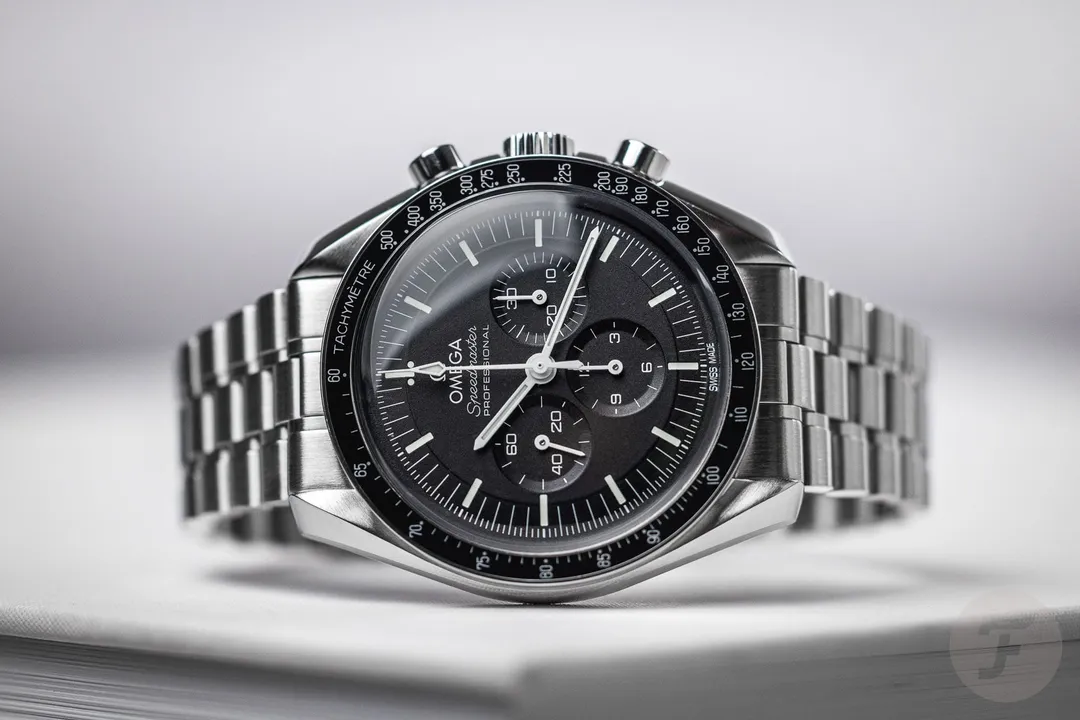
Before the formal qualification process began, NASA required reliable timing instruments for their burgeoning human spaceflight program, Project Mercury, and later Gemini. Initially, astronauts often used personal, off-the-shelf wristwatches, but as missions became more complex, the need for a standardized, space-worthy chronometer became critical for critical timing functions like mission phases, navigation, and emergency procedures. The U.S. space agency issued a request for quotations to several major watch manufacturers, including Rolex and Longines, asking them to submit their most capable chronograph models for rigorous evaluation. NASA was looking for a watch that could function perfectly in the vacuum and harsh environments of space, not just on Earth.
# Testing Protocol
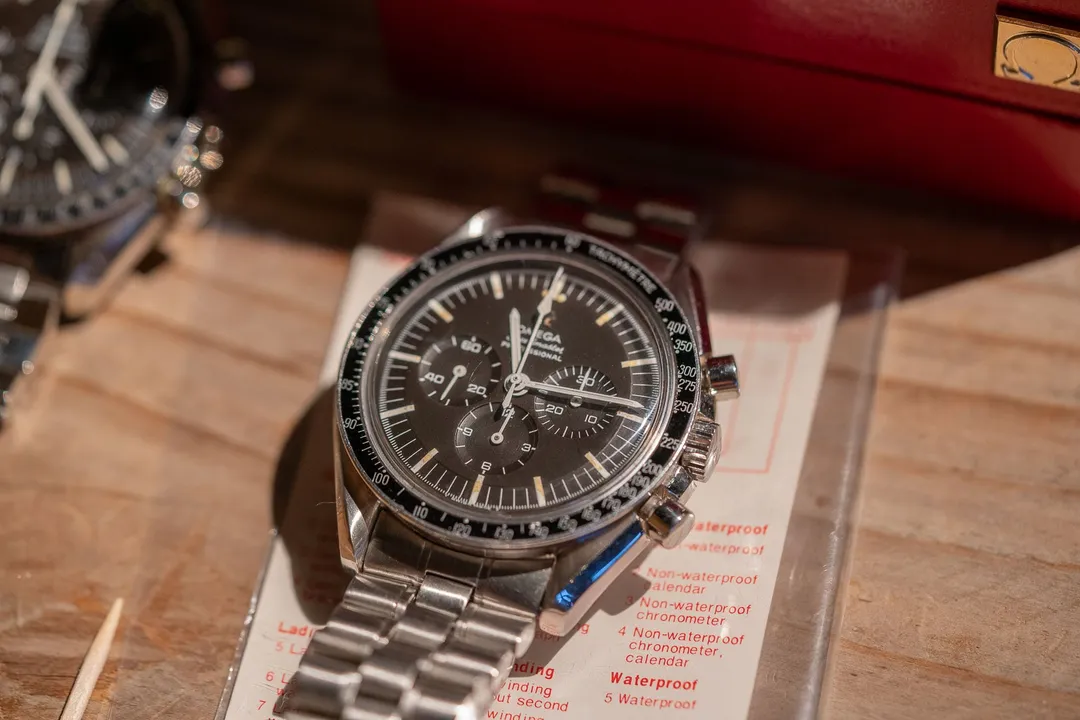
The evaluation process, initiated around 1964, was anything but gentle, focusing on how the timepieces would handle the extreme conditions encountered during spaceflight, particularly within the capsule environment. The tests were designed to simulate conditions far more severe than a standard terrestrial timepiece would ever face. Several models were reportedly submitted, though the competition eventually narrowed down to just the Omega Speedmaster and one other contender, often cited as the Rolex Cosmograph.
The qualification involved subjecting the watches to a battery of environmental trials:
- Extreme Temperatures: Watches were subjected to massive swings, cycling between very hot and very cold conditions, simulating exposure to both direct sunlight outside the capsule and the cold of deep space. Specifically, one test involved exposure to temperatures ranging from () to () and then rapidly dropping to ().
- Vibration: The watches endured high-frequency vibrations mimicking the intense shaking experienced during launch and re-entry.
- Acceleration: They were tested under significant G-forces.
- Vacuum: Exposure to a near-perfect vacuum tested the resilience of seals and lubricants.
- Humidity and Pressure: The watches also had to perform accurately under high humidity and varying atmospheric pressures.
For general readers, it is important to realize that these weren't simply checks on accuracy; they were pass/fail endurance tests designed to weed out any potential failure point that could compromise a mission.
# Watch Failure
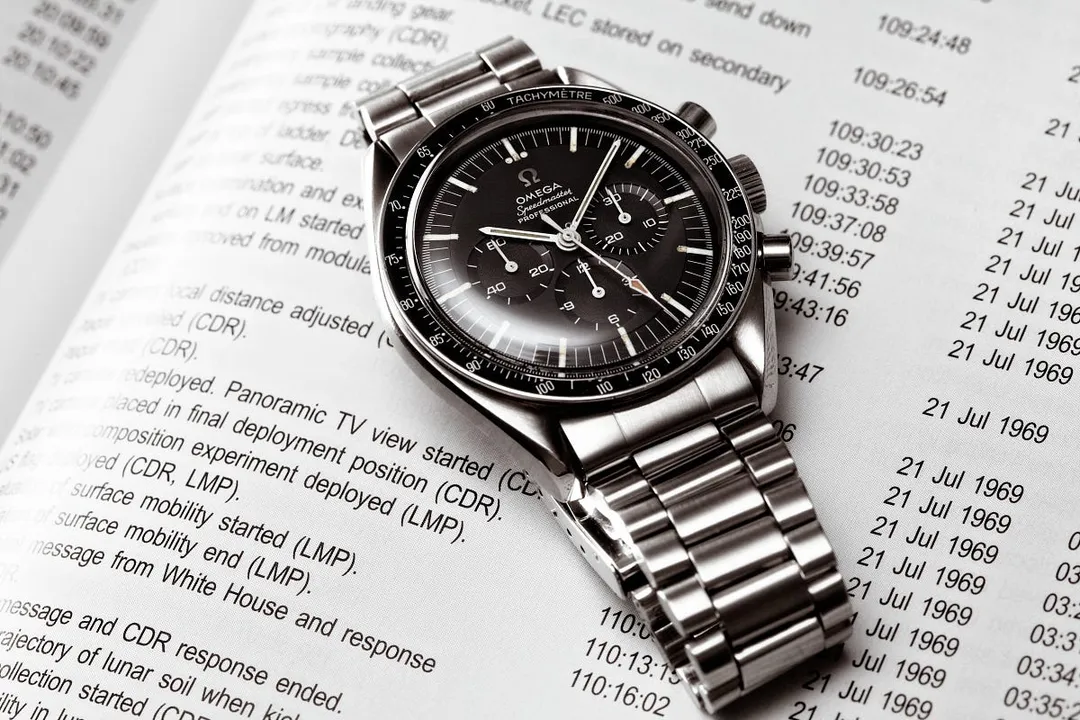
What truly set the Omega apart was the failure of its competition. During these severe trials, most submitted chronographs failed to meet NASA's exacting standards. While sources vary on the exact failure modes of the competing watches, the key outcome was that only the Speedmaster continued to operate correctly and maintain acceptable timing accuracy after enduring the full spectrum of tests. For instance, some watches might have stopped completely, while others could have lost significant time, rendering them useless as reliable mission tools. The source material suggests that the ability of the Speedmaster to function reliably under these duress conditions was the deciding factor. The watch had to perform within a narrow margin, specified as seconds per day, after all the testing concluded.
One fascinating detail often overlooked is the difference between quartz and mechanical movements. At that time, NASA was dealing exclusively with purely mechanical movements, as quartz technology was not yet space-ready or even widely adopted. This meant the Speedmaster succeeded purely on the merits of its mechanical engineering, a testament to its design originating in the late 1950s.
# Qualification Granted

Following the successful completion of the tests, in March 1965, NASA officially declared the Omega Speedmaster "flight qualified for all manned space missions". This status was unique; the watch was the only timepiece to receive this certification from the U.S. space agency. This designation elevated the Speedmaster from a highly regarded sports watch to an essential piece of flight hardware.
It is a critical distinction to note that while the watch was qualified in 1965, it was not required for the first Moon landing in 1969. Astronauts were permitted to bring personal items, and the Speedmaster was chosen by several crew members as their personal flight-qualified backup timer to the mission's primary digital flight timers. The decision to wear it was based on the astronauts' trust in the watch that had been vetted by their colleagues in the ground testing labs. The fact that Buzz Aldrin carried his Speedmaster to the Moon, making it the first watch worn on the lunar surface, cemented its legendary status.
An interesting point of comparison arises when considering the weight of this certification: while many terrestrial products claim "military spec," the NASA qualification was earned through active, destructive testing on flight-ready hardware, not just compliance with published paperwork. This sets a very high bar for 'trust' in a piece of equipment. Thinking about modern procurement, one might find that today's equivalent would involve complex electromagnetic interference (EMI) and radiation hardening standards that simply weren't the primary focus for a purely mechanical watch sixty years ago. The core requirement remained mechanical reliability, which the Speedmaster delivered.

# Space Legacy
The definitive proof of the Speedmaster's selection rationale came during the near-disaster of Apollo 13 in 1970. When an oxygen tank exploded, crippling the Command Module, the astronauts had to rely on manual procedures to correct their course for re-entry. The onboard digital timing systems were disabled or unreliable. Mission Control famously instructed the crew to use the ground timer to time a critical 14-second engine burn, but the ground crew had to use the elapsed time from the mission clock, which was synchronized with the 14-second burn needed on the lunar module’s engine. The only reliable, functioning stopwatch available to confirm the engine burn duration was, in fact, the Omega Speedmaster worn by Jack Swigert. This unplanned real-world application, saving the crew's lives, instantly transformed the watch's reputation from qualified equipment to indispensable hero.
This event solidified the watch's place in history, leading Omega to later add the famous "Flight Qualified By NASA For All Manned Space Missions" engraving on the case back of the Speedmaster Professional models. If we were to look at this from an engineering perspective today, the Apollo 13 incident serves as the ultimate stress test: a failure in a primary system forced complete reliance on the backup, non-powered timing mechanism. It demonstrated that the watch’s magnetic resistance (or lack thereof, as it was mechanical) and shock resistance far exceeded the environmental abuse it had already endured in the 1965 tests.
# Enduring Status
The original Speedmaster Professional models, often featuring the Hesalite crystal (a type of acrylic plastic), are the versions associated with the Moon missions. While Omega has since introduced watches with sapphire crystals, the use of Hesalite in the official flight-qualified version is often seen as advantageous for space applications because it is shatter-resistant—if it does crack, it tends to fracture into large pieces rather than producing dangerous, sharp shards like glass, a safety feature recognized by the agency.
This rigorous, transparent selection process, where a product earned its place through objective performance against extreme military/aerospace standards, is what gives the Speedmaster its unique authority in the watch world. For many enthusiasts, the choice wasn't arbitrary; it was a democratic outcome of engineering competition. Even today, when people casually mention the Moonwatch, they are referencing a specific piece of equipment that passed NASA's certification barrier when no other watch could.
When selecting a Speedmaster today, knowing the history helps distinguish the tool from the homage. If one seeks the closest link to the original qualification, the focus should remain on the manual-wind versions with the Hesalite crystal, as these directly descend from the movement that passed the 1965 ordeal. The story isn't just about reaching the Moon; it's about surviving the pre-flight gauntlet that earned the right to go.
#Videos
Why NASA chose the Speedmaster - Best explanation you will hear
Related Questions
#Citations
The Reason NASA Astronauts Relied on the Omega Speedmaster
1965: The Speedmaster is qualified by NASA for the space program
Flight-Qualified for Space: The Story Behind NASA's Choice of the
Ever wondered why NASA went for the Speedmaster instead of the ...
【F】 How The Omega Speedmaster Became The Moonwatch
Why NASA chose the Speedmaster - Best explanation you will hear
Feature: 10 things to know about the Omega Speedmaster
60 Years Since NASA Qualification | Worldtempus