Why did Apollo fail?
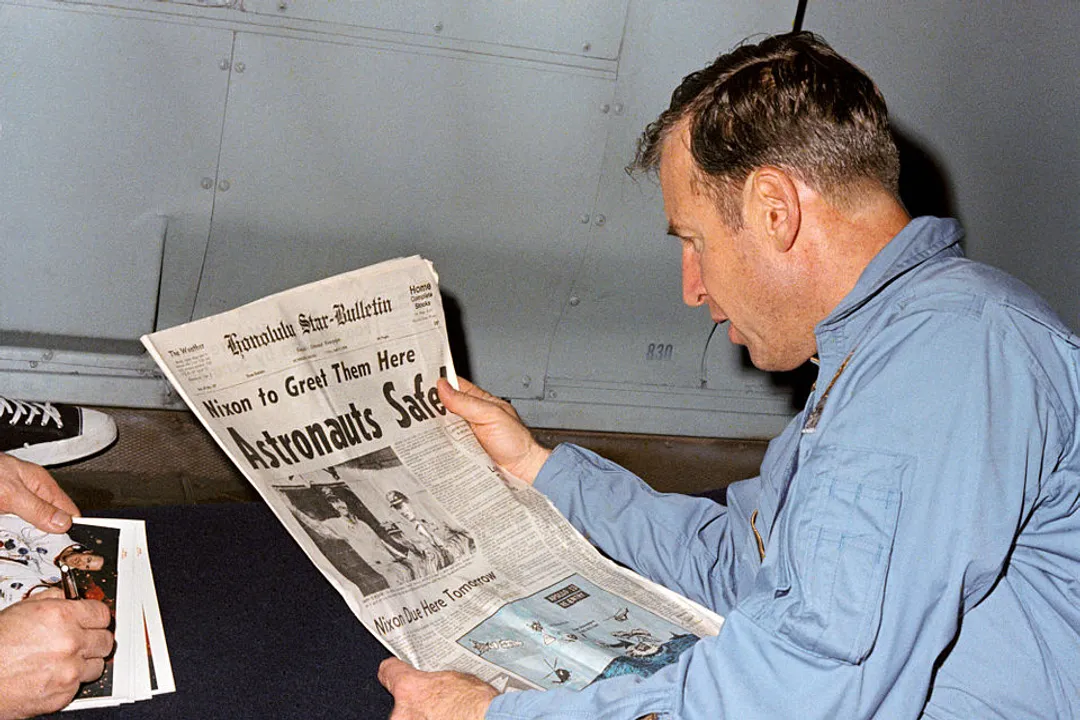
The event forever associated with failure in the Apollo program was not a crash or a cancellation, but a near-catastrophe that unfolded hundreds of thousands of miles from Earth in April 1970. [4] The third planned lunar landing mission, Apollo 13, was proceeding smoothly toward the Moon when, approximately 56 hours into the flight, a sudden, violent event crippled the spacecraft. [2][7] The primary objective—placing astronauts on the lunar surface—was aborted, making the mission a failure in terms of its primary goal. [5]
# Explosion Details
What exactly went wrong involved one of the most critical components of the spacecraft: the Service Module (SM). On April 13, 1970, while the crew was performing a routine stirring of the liquid oxygen tanks, one of the two SM oxygen tanks exploded. [1][4] This explosion was catastrophic, rupturing the other oxygen tank and severely damaging the electrical power sources housed in the Service Module. [1] The command module, the main living and control center for the trip home, was left without sufficient power, water, or oxygen. [1]
# Tank Roots
The explosion wasn't a random event but the culmination of issues that dated back to testing on the ground. Investigations revealed that the wiring inside the oxygen tank, which was designed to heat the oxygen for the fuel cells, had been compromised. [1] The tank had been dropped during pre-flight handling, which likely scraped off some of the Teflon insulation covering the internal wiring. [1] Later, during a pre-launch test, the ground crew applied too much voltage to the tank's heaters, causing the exposed wiring to short-circuit and ignite the Teflon insulation. [1] The explosion was the result of this ignited insulation once the system was activated in flight. [1]
# Lifeboat Mode
With the Command Module, Odyssey, effectively dead or needing to be preserved for re-entry, the three-person crew—Jim Lovell, Jack Swigert, and Fred Haise—had to relocate to the Lunar Module (LM), Aquarius. [1][4] The LM, designed for only two astronauts to survive for about two days on the Moon's surface, now had to sustain three men for the extended four-day trip back to Earth. [1] This necessity forced the crew and Mission Control to immediately pivot from exploration to sheer survival. [6]
The engineering challenge here was immense. The LM’s power and water reserves were never meant for this duration or load. [1] Every watt of electricity and every drop of water had to be rationed with extreme prejudice. This situation forced an unprecedented level of improvisation under pressure. It's remarkable to consider that the contingency plans likely focused on scenarios where one module failed, but rarely for the complete crippling of the main vehicle this far out, demanding creative solutions using only the minimal tools available in the cramped lunar lander. [9]
# CO2 Scrubber
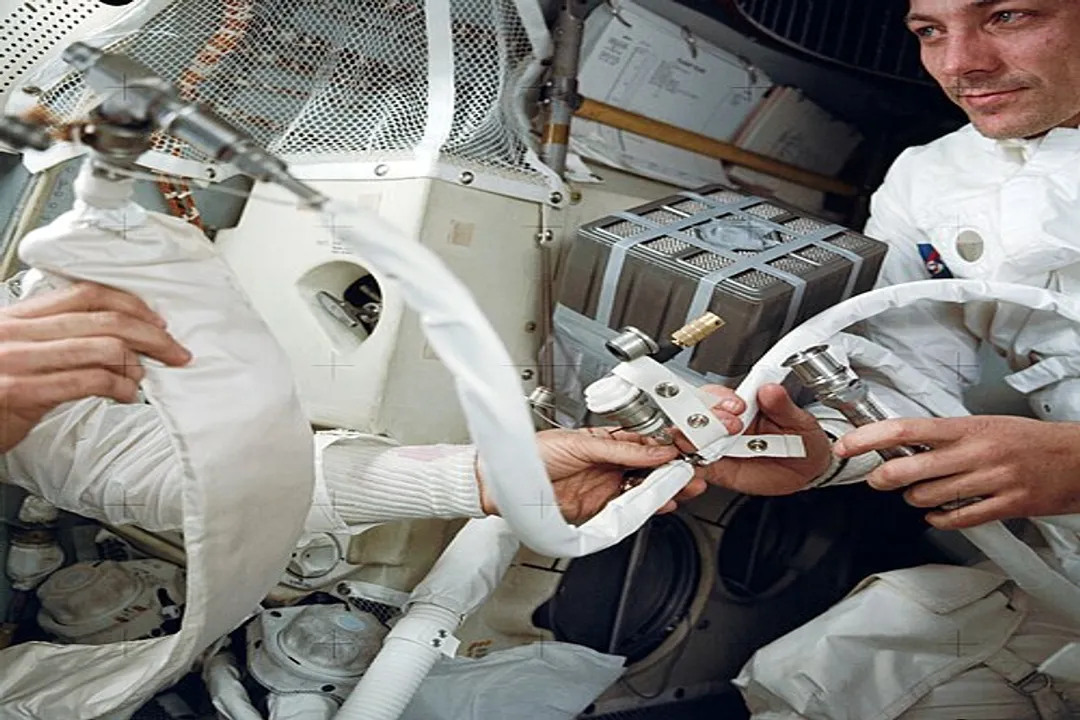
One of the most immediate and dangerous threats, second only to power loss, was the buildup of carbon dioxide exhaled by the three astronauts. [1] The LM’s lithium hydroxide canisters, designed to scrub CO2 from the air, were finite and insufficient for the prolonged journey home. [1] The ground team in Houston had to devise a procedure to adapt the square Command Module canisters to fit the round receptacles in the Lunar Module using only materials the crew had on hand: duct tape, plastic bags, and mission instruction manuals. [1] The successful fabrication and implementation of this "square peg in a round hole" solution stand as one of the highest achievements of that mission's support team. [1]

# Mission Control Effort
The efforts on the ground were just as vital as the actions inside the spacecraft. [2] Teams worked around the clock, facing the grim reality that bringing the astronauts home was far from guaranteed. [9] Engineers had to develop new flight plans and procedures on the fly, often running complex simulations based on the severely degraded state of the spacecraft. [2] The entire process of navigating the spacecraft, adjusting its trajectory for a precise Earth re-entry, and managing the dwindling resources required continuous, minute-by-minute problem-solving from teams who were not just relying on procedure but inventing it. [1]
One aspect often overlooked is the cognitive load placed on the crew. They were operating in near-freezing temperatures, suffering from dehydration, and working with the knowledge that a single mistake in a power-down sequence or navigation burn could be fatal. [1] The entire mission shifted focus from the scientific exploration of the Moon to the practical application of engineering principles under the most extreme duress imaginable. It’s a prime example of how expertise—deep, experienced knowledge of the system rather than just the manual—is what separates survival from failure when the manual runs out of answers. [2]
# A Successful Outcome
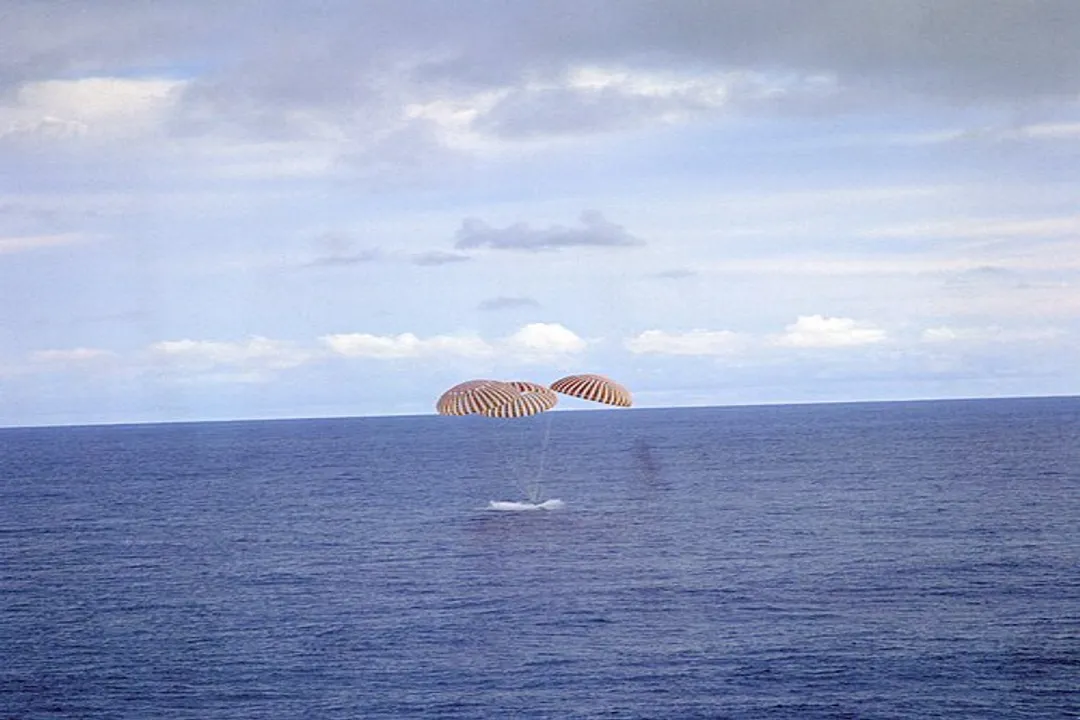
Apollo 13 did not land on the Moon, making it a mission failure regarding its primary scientific and exploration goal. [5] However, the safe return of the crew transformed the narrative entirely. [6] The ability of NASA to overcome the catastrophic in-flight emergency, conserve life support, navigate back to Earth, and successfully re-enter the atmosphere using the barely functional Command Module meant the mission became known globally as a "successful failure". [2][6]
The lessons learned from the failure of that oxygen tank directly led to significant redesigns for subsequent Apollo missions, ensuring that similar failures were extremely unlikely to recur. [1] While the immediate goal was lost, the program gained invaluable experience in crisis management that arguably enhanced the trust and authority of NASA’s engineering capability in the long run. When looking at the entire Apollo program, the failure of Apollo 13 was a sharp, painful check on complacency, proving the inherent dangers of spaceflight were still very real, even in the later stages of the program. [4] The mission ultimately demonstrated that the commitment to astronaut safety was absolute, making it a testament to human ingenuity when the stakes were highest. [7]
#Videos
Apollo 13's 'successful failure' explained - YouTube
Related Questions
#Citations
ELI5: What exactly went wrong on Apollo 13 and how was so many ...
Apollo 13: The Successful Failure - NASA
Apollo 13 - Wikipedia
What Went Wrong on Apollo 13? - History.com
What was the first Apollo mission? Why did it fail? - Quora
A Successful Failure: The Apollo 13 Mission - Navy.mil
Failure was not an option: 55 years ago, on April 11, 1970, Apollo 13 ...
Apollo 13's 'successful failure' explained - YouTube
Was not saving the Apollo 13 astronauts ever considered as an ...