How fast is the fastest Apollo?
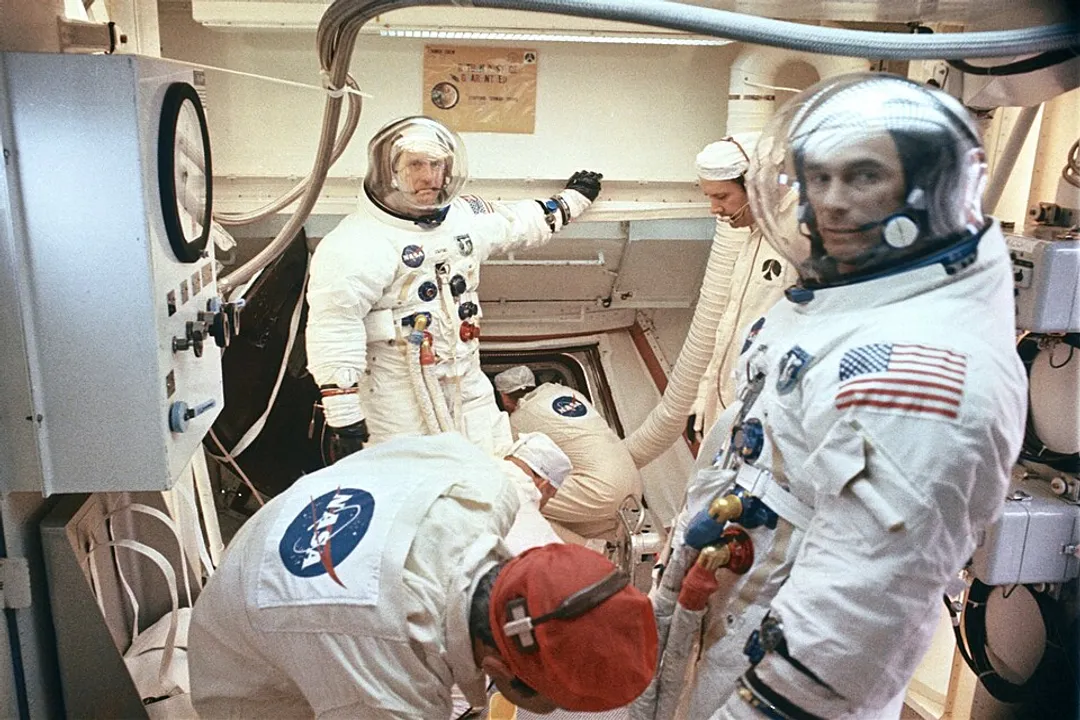
The fastest any human being has ever traveled was not during a launch toward the Moon, but rather on the return trip after performing a dress rehearsal for the first landing. The record belongs to the crew of Apollo 10 in May 1969, who achieved an astonishing velocity of 24,791 mph. [2][4] This incredible speed marks the peak velocity attained by humans during an Earth return trajectory, essentially traveling back toward our home planet following a loop around the Moon. [1][4]
# The Record Flight
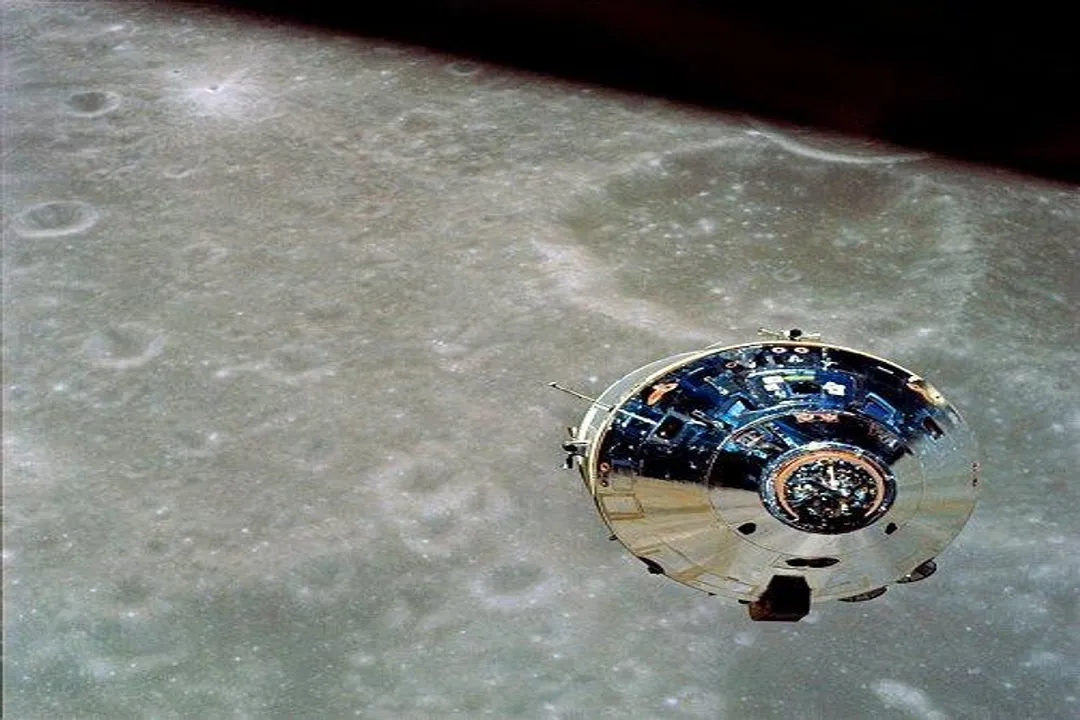
The mission that set this mark was Apollo 10, often remembered as the "Dress Rehearsal" for Apollo 11. [1] Launched on May 18, 1969, the flight involved Tom Stafford, John Young, and Gene Cernan. [1] While their primary goal was to test the Lunar Module (LM) in lunar orbit—descending to within 9 miles of the Moon’s surface—the return phase is what secured their place in the speed record books. [1]
The moment of peak velocity occurred as the Command and Service Modules (CSM) separated from the Lunar Module and began their final plunge toward Earth. [4] This high velocity was not an accident; it was a direct result of the precise trajectory calculated to use the Moon's gravity to sling the spacecraft back toward Earth at maximum efficiency. [1] The speed recorded, 24,791 miles per hour (or roughly 39,897 kilometers per hour), was achieved as the module hit the upper fringes of the atmosphere on May 26, 1969. [2][4]
# The Physics Behind Speed
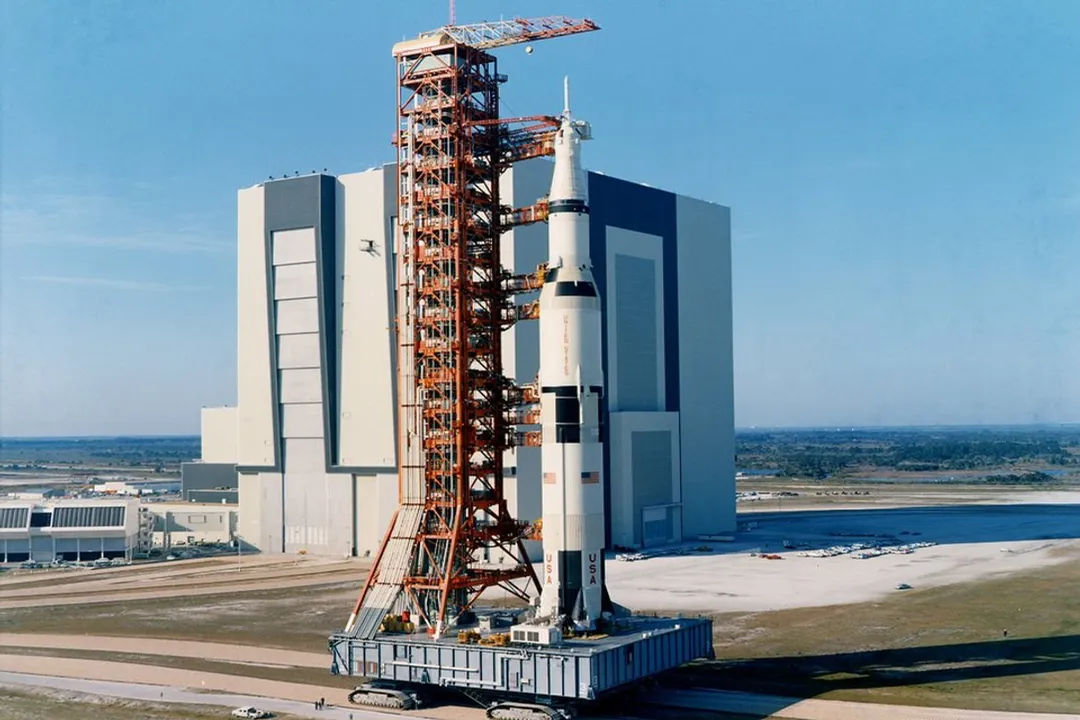
To achieve such a speed, the spacecraft had to execute a perfect "free-return trajectory" that maximized the gravitational pull of the Moon before slingshotting back. [1] When a spacecraft leaves Earth, it must reach a speed known as Earth's escape velocity to break free from our planet's gravitational grasp. [5] While the initial Saturn V launch pushed the crew to a very high velocity leaving Earth, the return journey involved the added momentum gained from the lunar flyby, significantly boosting the final speed upon approach to Earth. [4]
Thinking about that speed in context reveals its true magnitude. The speed of sound at sea level is about 767 mph; this means the Apollo 10 crew was moving over 32 times faster than the speed of sound when they re-entered the atmosphere. [2] Furthermore, this record speed is fundamentally about overcoming Earth's gravity well. Any lower speed on that trajectory, and the spacecraft would either miss Earth entirely or be captured into a much slower, less efficient orbit that would require further maneuvers—and significant fuel expenditure—to finally land. [1] The record speed, therefore, represents the absolute physical limit for a trajectory designed to use a lunar flyby for a direct return to a safe splashdown zone.
# Comparing Trajectories
It is interesting to compare this return record with other milestones in spaceflight history. While Apollo 10 holds the record for the fastest speed achieved by humans, the initial speed required to leave Earth’s surface is a different metric altogether. [5] The velocity needed just to depart Earth orbit and head toward the Moon was high, but the re-entry velocity after the lunar assist surpassed it. [5]
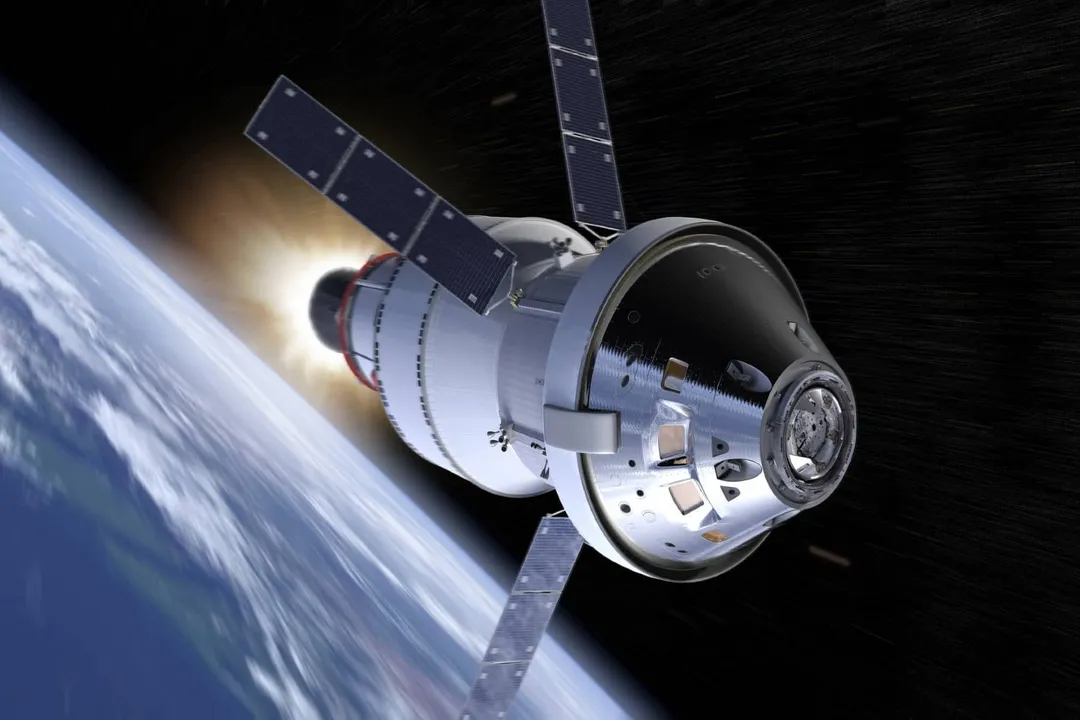
In recent years, new generations of spacecraft have started approaching, and in some specific phases, perhaps exceeding, the velocities of the Apollo era. For instance, the uncrewed Orion spacecraft on its Artemis I mission performed a lunar flyby re-entry at a velocity exceeding 25,000 mph. [9] While this is faster than Apollo 10's record, it is important to note the difference: the Orion mission was on a vastly different, highly energetic trajectory, and it was uncrewed. [9] The Artemis II mission, which will carry crew, is expected to achieve similar speeds upon its return. [7] This highlights an engineering evolution; modern spacecraft are designed for trajectories that may push the absolute speed envelope, which is a necessity for future deep space exploration beyond the relatively low-energy return paths utilized by the original Apollo missions. [9]
# Mission Precision
The successful execution of the Apollo 10 return—and the setting of this speed record—was a testament to mission control's expertise. [1] The timing of the lunar swingby, the exact altitude, and the angle of re-entry had to be calculated with sub-second precision. If the spacecraft had hit the atmosphere even slightly too steep at 24,791 mph, the resulting forces could have destroyed the capsule or burned it up entirely. [4]
This illustrates a key point often lost when only focusing on the top number: the record speed was a consequence of executing a perfect return maneuver, not the goal itself. [1] The goal was a safe landing. The fact that the required physics for the safest, fastest return path resulted in a speed record that still stands today speaks volumes about the navigational prowess of the era. For a crew traveling at 32 times the speed of sound, every degree of entry angle mattered immensely; it was a high-speed balancing act where the atmosphere itself was the final, unforgiving brake. [4]
# Enduring Benchmark
For now, the speed achieved by the Apollo 10 crew remains the benchmark for human velocity, set by the very first humans to circle the Moon and return. [4] While future missions, particularly those venturing further into cis-lunar space like the Artemis program, will necessarily involve spacecraft hitting the atmosphere at comparable or higher speeds, the Apollo 10 mark holds a special place as the peak velocity achieved by the first generation of lunar explorers on their way home. [7][9] That brief, fiery transit back to Earth in May 1969 represents the pinnacle of speed for human space travel to date.
Related Questions
#Citations
Apollo 10 - Wikipedia
TIL the fastest speed a human being has ever attained was when ...
Why did Apollo 10 go faster than Apollo 13? - Facebook
Apollo 10 achieved the fastest speed humans have ever traveled.
How fast was Apollo 10 going when it departed from Earth? - Quora
Apollo 10 Speed Record - NASA Spaceflight Forum
NASA achieves it 56 years later — It's a new record in human history
Apollo 10: Fastest recorded speed, why? - collectSPACE: Messages
Orion re-entry velocity: Why is it higher than Apollo?