Who is NASA accountable to?
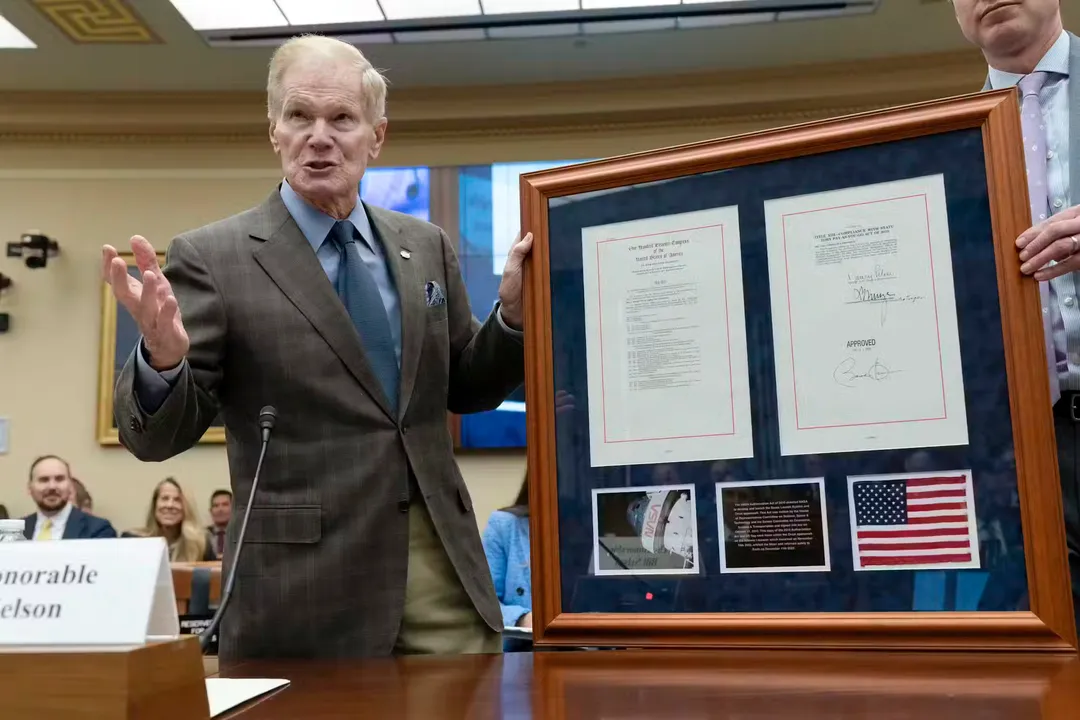
The National Aeronautics and Space Administration (NASA) occupies a unique position in the American governmental structure, simultaneously embodying the nation's highest scientific aspirations and operating within the very terrestrial constraints of budget approvals and political maneuvering. Understanding who holds the reins of accountability for this powerful agency requires tracing lines of authority that stretch from the halls of Congress directly to the Oval Office, all channeled through the agency's chief executive, the Administrator.
# Executive Ties

The formal accountability structure for NASA begins at the very top of the Executive Branch. The Administrator of NASA functions as the agency’s principal officer, a leadership role equivalent to that of a cabinet secretary, even though NASA itself is an independent executive agency. This top position is not chosen by internal agency consensus; rather, the individual selected to lead NASA is nominated by the President of the United States.
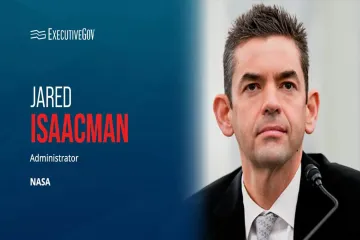
This nomination power establishes the President as the ultimate executive superior. When a new Administrator takes the helm, they are, in effect, inheriting the space policy direction set by the current administration. For instance, the recent confirmation of Jared Isaacman as the 15th NASA Administrator was contingent upon his appointment by the sitting President, setting the tone for his tenure. This link means that shifts in presidential priorities—whether focusing on returning to the Moon, deep space robotic exploration, or Earth science initiatives—must be rapidly adopted and implemented by the agency leadership. The Administrator reports directly to the President, making the agency’s highest strategic vision a reflection of the current White House agenda.
# Congressional Oversight

While the President appoints the leadership, the agency's ability to actually do anything—to launch rockets, fund research, or hire staff—rests squarely with the legislative branch. This is where the accountability shifts from executive direction to fiscal and programmatic control.
The Senate plays a critical, direct role in validating the President’s choice for the top job. Any nominee for Administrator must pass through the Senate confirmation process. This confirmation hearing serves as an early, high-stakes test of the nominee's technical understanding, policy alignment, and political acumen, providing Senators a chance to establish expectations before the Administrator even takes office. The history of nominations shows that the process is rigorous, ensuring that the person leading the agency has the requisite experience and can navigate the complex web of congressional committees that hold sway over NASA’s purse strings.
The real, ongoing power of Congress lies in appropriations. NASA is entirely reliant on annual funding bills passed by the House and Senate. The Administrator spends a significant portion of their time not just looking toward Mars, but meticulously defending budget requests, line item by line item, to various subcommittees. A successful Administrator must skillfully translate ambitious, decades-long goals—like the Artemis program—into digestible, fiscally responsible annual spending plans that Congress will approve. This creates an inherent tension: the agency strives for seemingly limitless exploration, but its resources are strictly limited by the yearly political negotiation that occurs on Capitol Hill. The agency must constantly justify its expenditures against competing national priorities, making Congress a persistent and necessary audience for accountability.
# Agency Structure

Internally, the Administrator is supported by a layer of deputies and advisory bodies intended to ensure smooth, mission-focused operation across the vast organization. The agency structure includes defined leadership roles designed to manage specific sectors, such as exploration, science, or aeronautics.
NASA also utilizes internal advisory groups, such as the NASA Council, whose members include the heads of various directorates and centers. These bodies ensure that the Administrator’s directives are implemented consistently across the agency’s diverse physical locations and functional areas, from Houston to Cape Canaveral and the various research centers. While these councils provide a mechanism for internal control and operational accountability, their authority is delegated by the Administrator, who remains the final decision-maker accountable to external forces. It is essential to recognize that while these internal leaders ensure mission execution, they are ultimately answerable to the Administrator, who answers to the President and Congress.
To better visualize the flow of responsibility, one can map the chain of command that defines NASA's accountability:
| Authority Level | Primary Responsibility/Action | Accountability To |
|---|---|---|
| NASA Administrator | Agency Chief Executive, Policy Execution | The President, Congress |
| NASA Council Members | Directorate/Center Management, Program Implementation | The Administrator |
| Agency Employees | Mission Performance, Scientific Output | Directorate/Center Heads |
The effectiveness of the Administrator often rests on their ability to manage the expectations across this entire structure while simultaneously dealing with the external pressures from Washington D.C..
# Public Mandate
While political and legislative oversight are the formal mechanisms of accountability, the American public exerts a powerful, albeit less direct, influence. NASA is funded by taxpayer dollars, and its successes—and failures—are globally broadcast events. This creates an implicit accountability to the citizenry, which forms the bedrock of the agency’s political support.
When NASA embarks on major initiatives, public enthusiasm is often a key ingredient in maintaining the political will necessary for sustained, multi-year funding. This reliance on popular support means that transparency regarding mission status, budget expenditures, and risk assessment is not just good public relations; it is a critical component of budget defense. A failure in public communication or a highly visible mishap can quickly erode the goodwill needed to secure future appropriations from skeptical members of Congress.
Considering this dynamic, a practical way to assess the agency's immediate accountability is by tracking public reception alongside budget hearings. If public interest wanes, the political appetite for funding ambitious new programs naturally diminishes, often forcing the Administrator to refocus resources on near-term, easily understood achievements to maintain their mandate.
# Navigating the Divide
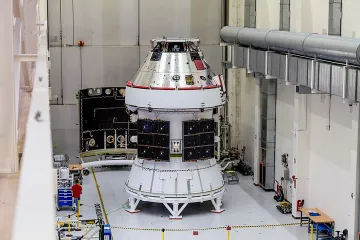
The role of the Administrator is defined by negotiating the vast gap between the inspiring, long-term goals of space exploration and the short-term, often volatile realities of the political world. They must operate in two distinct timeframes simultaneously. On one hand, they are accountable for fulfilling commitments made by previous administrations decades prior, such as maintaining the International Space Station or completing a planetary probe design. On the other hand, they must secure funding for projects that will only launch or deliver results long after the current President and Congress have left office.
The essential insight here is that for NASA, accountability is less about a single decision-maker and more about managing a set of overlapping masters. A decision that satisfies the President’s political timetable might complicate the next fiscal year’s request before the Appropriations Committee, or vice-versa. This requires a constant, nuanced balancing act where satisfying one master often means compromising with another. The true measure of the Administrator’s effectiveness, therefore, isn’t just mission success, but their skill in maintaining the delicate equilibrium between scientific ambition and political feasibility.
#Videos
Senate confirms Jared Isaacman as NASA administrator - YouTube
Related Questions
#Citations
Administrator of NASA - Wikipedia
NASA Leadership
Isaacman Confirmed as 15th NASA Administrator
What does the NASA administrator do? The agency's leader ...
Senate Confirms Isaacman as Next NASA Chief - MeriTalk
Isaacman sworn in as 15th NASA Administrator - Spectrum News 13
Senate confirms Jared Isaacman as NASA administrator - YouTube
Who does the Administrator of NASA report to? : r/nasa - Reddit