What is Goldilocks zone UPSC?
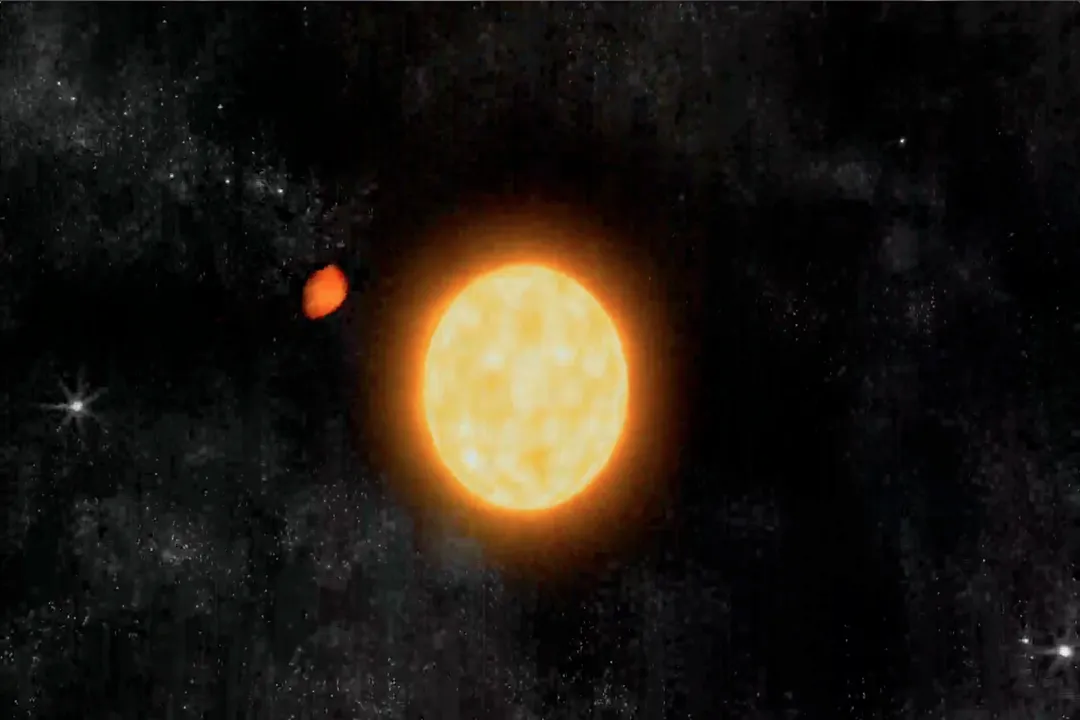
The Goldilocks zone, scientifically known as the circumstellar habitable zone, represents a specific region around a star where conditions are favorable for liquid water to exist on a planet's surface. [3] It is a foundational concept frequently tested in the UPSC Prelims, as it serves as the primary filter for astronomers searching for potential extraterrestrial life. [1][2] When scientists scan the cosmos for exoplanets, this zone acts as the first checkpoint to determine whether a world is worth further investigation. [5]
The name derives from the classic fairy tale "Goldilocks and the Three Bears," where a young girl samples three bowls of porridge—one too hot, one too cold, and one just right. [3] Similarly, a planet situated too close to its host star faces intense radiation and boiling temperatures, stripping away its atmosphere and vaporizing surface water. [10] Conversely, a planet too far away experiences freezing temperatures, locking water into permanent ice. [4] The Goldilocks zone is that "just right" orbit where stellar heat allows water to remain in liquid form, a necessary ingredient for life as we know it. [3]
# Stellar Influence
The location and width of this zone are not fixed; they depend entirely on the type and size of the host star. [3][7] Stars come in various sizes and luminosities, and their heat output dictates where the habitable region starts and ends. For example, massive, hot stars like blue giants have habitable zones that are quite far away because the intensity of their heat would incinerate any planet orbiting too close. [6]
In contrast, cooler, smaller stars like red dwarfs have habitable zones much closer to the star. [3] Because red dwarfs emit less light and heat, planets need to orbit tightly to maintain temperatures that allow for liquid water. [8] This is an important distinction for aspirants because it shifts the focus from the distance per se to the energy output of the star. [7] A planet located at Earth’s distance from a red dwarf would likely be a frozen wasteland, whereas it would be perfectly positioned if the host star were a G-type star like our Sun. [10]
# Exoplanetary Discoveries
This concept has gained immense traction in recent years due to the discovery of Earth-sized exoplanets located within these zones. [9] The TRAPPIST-1 system is perhaps the most famous example often cited in current affairs. [9] NASA scientists discovered seven Earth-sized planets orbiting a single red dwarf star, with three of them residing directly within the habitable zone. [9]
Such discoveries are the reason the term appears frequently in news and UPSC question papers. [1][2] When a space agency announces a new exoplanet, they rarely claim it is "inhabited." Instead, they report that it is "potentially habitable" because it resides in the Goldilocks zone. [5] This nuance is critical. Being in the zone only implies the potential for liquid water; it does not guarantee that the planet has an atmosphere or even a solid surface. [8]
# Earth Comparison
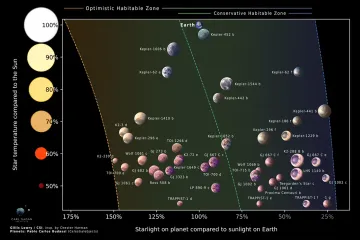
To understand this better, we can analyze the inner solar system, which offers a clear contrast between planets that are in or near the Goldilocks zone and those that are not. Earth occupies the ideal position. We have a robust atmosphere, a magnetic field, and the perfect amount of stellar flux to maintain oceans. [3]
| Planet | Position Relative to Goldilocks Zone | Outcome |
|---|---|---|
| Venus | Inner edge (too hot) | Runaway greenhouse effect; surface lead-melting hot |
| Earth | Center (just right) | Liquid water, stable atmosphere, life-sustaining |
| Mars | Outer edge (too cold) | Thin atmosphere; water mostly frozen or lost |
As shown, Venus is often considered to be on the inner edge of the habitable zone. [10] However, its thick carbon dioxide atmosphere created a runaway greenhouse effect, making it uninhabitable despite its proximity to the zone. [3] Mars sits on the outer edge, where it is often too cold to sustain liquid water on the surface, though evidence suggests it may have had water in the past. [10] This demonstrates that the Goldilocks zone is a necessary condition, but not a sufficient one, for life. [8]
# Atmospheric Requirements
While distance from the star is the primary factor, the atmosphere acts as the regulator. [3] A planet could be perfectly positioned in the habitable zone but remain hostile to life if it lacks an atmosphere to trap heat or protect the surface from stellar radiation. [5]
The atmospheric composition determines how a planet retains heat. Earth’s greenhouse effect, regulated by carbon dioxide and water vapor, keeps the planet warm enough for liquid water. [3] Without this, Earth would be significantly colder, potentially pushing it out of the habitable range. Therefore, when astronomers evaluate exoplanets, they look for spectroscopic evidence of an atmosphere. [6] They analyze the light passing through a planet's atmosphere during a transit event to identify chemical signatures like oxygen, methane, or carbon dioxide. [9]
# Geological Activity
Beyond the atmosphere, geological activity plays a significant role in long-term habitability. Plate tectonics and volcanic activity help regulate the carbon cycle. [3] Volcanoes release carbon dioxide into the atmosphere, while the recycling of the crust through subduction removes it. This natural thermostat prevents a planet from swinging between extreme heat and extreme cold over millions of years. [5]
A planet that is "geologically dead"—meaning it has cooled down internally and stopped tectonic movement—might struggle to maintain a stable climate even if it resides in the Goldilocks zone. [8] For UPSC aspirants, understanding this connection between geophysics and habitability provides a deeper, more analytical perspective than simply memorizing the definition of the zone. [1][2]
# UPSC Strategy
For those preparing for exams, questions on the Goldilocks zone usually demand an understanding of the relationship between stellar classification, distance, and atmospheric conditions. [7] Avoid viewing it as an isolated fact. Instead, connect it to broader topics like:
- Astronomy: Methods of detecting exoplanets (transit method and radial velocity) often reference the habitable zone. [9]
- Geography: Planetary formation and the evolution of the solar system. [10]
- Environment: The role of the atmosphere as a greenhouse and a shield. [5]
When a question asks about the Goldilocks zone, check the options carefully. They might test whether you know that "habitable" does not mean "inhabited" or if you understand that the zone changes based on the star's type. [8]
# Chemical Solvents
A question often arises regarding why we focus exclusively on liquid water. Why not look for life that uses methane, ammonia, or some other liquid as a solvent? The answer lies in the unique chemical properties of water. [3] Water is a polar molecule, making it an excellent universal solvent. It allows for a vast range of chemical reactions that are required for biological processes. [8]
While some scientists theorize about life forms based on other liquids, water remains the gold standard because of its abundance in the universe and its stability across a broad temperature range. [3] The Goldilocks zone is defined specifically by the temperatures at which water remains liquid at Earth-like atmospheric pressures. [7] If a planet relies on ammonia, its "Goldilocks zone" would be at a much colder temperature, likely much farther from the star. However, until we find evidence of alternative biochemistry, our search strategies remain grounded in the water-centric definition. [6]
# Future Observations
Looking ahead, space telescopes are designed to refine our understanding of these zones. [9] The James Webb Space Telescope, for instance, allows researchers to look at the atmospheres of exoplanets in these regions with unprecedented detail. [9] The goal is to move from simply identifying "Goldilocks" planets to characterizing them. Can we detect surface water? Is there oxygen? Are there signatures of a magnetosphere?[5]
This transition from "discovery" to "characterization" is where the field is heading. [9] For the exam, keeping track of major space missions and the discoveries they make in these habitable zones is helpful. [1][2] When a new planet is announced in the media, try to determine what kind of star it orbits and where it sits in the local habitable zone. This practice turns static knowledge into a dynamic understanding, helping you answer high-level questions that test application rather than rote memorization. [4]
#Videos
Goldilocks Zone
Related Questions
#Citations
Q. The term 'Goldilocks Zone' is often seen news in ...
The term 'Goldilocks Zone' is often seen in the news in ...
What is the habitable zone or “Goldilocks zone”?
[Solved] The term 'Goldilocks Zone' is often seen in the news
Goldilocks Zone
Goldilocks Zone
(Daily News Scan - DNS English) Goldilocks Zone
UPSC Prelims 2015 -Question 45 - Blog
3) What is 'Goldilocks' zone of a star? Recently NASA ...
The Goldilocks Zone | PBS LearningMedia