How does the star system work?
The term "star system" carries drastically different meanings depending on whether you are looking through a telescope, booking a hotel room, or managing a team in a professional environment. While one definition involves the physics of gravity and nuclear fusion, another refers to standardized metrics used to measure quality or relative skill. Understanding these systems requires shifting perspective between the physical universe and human-made classification models.
# Stellar Physics
In the astronomical sense, a star is a luminous sphere of plasma held together by its own gravity. [1] The engine that makes a star work is nuclear fusion. Within the core of a star, intense pressure and temperature force hydrogen atoms to collide and fuse, forming helium and releasing an immense amount of energy. [1][5] This energy release creates an outward pressure that counteracts the crushing inward pull of gravity, maintaining a state of hydrostatic equilibrium. [1]
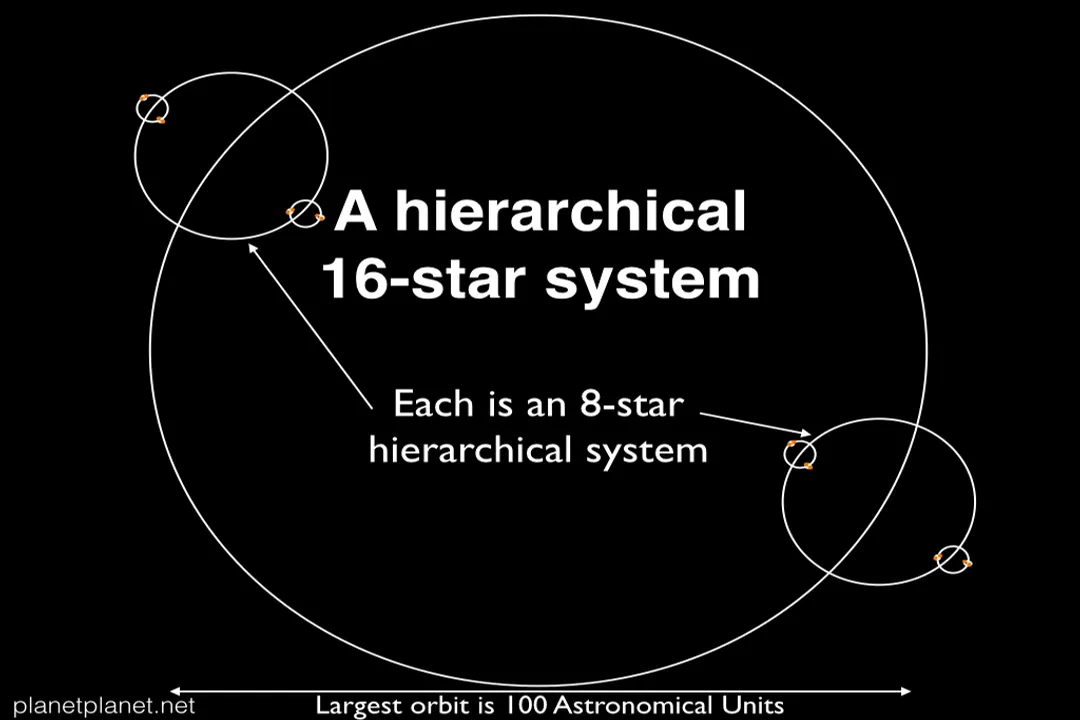
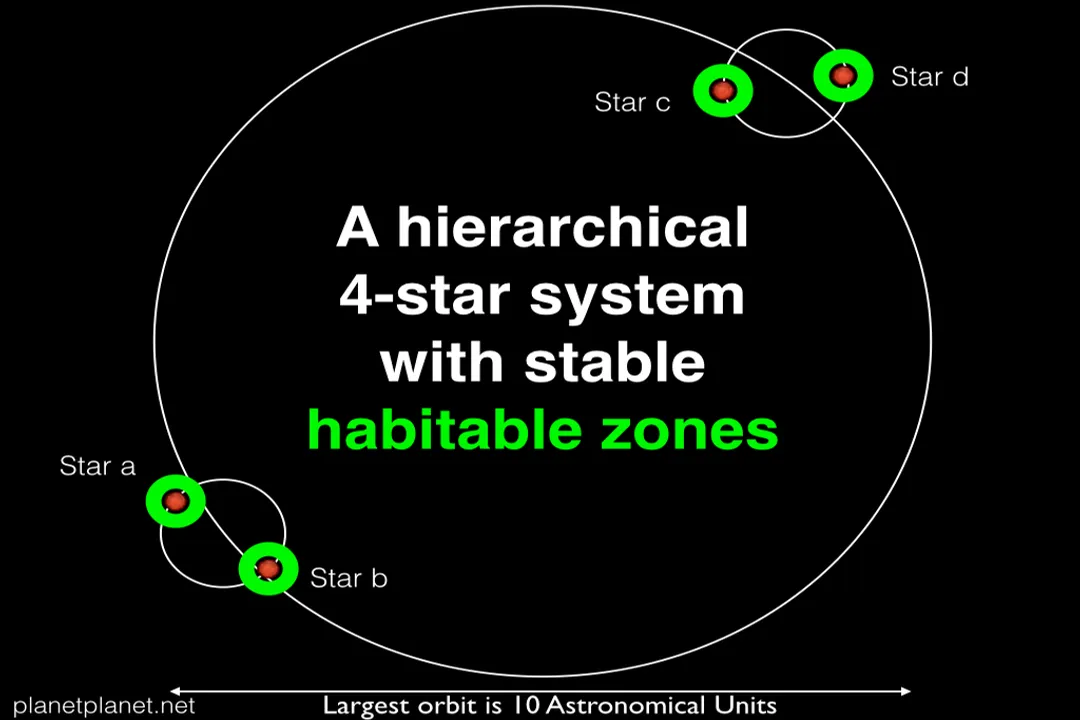
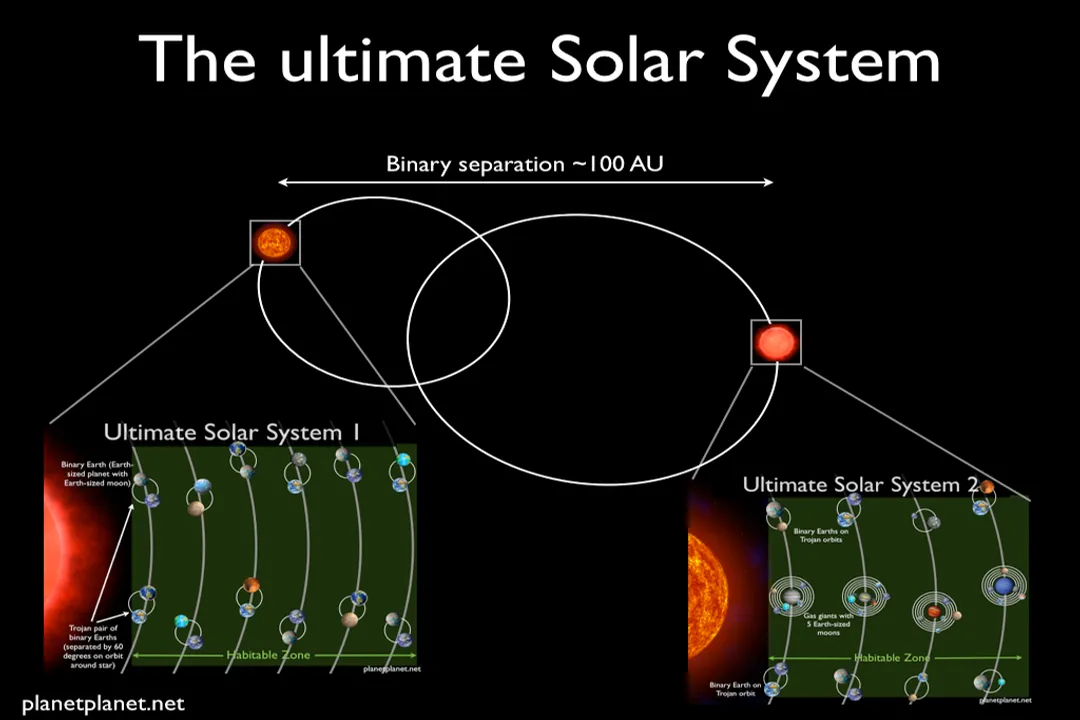
When we speak of a "star system" in space, we are referring to a gravitationally bound group of stars. [7] While the Sun is a single star, it is increasingly clear that many stars exist in pairs or larger groups. [8] These are known as binary or multiple star systems. In these configurations, the stars orbit a common center of mass. [8] The stability of these systems depends on how far apart the stars are and how their individual gravitational fields interact. [7]
If you were to map the movement of a triple-star system, the complexity increases significantly compared to a binary setup. In many observed systems, two stars orbit closely while a third star orbits the pair from a greater distance. [7] If a star moves too close to its companion, tidal forces can strip gas from the other, potentially altering the evolutionary path of both stars. While single-star systems are often considered prime candidates for stable planetary orbits, multiple star systems offer chaotic orbital dynamics that make the long-term existence of planets much more difficult, often resulting in gravitational ejection of any orbiting bodies over time.
# Hotel Ratings
In the hospitality industry, a star system is a subjective shorthand meant to indicate a property’s facilities and level of service. Unlike physical laws, there is no single, globally recognized authority that dictates what earns a hotel one star versus five. [2] Instead, these systems are managed by a mix of government agencies, travel industry associations, and private companies. [6]
The primary logic behind these ratings is the checklist of amenities. A one-star property generally offers basic lodging, whereas a five-star hotel is expected to provide a wide array of services, such as 24-hour room service, luxury toiletries, and high-end dining options. [6] However, a significant disconnect often exists for travelers because the criteria vary by region. A four-star hotel in a rural town might offer different standards than a four-star property in a major metropolitan center.
The table below illustrates why comparing hotel ratings across borders can be misleading:
| Region/Authority | Focus | Primary Criteria |
|---|---|---|
| Government-led | Standardization | Specific physical assets (room size, elevator, etc.) |
| Private/Online | Guest Experience | Sentiment, cleanliness, service speed |
| Industry Boards | Luxury Tiers | Availability of concierge, spa, premium dining |
This creates a hidden "inflation" effect in the hospitality sector. Hotels often add minor luxury features—like high-thread-count sheets or a specific type of coffee machine—not because the core functionality improves, but specifically to boost their rating in local metrics. Travelers should view these stars as an indicator of available infrastructure rather than a guarantee of a specific emotional or service quality.

# Communication Framework
In a professional or clinical setting, "STAR" represents an acronym used to structure communication during critical or time-sensitive situations. [9] The system works by forcing a speaker to organize information into four logical buckets:
- Situation: A brief, clear statement of what is happening.
- Task: The specific goal or problem that needs to be addressed.
- Action: The steps taken or planned to resolve the task.
- Result: The outcome or the expected outcome of the actions taken. [9]
This is a mental model designed to reduce ambiguity. By strictly adhering to these four components, individuals avoid rambling or burying important information under irrelevant context. It is effective because it moves the listener from "what is happening" to "what needs to be done" without requiring the listener to infer the speaker's intent.
# Relative Rankings
In gaming and management simulations, such as Football Manager, the star system operates as a relative ranking tool rather than an absolute measure of ability. [4] In this context, stars do not represent a fixed skill value like "90 out of 100." Instead, they represent how a specific individual compares to the rest of the current squad. [4]
If you have a player rated as a "five-star" prospect, the system is telling you that this player is at the top tier relative to your specific team's current roster. If you sign a better player for that position, your previous five-star player might suddenly drop to a three-star rating. The player's actual attributes did not change; the baseline for what constitutes "star-level" performance within your organization simply shifted. [3]
This distinction is important because it prevents users from assuming that a star is a static entity. Just as a small star in a galaxy might appear bright depending on its proximity to an observer, a "star" in a management system is purely dependent on the context of the environment surrounding it. When interpreting these ratings, it is essential to ask: what is the baseline for the comparison? Understanding the frame of reference is the key to using any star-based classification system effectively.
#Videos
What are stars? Astro-Investigates Ep. 3 (Stars) - YouTube
Related Questions
#Citations
Star Basics - NASA Science
Hotel star rating system: Meaning and how it works - SiteMinder
What are stars? Astro-Investigates Ep. 3 (Stars) - YouTube
Can someone explain to me how the star system works? - Reddit
Going Inside a Star to See How It Works - ThoughtCo
How Does the Hotel Star Rating System Work? - Little Hotelier
Building the ultimate Solar System part 6: a system with multiple stars
Tool: STAR | Agency for Healthcare Research and Quality - AHRQ