What is the largest known TNO?
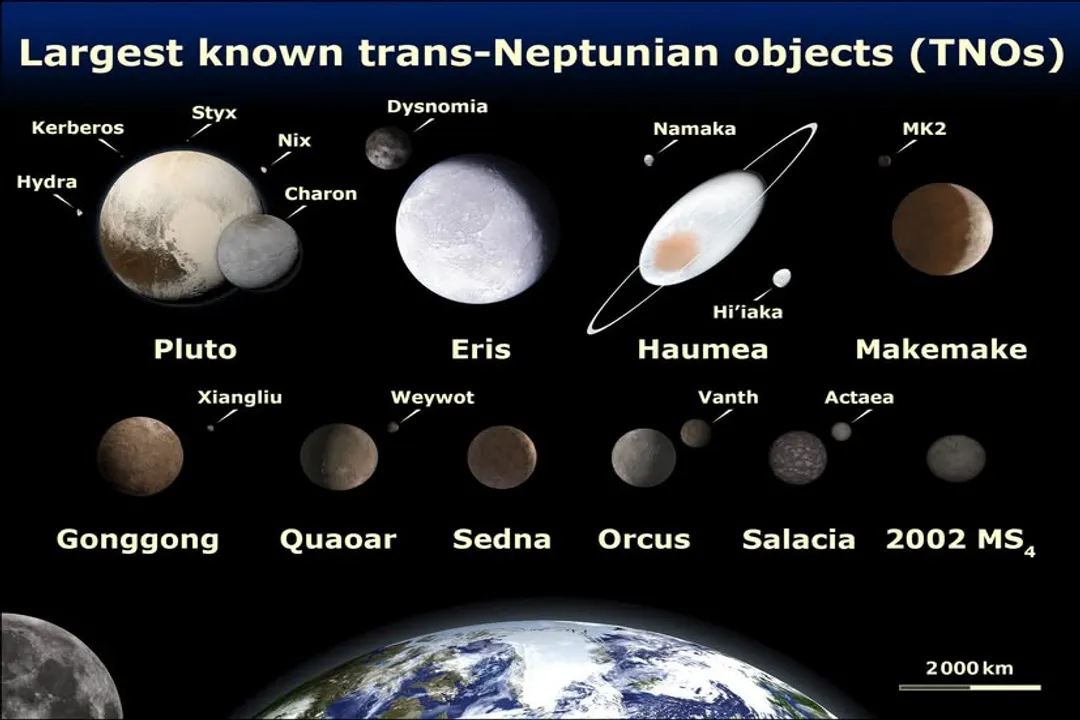
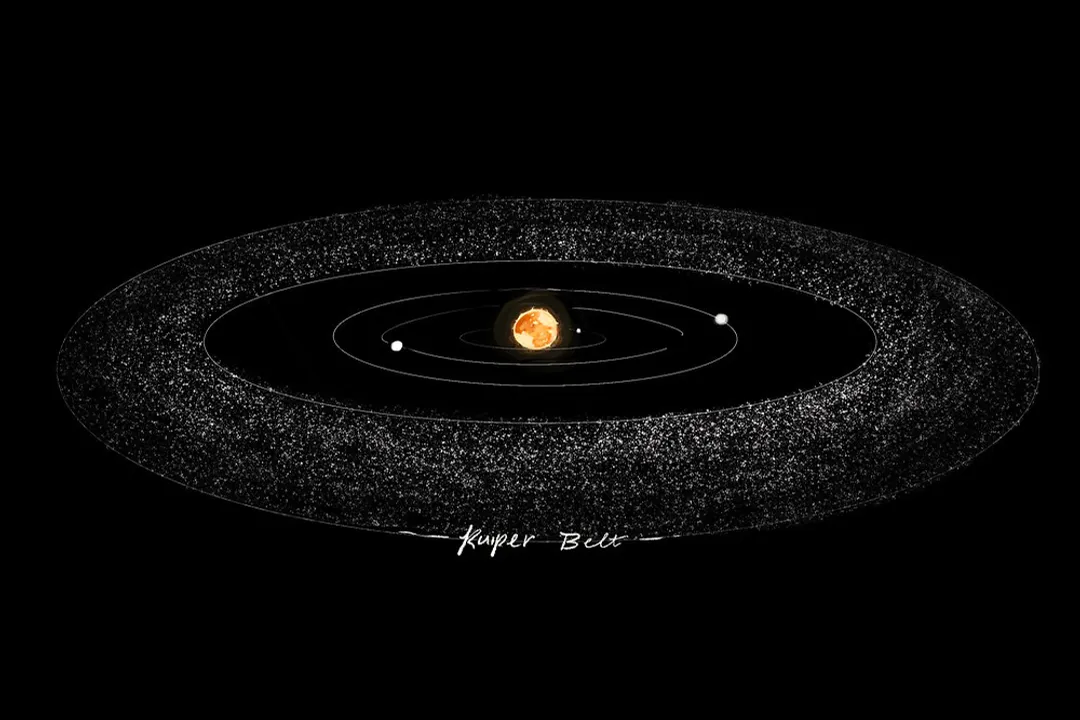
Far away from the warmth of the Sun, orbiting in the dark fringes of the solar system, lies a vast, icy frontier known as the Trans-Neptunian region. Objects found in this area, collectively called Trans-Neptunian Objects (TNOs), circle the Sun at distances greater than the orbit of Neptune. [4] These icy worlds range from small cometary bodies to significant, planet-like entities. Identifying which of these objects is the largest remains a topic of active scientific study, as the immense distances make precise measurements of size and mass difficult to obtain. [1]
# Defining TNOs
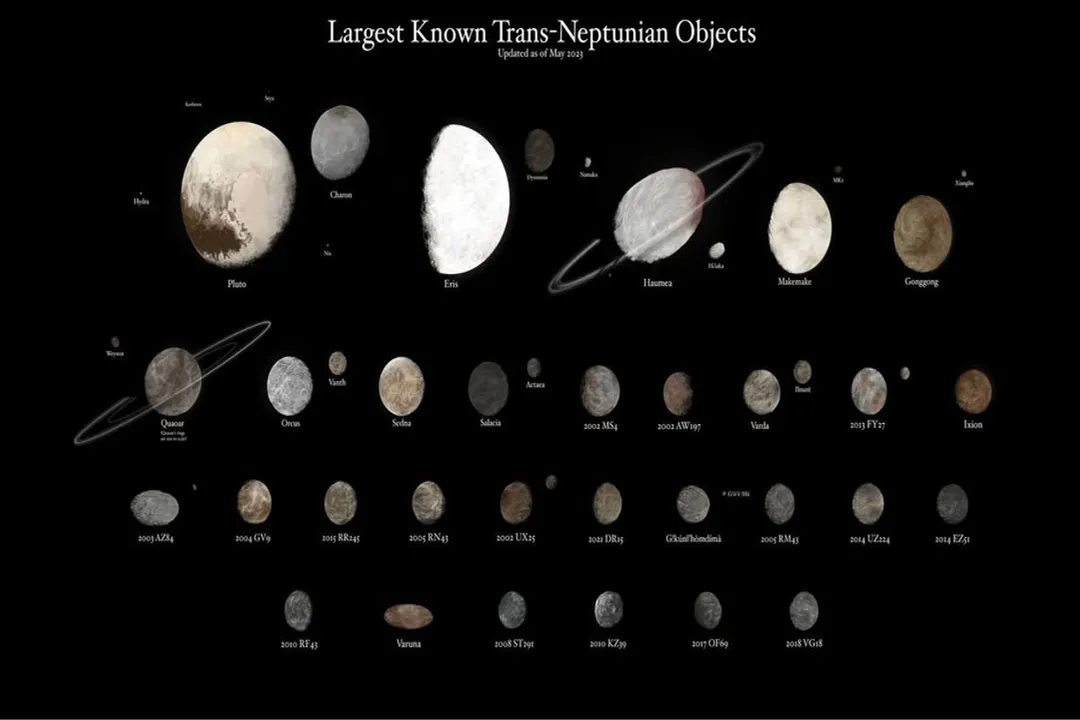
The term Trans-Neptunian Object encompasses a wide variety of bodies, including those in the Kuiper Belt, the scattered disc, and the inner Oort cloud. [7] These objects are essentially the remnants of the solar system’s formation, preserved in a deep freeze for billions of years. [4] Their composition is generally a mix of rock and ice, primarily water, methane, and ammonia ices. [9] Because they are so far away, they are extremely faint, making them difficult to detect without advanced telescopes and careful observational strategies. [6]
The classification of these bodies has changed significantly over the last two decades. As technology has improved, researchers have discovered hundreds of these objects, leading to a much clearer map of the outer solar system. [1] While many are small and irregularly shaped, a select few are large enough to be rounded by their own gravity, placing them in a category often associated with dwarf planets. [2]
# Leading Contenders
For years, the question of the largest TNO was relatively straightforward because it was simply Pluto. However, the discovery of Eris in 2005 complicated the conversation. [3] For a time, initial estimates suggested Eris was significantly larger than Pluto, which directly contributed to the reclassification of Pluto as a dwarf planet. [5]
Later data, particularly from the New Horizons mission flyby, provided more precise measurements for Pluto. [1] It turns out that while Eris is slightly more massive, Pluto has a larger diameter. [1] This distinction creates a nuance: if "largest" refers to diameter, Pluto takes the title. If "largest" refers to mass, Eris holds the crown. [1] This rivalry serves as a primary example of how our scientific understanding evolves as data improves.

# Size Comparisons

Determining the exact size of these distant objects is rarely a matter of direct measurement. Instead, astronomers must infer the size based on the object's brightness and its estimated albedo—a measure of how reflective its surface is. [2] If an object is dark, it might be large but appear dim. If it is bright and icy, a smaller object might appear quite large in a telescope. [8]
The following table provides a comparison of the most prominent objects in the Trans-Neptunian region, based on current astronomical consensus regarding their approximate physical characteristics. [1][2]
| Object | Estimated Diameter (km) | Primary Characteristics |
|---|---|---|
| Pluto | ~2,377 | Largest by diameter; massive atmosphere |
| Eris | ~2,326 | Most massive; highly reflective |
| Haumea | ~1,632 (mean) | Rapid rotation; elongated shape |
| Makemake | ~1,430 | Slow rotation; reddish appearance |
| Gonggong | ~1,230 | Red surface; slow orbital period |
| Quaoar | ~1,110 | Significant moon system |
| Sedna | ~995 | Extremely long, eccentric orbit |
| Orcus | ~910 | Orbital resonance with Neptune |
Note: Diameters are estimates based on occultation data and infrared observations, which can change as new measurements become available.
# Measurement Challenges
The primary difficulty in identifying the absolute largest TNO lies in the "albedo trap." Most objects in the outer solar system have surfaces that reflect light in unpredictable ways. [8] Some are coated in fresh, bright ices, while others are covered in "tholin"—complex organic compounds that result from radiation hitting simple ice, creating a dark, reddish crust. [7]
If an astronomer detects a new object, they first measure its brightness. To calculate the physical size, they must guess the albedo. A 50% error in the assumed albedo results in a 50% error in the calculated diameter. This is why, for many years, the estimated size of objects like Quaoar and Makemake fluctuated significantly. [3] Only through stellar occultation—watching the TNO pass in front of a distant star and measuring how long it blocks the light—can scientists pin down a precise size. [1]
# Density Nuance
One observation that is often overlooked is the relationship between mass and diameter, which defines density. Pluto and Eris are physically comparable, but they are not the same in composition. Eris is denser, which suggests it is made of a higher ratio of rock to ice compared to Pluto. [1]
This creates an interesting scenario for future planetary science. While Pluto remains the king of the Kuiper Belt by volume, Eris demonstrates that there can be a heavier, more compact class of TNOs that orbit further out in the scattered disc. Studying the density of these objects allows scientists to reconstruct the conditions of the protoplanetary disk—essentially acting as a forensic investigation into how the solar system was built. [7] The higher density of Eris implies it might have formed closer to the Sun and was later scattered outward by gravitational interactions with giant planets. [9]
# The Hunt Continues
The discovery of these objects has not ceased; it has accelerated. Surveys using ground-based telescopes and space observatories continue to identify smaller, fainter bodies. [6] There is a theoretical possibility that a "Planet Nine" or other large, undiscovered TNOs exist even further out, hiding in the dark. [5]
The scientific community maintains a rigorous standard for verifying these discoveries. An object is not simply added to the list of "largest" TNOs upon initial sighting. It requires follow-up observations over many years to establish its orbit, verify its brightness, and eventually determine its size. [1]
For the average observer, keeping track of these objects serves as a reminder that the solar system is much larger and more active than the eight main planets might suggest. We are currently in a golden age of outer solar system exploration, where even the most distant, icy specks of light are slowly being revealed as complex, world-sized bodies with their own geology, moons, and histories. [6][8]
Related Questions
#Citations
List of trans-Neptunian objects - Wikipedia
List of largest known TNOs (upwards of 100 kilometers)
The largest known trans-Neptunian objects posted by joosth3.
Trans-Neptunian objects: Facts and Information - Solar System
Largest known trans-Neptunian objects (TNOs) : r/space - Reddit
Largest discovery of trans-Neptunian objects released
The Kuiper Belt and Trans-Neptunian Objects - ScienceHolic
Trans-Neptunian object | Astronomy and Astrophysics - EBSCO