Is astronomy science hard?
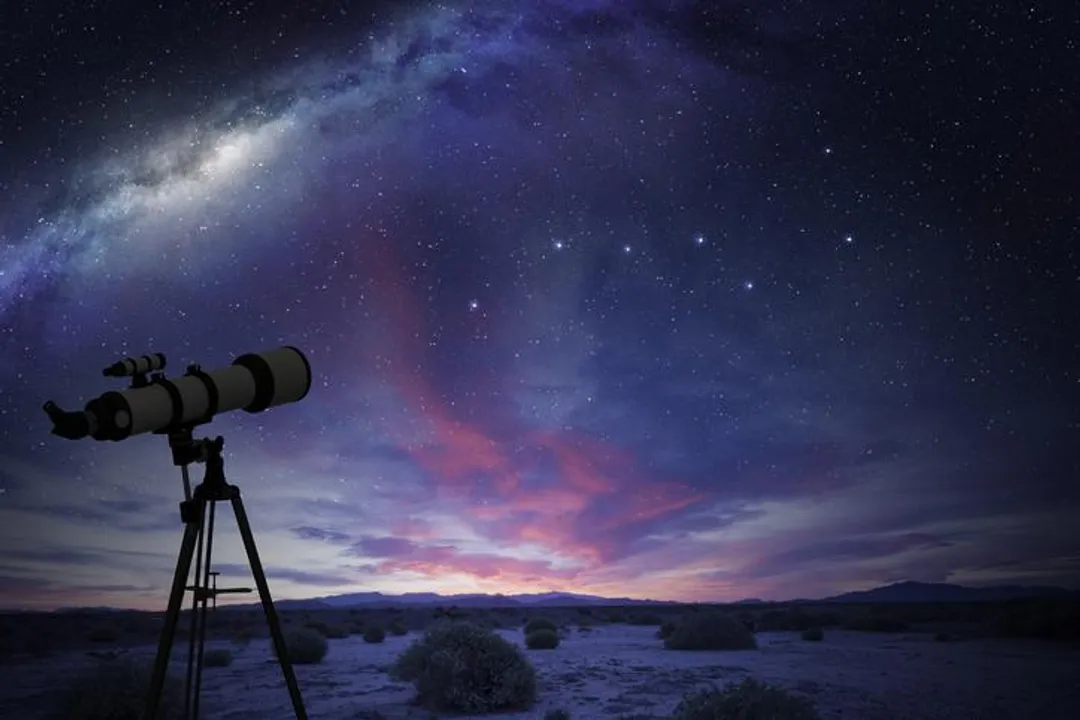
The allure of the cosmos—the glittering nebulae, the silent sweep of distant galaxies—often masks the academic reality required to study them professionally. Many people approach astronomy with the romantic notion of looking through a telescope, but the science itself demands rigorous analytical skills that can make the path to understanding feel steep. Whether astronomy is "hard" depends entirely on the context: are we talking about a single introductory college survey course, or the multi-year commitment to earning a research doctorate?[2][5]
# Survey Courses
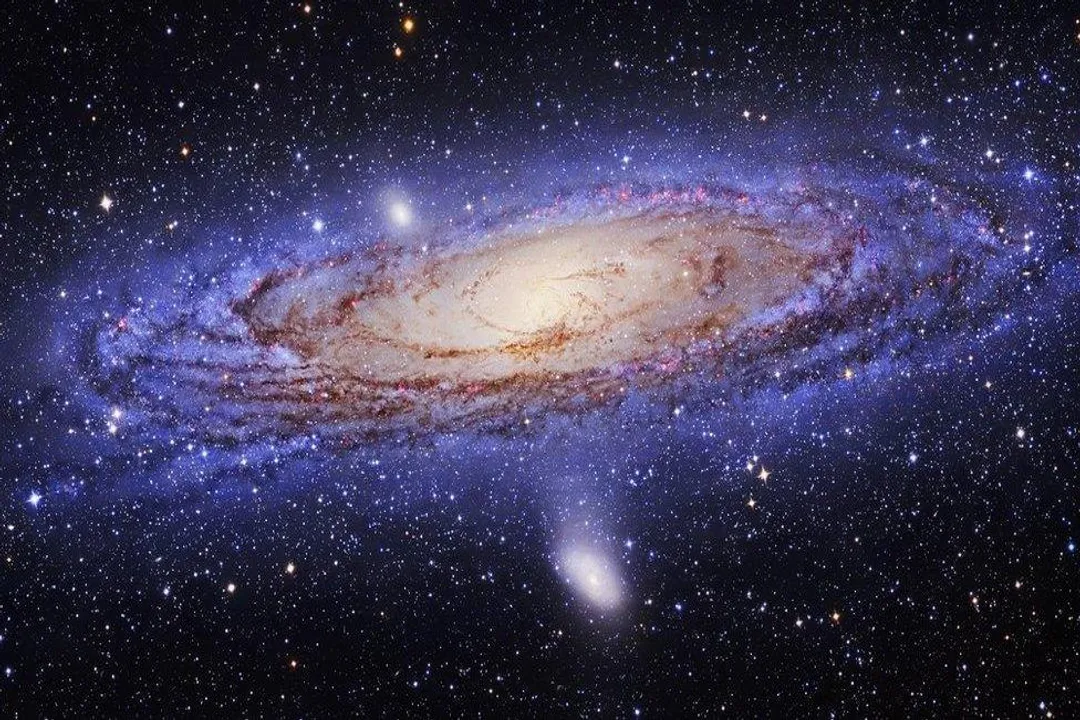
For the casual learner or the student fulfilling a general science elective, an introductory astronomy class can be a fascinating entry point into science. Some students perceive these foundational courses as being less mathematically intense than a standard introductory physics sequence. [7] In some cases, general astronomy might be considered easier than introductory physics, depending on how the material is presented by the instructor. [7][8] These courses often focus on the observable, covering topics like the solar system, stellar evolution over vast timescales, and basic observational techniques, which can be very accessible. [6]
However, even at this introductory level, difficulty is subjective and highly dependent on the curriculum design. If a general astronomy course is geared toward science majors, it may still require comfort with algebra and basic physics principles, as understanding luminosity, orbital mechanics, or spectral classification necessitates some quantitative skills. [8] For someone with no science background, even the descriptive elements can require significant memorization of terminology and concepts that are entirely counter-intuitive to everyday experience, such as the scale of light-years or the nature of spacetime. [2]
# Difficulty Benchmarks
It is useful to conceptualize the relative challenge by considering the required toolkit:
| Level | Primary Focus | Common Prerequisite Math | Perceived Difficulty Factor |
|---|---|---|---|
| Introductory Survey | Descriptive Sky Knowledge, Basic Concepts | Pre-Calculus/Algebra | Low to Moderate |
| Undergraduate Major | Orbital Mechanics, Thermodynamics, Optics | Calculus I & II, Differential Equations | High |
| Graduate Study | Data Analysis, Modeling, Observation Reduction | Advanced Multivariable Calculus, Linear Algebra | Very High |
When looking at course prerequisites, a student can quickly gauge the expected rigor. If a community college course lists only high school algebra as a prerequisite, the expectation should be descriptive astronomy; if it lists Calculus I, the content will quickly shift toward physics-based problem-solving. [6]
# Prerequisite Skills
For those intending to major in physics with an astronomy concentration, or pursue a dedicated astrophysics degree, the difficulty escalates sharply because the science itself is inseparable from its foundational mathematics and physics. [1] Astronomy is fundamentally applied physics observed at immense scales. [1]
The math requirements quickly move past introductory calculus. To truly analyze astronomical data, model physical phenomena like accretion disks, or understand general relativity, students must become proficient with multivariable calculus, differential equations, and linear algebra. [1][5] This quantitative hurdle often becomes the primary barrier for students who might otherwise be captivated by the subject matter.
Beyond mathematics, computational literacy is mandatory for modern astronomy. A successful undergraduate or postgraduate student will need to be comfortable with programming languages like or to handle the massive datasets generated by modern telescopes and simulations. [1][5] The difficulty here isn't just learning the syntax; it's learning to think algorithmically to solve complex physical problems that cannot be solved with pen and paper alone.

# Postgraduate Rigor
Earning a Master’s degree in astronomy, or proceeding to a Ph.D., moves the focus from learning established science to creating new scientific knowledge. This level of study is universally described as intensely challenging. [5] A Master's program, for instance, often requires a significant thesis or a research project that demands independent, novel work. [5]
The coursework at the graduate level delves deep into specialized areas like radiative processes, high-energy astrophysics, or cosmology, demanding a level of abstraction and detail far removed from the introductory material. Students are expected to be self-starters, capable of troubleshooting complex observational equipment or identifying flaws in theoretical models with minimal guidance. [5] The environment in these programs is often competitive, requiring consistent high performance to meet research milestones. [1]
If you are considering an advanced degree, the expectation is not just to know the answers but to be able to devise the methodology to find answers that no one has yet documented. This involves mastering both observational hardware and the theoretical underpinnings that predict what that hardware should see. [5]
# Career Pathways
The question of difficulty often circles back to career prospects. For those who complete the academic marathon, the job market presents its own set of challenges. Securing a permanent, tenured research or faculty position in astronomy is notoriously competitive. [1] Most academic research roles—the kind that involve operating telescopes or developing new theoretical models—require obtaining a Ph.D.. [1]
Even after the Ph.D., the path often involves several years of postdoctoral research positions (postdocs), which are temporary, requiring continuous relocation and reapplication. This extended period of intense research before achieving a stable position is a significant stressor that adds a practical layer of difficulty to the academic pursuit. [1] For many who love the science but cannot navigate the hyper-competitive academic track, alternative careers in data science, software engineering, or education—where the physics and quantitative skills are transferable—become the realistic endpoint.

# Discipline Comparison
When evaluating the difficulty, it helps to compare astronomy to its closest relative, physics. Introductory astronomy courses are sometimes perceived as easier because they often draw from broader physics concepts rather than requiring the deep, rigorous mathematical foundation demanded by, say, a classical mechanics or quantum physics course at the same level. [7] However, this perceived ease is misleading for a professional track. Astrophysics majors essentially take the upper-division physics sequence plus specialized astronomy courses. [1]
A student serious about astrophysics must master the same difficult mathematics and physics as a pure physicist, but then they also have to learn the specific observational techniques, instrumentation, and astrophysical modeling required for their field. [1] In this sense, the astrophysicist often ends up covering more specialized ground than a physics major who focuses solely on theoretical or particle physics, adding volume and breadth to the required expertise.
To manage this broad scope, a student should critically assess their own aptitudes early on. If the abstract manipulation of symbolic mathematics feels natural, the physics side will likely be manageable. If, however, the concepts are interesting but the required calculations cause significant friction, it is worth stopping to ask if one is better suited for a career in science communication or observational astronomy where the day-to-day work might rely more on instrumentation and image processing than on deriving new field equations. [2] Staying mindful of which aspect of the discipline sparks the most genuine curiosity—the calculation or the observation—can guide decisions before committing to the multi-year track.
#Videos
Is Astronomy A Hard Class? - Physics Frontier - YouTube
Related Questions
#Citations
Is pursuing a career in Astronomy as difficult as everyone makes it ...
Are astronomy classes hard? - Quora
Planning Your Education | American Astronomical Society
Is earning an astronomy degree hard? - Career Village
How Hard Is A Master's In Astronomy? - Spires Online Tutors
Would astronomy be a hard first community college class?
Is Astronomy A Hard Class? - Physics Frontier - YouTube
Is college Astronomy hard?
how hard is the astronomy class here? - Facebook