Is astronomy easy to learn?
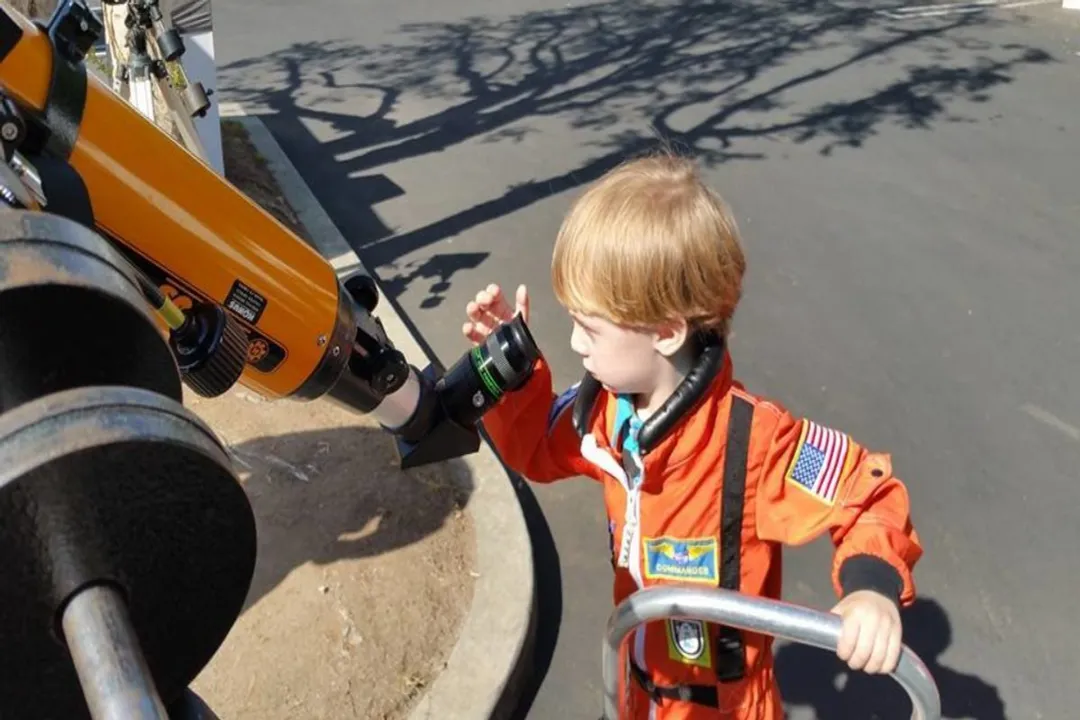
The wonder of the night sky has captivated humanity since prehistory, drawing us to identify patterns, tell stories, and map the movements above. This inherent sense of awe often leads to the next logical question: How hard is it to learn all that is out there? The answer is not a simple yes or no; it depends entirely on which cosmos you intend to study—the casual, magnificent view from your backyard, or the rigorous, mathematics-driven universe required for professional research.
To say astronomy is easy is to speak only of the surface layer, the sheer visual delight of peering at the Moon or spotting a bright planet. To say it is difficult ignores the fact that introductory courses are frequently taken by students from diverse, non-science backgrounds and are often perceived as manageable electives. But when the goal shifts from appreciation to understanding the physics that underpins the universe's operation, the climb becomes noticeably steeper.
# Casual Stargazing

For those whose main goal is simply to observe and appreciate the cosmos, learning astronomy is remarkably accessible. It is an activity suited for virtually everyone, regardless of age. You do not need a massive budget or specialized equipment to begin your exploration; your naked eye is the first and most fundamental tool.
Getting started effectively involves a few foundational steps. First, find your spot. While the darkest skies, rated Class 1 on the Bortle scale, offer the best view, even inner-city Class 9 skies hold observable objects. Next, orient yourself by learning the cardinal directions; just like the Sun, the Moon and planets generally rise in the east and set in the west. A handy trick for estimating angular distance is using your hand: an outstretched fist held at arm's length covers roughly 10 degrees of the sky—perfect for estimating when an object is reported to be a certain distance from another.
The progression of equipment typically follows:
- Naked Eye: Excellent for spotting the brightest planets (like Venus, Jupiter, Mars) and recognizable constellations.
- Smartphone Apps: Modern applications are invaluable for real-time navigation, identifying visible objects from your specific location, and often providing alerts for planetary visibility.
- Binoculars: The next step up, capable of revealing craters on the Moon and the brighter moons of Jupiter.
- Telescopes: While they offer stunning views of features like Saturn's rings, beginners are often advised to start small, prioritizing portability and ease of use over raw magnification.
Observing the Moon is often cited as the easiest starting point, but if you seek fainter deep-sky objects, planning is key. The best time for non-lunar viewing is during the new or crescent phases when the Moon's intense brightness does not wash out the view.
# Introductory Courses
When we transition to formal education, the perception of difficulty often depends on the track selected. Introductory astronomy classes designed for general education requirements (GER) are frequently viewed as less demanding than introductory physics or even other science courses like general chemistry. These general survey courses often aim to convey physical principles using the universe as a vehicle, focusing heavily on conceptual understanding rather than complex mathematical derivations. For a non-STEM student needing just one lab science credit, general astronomy is often considered both captivating and relatively straightforward to pass.
However, the prerequisite expectations can vary. While some college courses for non-majors have minimal math prerequisites, others expect students to apply mastered high school algebra to calculate things like gravitational forces or orbital data. A crucial distinction must be made between the general survey course and the astronomy course geared toward science majors. Students who accidentally enrolled in the latter often found the material "almost IMPOSSIBLE" if they lacked a strong math foundation, indicating that the path to an "easy A" is directly tied to the course's intended audience. Ultimately, student feedback suggests that personal interest is the single biggest factor; liking the subject makes even a heavy workload enjoyable, while disinterest turns any class into a struggle.
To succeed even in these introductory university settings, adopting good study habits is essential. Consistent, regular study sessions are far more effective than last-minute cramming—you cannot, as the saying goes, "learn the whole universe in one night". Forming study groups to discuss concepts and quiz each other can also help solidify the new vocabulary and ideas that come with any new scientific discipline.

# Professional Hurdles
The gap between an enjoyable elective and a career in professional astronomy is vast, defined primarily by mathematics and physics. Those who want to become research astronomers are not merely interested in the visual beauty; their daily challenge is to decipher the basic underlying physics that governs everything from stellar evolution to the structure of the universe itself.
Astronomy is, fundamentally, applied physics. Undergraduate preparation demands a rigorous foundation, typically requiring a major in physics or a joint major/minor in physics and astronomy. The coursework necessary to prepare for graduate school is extensive and mathematically intense, covering subjects such as:
- Electricity and Magnetism
- Thermodynamics
- Statistical Mechanics
- Quantum Theory
- Relativity
This level of study requires comfort with advanced mathematics like differential equations and linear algebra, often building on calculus sequences. While some observers suggest that specialization can later reduce the daily need for advanced math, mastering the basics is non-negotiable for entry into a graduate program, which is the standard requirement for most professional astronomy positions. If you struggle with higher-level math, it is not an insurmountable barrier, but it does demand a significant commitment to effort and often tutoring to keep pace with peers who may find those mathematical tools more intuitive.
# The Data Landscape
A common misconception is that modern astronomy involves spending one's life looking through large telescopes. While direct observation is vital, a significant portion of the professional astronomer's time is now dedicated to computation and data analysis. Supercomputers are employed to simulate galaxy collisions, model cosmic jets, and devise complex theoretical scenarios that cannot be tested in a terrestrial laboratory.
For many researchers, the reality of the job involves spending months analyzing mountains of numerical data and mathematical statistics. Furthermore, computer programming is now a major component of nearly all astronomical projects, whether theoretical or observational. Success in the field often means spending substantial time writing code to process datasets gathered by orbital observatories or massive ground-based instruments, rather than simply pointing an eyepiece at a nebula. This reality—the necessary focus on computation and the statistical analysis of light patterns—is what often surprises newcomers who were drawn in by the field's aesthetic appeal.
# Cultivating Expertise
For the dedicated self-learner or the aspiring undergraduate, overcoming the perceived difficulty hinges on effort and strategy. A useful way to frame this initial learning phase, particularly when self-guiding, is to understand that the required mathematics acts as a language for describing the universe, not the universe itself. While professional astrophysicists must master the grammar (calculus, differential equations), an enthusiast can gain deep insight by focusing on why the equations work and what they describe. For example, understanding the inverse-square law for light intensity or basic orbital mechanics—even using simple pre-calculus or algebra—will unlock immediate comprehension of concepts like stellar distances and planetary paths, which is immensely rewarding.
This process of gradual immersion is the secret to sustained engagement. Since the cosmos involves objects and processes entirely unfamiliar to terrestrial experience, the initial learning curve can feel like adapting to a new country with strange customs and vocabulary. Perseverance is critical; acknowledging that one might not grasp everything immediately, but committing to the required study hours, is the foundation of any science major. A surprisingly effective way to cement abstract knowledge is to try explaining it to someone else, which forces a deeper structural understanding than passive reading allows.
Another aspect to consider is the sheer conceptual leap required in the field. While a physics student might grapple with the math of a vibrating spring, an astronomy student must simultaneously process concepts spanning extreme scales: the quantum mechanics governing the fusion in a star's core and the general relativity dictating the behavior of a black hole near a galaxy's center. This dual requirement—mastering the very small (particle physics) to explain the very large (cosmology)—is perhaps the most intellectually challenging element of the discipline. It asks for a mind comfortable navigating immense differences in scale and physical laws simultaneously.
# The Final Measure
Is astronomy easy to learn? If your definition of learning involves charting familiar constellations, tracking satellite passes, or understanding the basic structure of our solar system through accessible apps and basic reading, then no, it is not difficult; it is a hobby that can bring profound peace and perspective.
If, however, learning means gaining the expertise to contribute original research—to mathematically model a quasar or interpret the spectral signature of an exoplanet's atmosphere—then it demands high rigor, advanced physics, and significant dedication through years of graduate school. The consensus among those who have pursued the academic path is clear: astronomy is challenging, but the satisfaction of solving those fundamental puzzles of the universe makes the effort worthwhile. The key to navigating either path successfully remains consistent engagement driven by genuine fascination with the subject matter.
Related Questions
#Citations
Is pursuing a career in Astronomy as difficult as everyone makes it ...
Is General Astronomy harder than Introductory Physics?
Planning Your Education | American Astronomical Society
Astronomy for Beginners | The Planetary Society
Would astronomy be a hard first community college class?
Easy A Courses for Science Majors: Astronomy vs. Intro to Psychology
Studying the Stars: Self-Learning Astronomy | by Andrewgarner
How to Study for an Introductory Astronomy Class - Lumen Learning