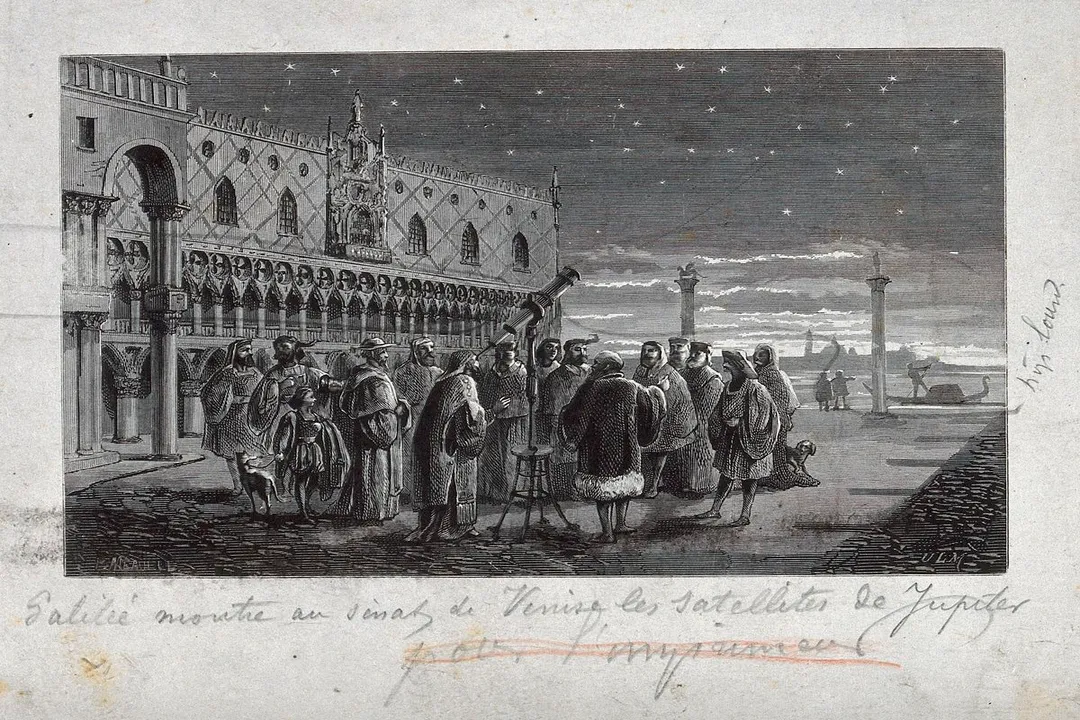
Why is the relative error in predicting Jupiter's position next month potentially smaller than Proxima Centauri distance uncertainty?
Newtonian mechanics provides a mature model for solar system mechanics at that scale
The accuracy achieved in astronomy is relative to the scale and the physical mechanism being observed. For objects within our solar system, like Jupiter, the Newtonian mechanics model is extremely mature, built upon centuries of highly refined data compilation. This allows predictions of its future trajectory relative to the Sun to have an error measured perhaps only in kilometers, representing a very small relative error given the scale. Conversely, measuring the distance to even the nearest star, Proxima Centauri, using trigonometric parallax involves inherent geometric limitations, typically resulting in an uncertainty error in the range of a few percent.