What specific declination value ($\delta$) marks the celestial equator?
Answer
Zero degrees ($0^ $).
The celestial equator functions as the fundamental zero point for angular measurement in the celestial coordinate system. Specifically, it defines the location in the sky where the angular distance measured perpendicular to the plane of the celestial equator, known as declination ($\delta$), equals zero degrees ($0^ $). Any object observed above this line has a positive declination, and any object below has a negative declination. This fixed zero point is crucial for observers worldwide as it provides the baseline against which all other celestial altitudes or distances above or below the celestial plane are quantified.
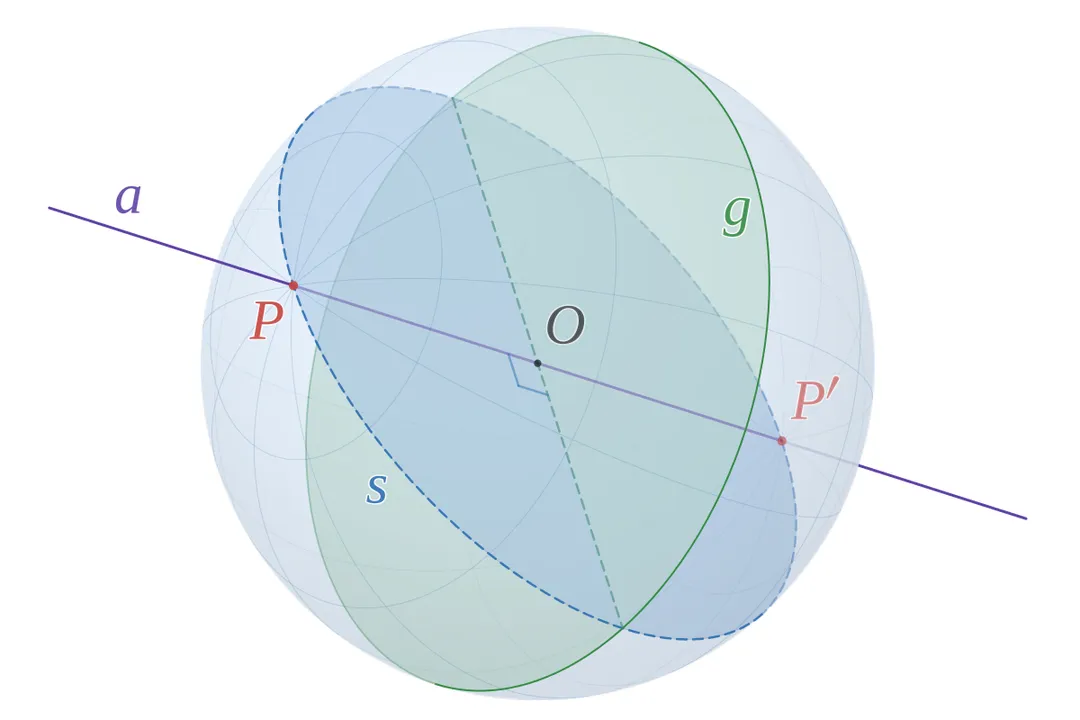
#Videos
What Are Great Circles On A Sphere? - Physics Frontier - YouTube
Related Questions
What geometry defines a great circle on a sphere's surface?Which specific terrestrial line is cited as a perfect example of a great circle?What critical function does a great circle serve for distance planning?What is the primary function of projecting the cosmos onto the celestial sphere?What specific physical feature is the celestial equator a direct projection of?What specific declination value ($\delta$) marks the celestial equator?For an observer standing on the Earth's physical equator, where does the celestial equator appear?What apparent path does the ecliptic great circle represent on the celestial sphere?What geometric difference defines the celestial equator versus the ecliptic?What are the two intersection points between the celestial equator and the ecliptic called?