How does the absolute magnitude scale work for the brightest stars on the vertical axis?
They correspond to lower or negative absolute magnitude numbers
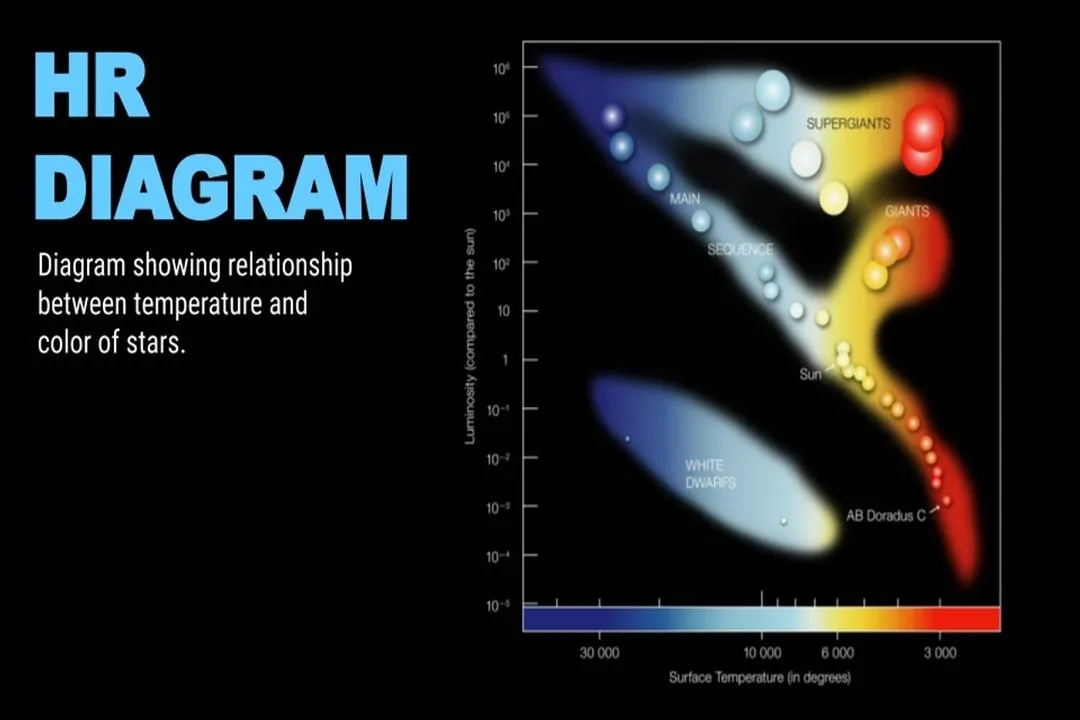
The vertical axis of the H-R diagram, representing luminosity via absolute magnitude, employs a counterintuitive numerical scale common in astronomy for brightness measurements. In this system, the brightest objects—those with the greatest intrinsic energy output—are assigned the lowest numerical values, often resulting in negative numbers. For instance, a star with an absolute magnitude of -5 is vastly brighter than a star with an absolute magnitude of +5. The dimmest stars are found near the bottom, associated with higher positive magnitude numbers. This ranking system treats lower numbers as superior or 'better' in terms of luminosity, meaning the scale decreases numerically as one moves upward toward the most energetic stars.
#Videos
HR Diagram Explained - Star Color, Temperature and Luminosity