What is the full operational capability of Galileo?
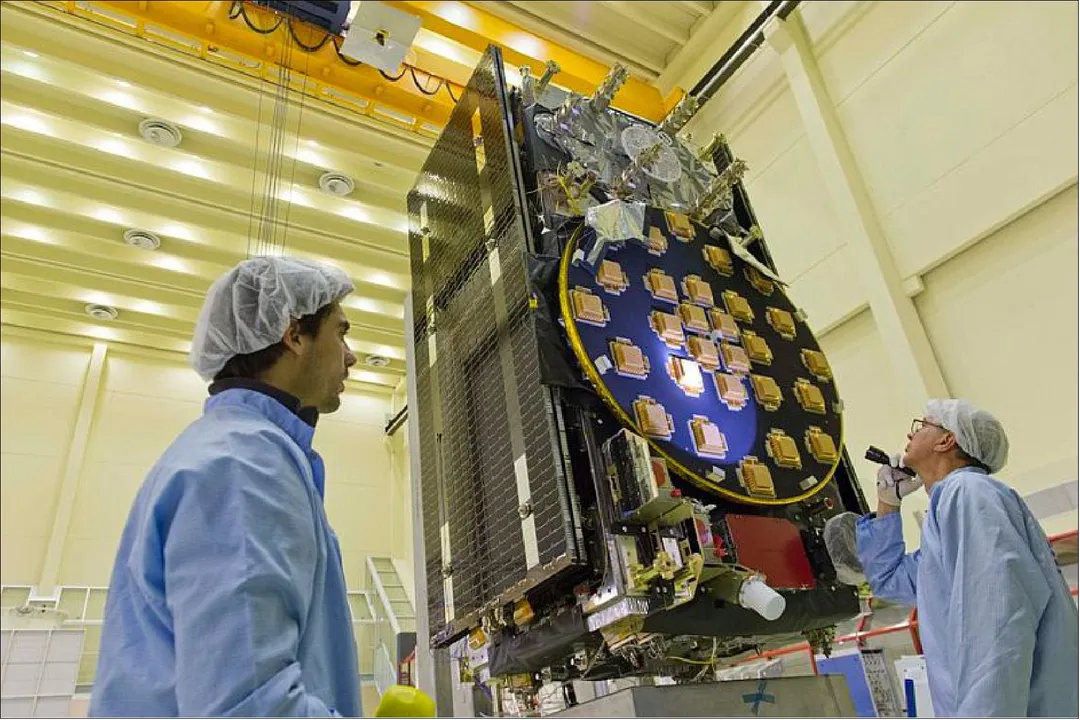
The European Union’s Galileo satellite navigation system represents a significant step in global Positioning, Navigation, and Timing (PNT) infrastructure, moving steadily toward its Full Operational Capability (FOC) status. [5] Achieving FOC signifies that the system has reached a level of maturity where the constellation is sufficiently populated and the ground segment is fully established to guarantee the defined service levels under nominal conditions. [5] This capability is not a single switch, but rather the establishment of a fully functional, independent global navigation satellite system (GNSS) offering precise positioning data worldwide. [5]
# Initial Service Levels
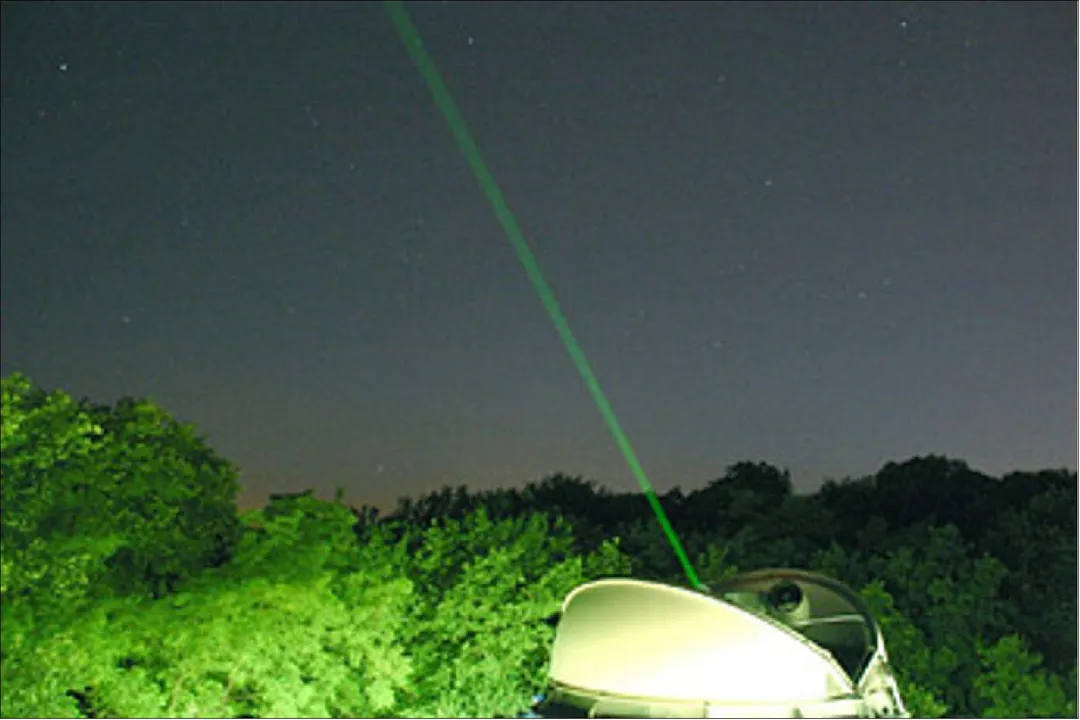
Galileo’s operational capacity is defined by the services it delivers to various user groups, ranging from the general public to governmental entities requiring protected signals. [1] The core of the initial operational set includes three distinct services.
The Open Service (OS) is available free of charge for mass-market applications, such as location-based services on smartphones or in-car navigation systems. [1][5] Users receive signals transmitted on two frequencies, offering two distinct positioning signals. [1] This service is key to demonstrating the system’s global reach and utility for everyday life. [5]
For government authorities requiring assured availability and integrity, the Public Regulated Service (PRS) is available. [1] This signal is encrypted and specifically designed to be highly resilient against jamming and spoofing attempts, making it suitable for sensitive governmental applications, critical infrastructure, and emergency responders. [1][5] A point of operational distinction here is the clear separation of access: the PRS is intentionally restricted, contrasting sharply with the freely available OS signals. [1] This dual-access structure, offering both mass-market utility and state-level security, is a fundamental characteristic of Galileo's design philosophy.
The third service contributing to the initial FOC declaration is the Search and Rescue (SAR) service, also known as the Return Link Service (RLS). [1] Galileo operates as a return-link service, meaning that once an emergency beacon is activated, the system can send an acknowledgement signal back to the beacon, confirming that the alert has been received by the rescue coordination centers. [1][5] This feature distinguishes it from older systems that only relay the distress signal, providing crucial peace of mind to the person in distress. [1]
# Control Segment Readiness

The operational capability of any space-based system hinges as much on the infrastructure on Earth as it does on the satellites orbiting overhead. [4][9] For Galileo to fully execute its mission, the ground control segment must be fully upgraded and capable of supporting the entire constellation. [9] Recently, significant effort has focused on ensuring the Ground Control Segment (GCS) is ready to manage the constellation at its intended operational size and complexity. [4][9]
The GCS is responsible for monitoring the health of the satellites, uploading navigation data, and managing the clock offsets and orbital parameters necessary for accurate positioning solutions. [4] When the system reaches FOC, the GCS must be capable of handling the full complement of operational satellites and processing the data required to maintain the high performance expected from the navigation services. [9] Successfully upgrading this segment represents a major milestone, confirming that the infrastructure required to manage the growing constellation and maintain the promised service performance is in place. [4] This readiness across the ground segment is inseparable from the declaration of Full Operational Capability. [9]
# High Accuracy

Beyond the standard positioning accuracy offered by the Open Service, Galileo’s operational envelope includes a more precise offering: the High Accuracy Service (HAS). [3] The HAS is designed to provide positioning accuracy significantly better than what is achieved with standard GNSS signals alone, delivering horizontal accuracy in the decimeter range for users equipped with the right receivers. [3]
This service is transmitted through the Galileo navigation message, meaning it does not require separate ground infrastructure or subscriptions, making it a value-added component of the standard service package. [3] The HAS signal is broadcast on the E6 frequency band. [3] Importantly, the HAS signal structure is designed to be broadcast globally, meaning its high-accuracy corrections are available even outside the immediate visibility of the Galileo constellation. [3] This global availability, supported by Galileo's ground stations, extends the operational reach of the high-accuracy corrections to regions where direct satellite visibility might be limited, providing a consistent, high-grade correction service that surpasses the immediate coverage footprint of the satellites themselves. [3]
When considering the practical application of these services, one can observe an interesting pattern: the Open Service is generally accurate to within a few meters, while the HAS aims for sub-meter to decimeter accuracy. [3] For users in autonomous driving or precision agriculture, the operational jump from OS to HAS represents a shift from "where am I accurately enough" to "where exactly is this specific point on the ground," requiring receivers capable of processing the specific HAS data streams. [3]
# Future Evolutions

The definition of Galileo’s operational capability is inherently dynamic, as the system is planned to evolve significantly beyond the initial FOC deployment. [2] The current operational constellation, while functional, is set to be augmented by new generations of satellites designed to enhance performance, robustness, and service offering. [2]
The evolution roadmap focuses on improving performance, particularly in challenging environments, and expanding the services available. [2] Key areas of planned improvement include enhancing the signal quality and robustness of the existing services. [6] For instance, future satellites are expected to carry improved hardware, such as higher-power transmitters, which will bolster signal strength and resilience against interference, a critical factor as the system matures and faces increasing signals density in the sky. [2]
A notable aspect of the coming capabilities involves advancements in time synchronization and the integration of inter-satellite links (ISL). [2] ISL technology would allow Galileo satellites to communicate directly with each other, reducing the reliance on constant, real-time updates from the ground control segment for orbit and clock corrections. [2] This direct satellite-to-satellite communication capability is a significant architectural step, promising increased autonomy and faster service restoration after anomalies, thereby setting a new, higher standard for operational resilience compared to the initial FOC configuration. [2] Furthermore, next-generation spacecraft are slated to offer new services, potentially including advanced secure communication channels for specific users. [6]
The transition to the next phase, often termed Galileo Second Generation (G2G), signifies that the initial FOC baseline is merely the starting point for the system’s full potential. [2] This forward-looking approach ensures that the operational capability remains competitive and aligned with technological advancements in the PNT domain. [6]

# Orbital Assets
The physical foundation of Galileo's operational capability rests upon its constellation of satellites. [5] The system is designed around a constellation of 30 satellites in medium Earth orbit (MEO), comprising 24 operational satellites and six active in-orbit spares. [5] Achieving this configuration is what allows the system to provide continuous global coverage. [5]
The process of building and launching these assets is ongoing, ensuring the necessary redundancy and replacement capacity are maintained. [8] The delivery and launch of further navigation satellites, often manufactured by European entities like OHB, are essential steps in populating the constellation to meet the full FOC requirements and maintain service continuity. [8] Each launch adds to the operational capacity, replacing older units or bringing the total number of active on-orbit spacecraft to the target level necessary for guaranteed service provision across the globe. [5][8] The successful integration of these new units, built to the current generation's specifications, directly translates into the stability and accuracy of the services being delivered today. [8]
The placement and management of these satellites directly impact the availability component of the operational capability. A fully operational system must ensure a minimum number of satellites are visible to a user receiver at any point on Earth, regardless of time of day or weather conditions. [5] The architecture ensures that even with the planned service level, the system maintains the positional accuracy and integrity checks necessary for users relying on precise location data. [1]
# Operational Consistency
The true measure of Full Operational Capability lies in consistency rather than just feature availability. [5] An FOC system is expected to deliver its promised performance metrics—accuracy, integrity, availability, and continuity—reliably across its entire coverage area, day in and day out. [1][5] This reliability is achieved through rigorous monitoring and maintenance performed by the ground infrastructure. [4]
For a user relying on the system, the operational consistency means that the reported position uncertainty remains within defined bounds whether they are navigating in a dense urban canyon or crossing an open ocean. [1] This is sustained by continuous orbit determination and precise time synchronization, managed by the ground segment connecting to the space segment. [4] The continuous cycle of monitoring, calculation, and uploading corrections ensures that the navigation messages being broadcast are as accurate as the system design allows. [9]
For example, while the High Accuracy Service provides exceptional positional data, its operational value is only fully realized if the signal carrying the correction data is continuously available, even if the user is receiving the signal from a lower elevation angle satellite. [3] The FOC status confirms that the system architecture is designed to manage these variables across the entire constellation to maintain that expected service envelope. [5] The move towards the next generation, with its emphasis on autonomous satellite-to-satellite links, aims to improve this consistency further by buffering the system against transient ground segment issues, suggesting that the "full" capability is a moving target defined by decreasing operational risk. [2]
In summary, Galileo’s full operational capability is a complex layering of available services—Open, PRS, and SAR—supported by a proven ground control segment, underpinned by a requisite number of functional satellites, and characterized by the consistent delivery of defined performance levels globally. [1][5] It signifies the successful transition from a testing phase to a mature, independent provider of global PNT services, with continuous evolution planned to expand the depth and resilience of that operational envelope. [2][6]
#Videos
Galileo: en route to full operational capability - YouTube
Related Questions
#Citations
Galileo FOC (Full Operational Capability) - eoPortal
Galileo Future and Evolutions - Navipedia - GSSC
Galileo High Accuracy Service (HAS) - GSC-europa.eu
Galileo Ground Control Segment ready for Full Operational Capability
Galileo (satellite navigation) - Wikipedia
Galileo: An exciting road ahead toward new capabilities - GPS World
Galileo: en route to full operational capability - YouTube
Launch of two further Galileo navigation satellites "made by OHB"
Galileo ground control segment upgraded and ready for full ...