Planetary Formation articles - Page: 2
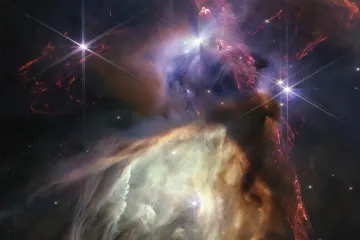
What gas makes up approximately three-quarters of the mass of molecular clouds?
What physical state must molecular clouds typically maintain to allow gravity to overcome internal pressure?
What is the fundamental mechanism responsible for the birth of star-forming clouds?
What is the primary role of microscopic dust grains within a molecular cloud?
What term describes the minimum mass a cloud requires to collapse under its own gravity at a given temperature and density?
What force exerts pressure that specifically resists compression across magnetic field lines during cloud collapse?
What specific process allows the majority component of gas (neutral particles) to decouple from magnetic field lines, thus enabling collapse to proceed?
What process describes the large cloud breaking down into smaller, dense, gravitationally bound clumps or cores?
What is the typical timescale for the collapse of a sufficiently dense core once fragmentation has occurred?
What is the object called that forms after a core becomes gravitationally dominant but has not yet initiated stable core fusion?
What must occur internally for a protostar to officially achieve the status of a main-sequence star?
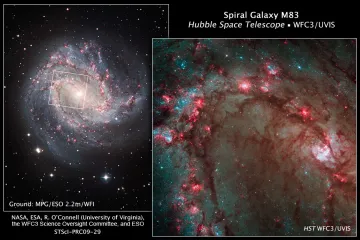
What is the fundamental raw material required for a galaxy to manufacture new stars?
What two opposing forces are fundamentally engaged in a tug-of-war governing the star formation rate?
What concept dictates the minimum mass and size a gas cloud must possess to overcome pressure and begin gravitational collapse?
What dictates the *efficiency* of turning supplied gas into stars at the scale of individual Giant Molecular Clouds (GMCs)?
How does turbulence simultaneously affect star formation within the interstellar medium?
When a galaxy moves into a dense cluster, what mechanism physically removes its cold gas reservoir, leading to quenching?
Compared to smaller, actively growing galaxies, what trend is observed for more massive galaxies regarding their star formation rate?
How do supernovae primarily act as a negative feedback mechanism on star formation?
What role do metals (elements heavier than hydrogen and helium) play in the star formation process?
What empirical law relates the observed surface density of star formation ($\Sigma_{SFR}$) to the surface density of cold gas ($\Sigma_{gas}$) in a galaxy disk?
PreviousPage 2 of 2