What is an example of terraforming?
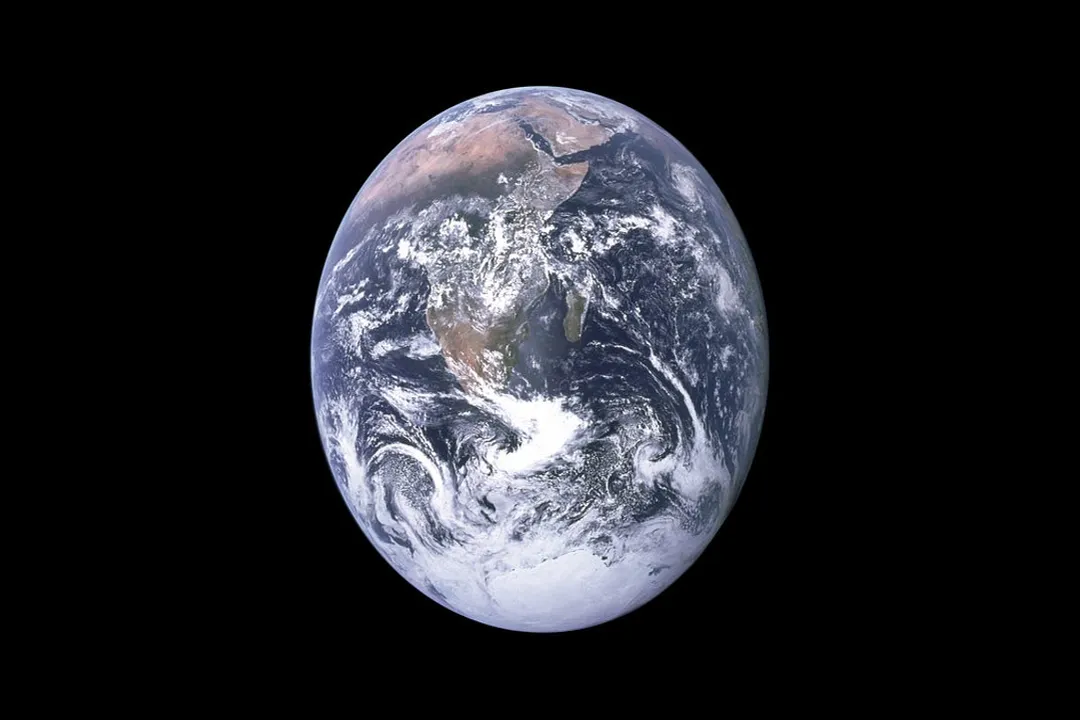
Terraforming is the hypothetical process of deliberately modifying a planetary body to make it habitable for Earth-like life. [1][8] It involves changing the physical and chemical properties of an environment—such as atmosphere, temperature, and surface ecology—to support liquid water and breathable air. [6] While this concept often appears in science fiction, it remains a serious subject within planetary science and engineering, serving as a primary target for discussions on long-term human survival beyond our home planet. [3]
The most cited example of potential terraforming involves Mars. Because Mars is relatively close to Earth, shares a similar day-night cycle, and contains frozen water, it is frequently viewed as the most accessible candidate for transformation. [8][9] However, changing a planet the size of a world requires massive inputs of energy and time, pushing the boundaries of what current technology can achieve. [2][6]
# Mars Example
Mars presents the clearest case study for terraforming because it sits within the Sun's habitable zone and has enough gravity to retain a significant atmosphere, should one be manufactured. [9] The primary challenge on Mars is the atmosphere, which is about 100 times thinner than Earth’s and composed mostly of carbon dioxide. [9] Without a thicker atmosphere, liquid water cannot exist on the surface; it either freezes or boils away depending on the pressure and temperature. [8]
To terraform Mars, engineers suggest a multi-stage approach. First, the planet needs to be warmed. By releasing greenhouse gases—or by thickening the existing atmosphere—the surface temperature could rise enough to melt the polar ice caps, which contain large reservoirs of frozen carbon dioxide and water. [8][9] As these caps melt, the release of trapped gases would create a positive feedback loop, further thickening the atmosphere and increasing surface pressure.
Once the atmosphere is thick enough to prevent liquid water from evaporating immediately, biological organisms could be introduced. [1][8] Photosynthetic microbes or algae would be the first step, working to convert the carbon dioxide atmosphere into oxygen over centuries. [1][3] This process requires immense patience, as the timeline for such a project would span hundreds or even thousands of years, far beyond the scope of a single human generation. [3]
# Venus Scenario
Venus offers a striking contrast to Mars. While Mars is too cold and thin, Venus is far too hot and dense, with surface temperatures hot enough to melt lead and atmospheric pressure equivalent to being deep underwater on Earth. [9] Despite these conditions, some scientists argue that Venus might actually be easier to terraform than Mars in specific ways, though the engineering requirements are vastly different. [4][9]
Instead of warming the planet, the goal on Venus would be cooling. Proposals include constructing giant sunshades in orbit to block sunlight, effectively cooling the planet enough for the surface gases to condense. [9] Another approach involves "cloud cities." Because the upper atmosphere of Venus has temperatures and pressures similar to Earth at sea level, humans could theoretically live in floating colonies, essentially terraforming the "sky" rather than the surface. [9] This avoids the need to cool the entire, massive surface area of the planet, which is a daunting task.
| Feature | Mars | Venus |
|---|---|---|
| Primary Goal | Increase temperature/pressure | Decrease temperature/pressure |
| Atmospheric Density | Too thin | Too thick |
| Gravity | ~38% of Earth | ~90% of Earth |
| Main Hurdle | Magnetic field/solar wind | Crushing surface pressure |
This comparison highlights that terraforming is not a one-size-fits-all process. The strategy depends entirely on the specific planetary conditions encountered. [6] While Mars requires "building up," Venus requires "tearing down."
# Earth Applications
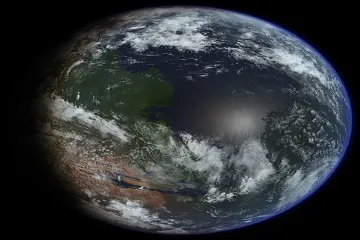
Terraforming is often discussed in the context of other planets, but the underlying principles apply to our own world. Some experts argue that large-scale environmental management on Earth—geoengineering—is a localized, immediate form of terraforming. [7] When humans reforest massive areas, capture carbon at an industrial scale, or alter land use to stabilize local climates, they are performing planetary engineering. [7]
Unlike interplanetary terraforming, which seeks to create a new environment, terrestrial geoengineering focuses on preservation and restoration. The techniques overlap, however. The study of how to create an atmosphere on Mars provides insights into how we might mitigate greenhouse gases on Earth. [7] By understanding the delicate balance of planetary chemistry on other worlds, researchers gain clarity on the fragility of our own biosphere. [5]
# Engineering Constraints
The physical hurdles for large-scale terraforming remain significant. One of the most critical issues is the lack of a magnetosphere on Mars. [2] Earth possesses a magnetic field that shields the atmosphere from being stripped away by the solar wind. [9] Mars lost its magnetic field billions of years ago, which is likely why its atmosphere is so thin today. Even if we artificially thickened the atmosphere, the solar wind would gradually blow it away again unless we could restart the planet's magnetic dynamo or build a massive artificial shield at the L1 Lagrange point. [9]
Another constraint is the availability of resources. Transforming a planet requires moving massive amounts of material. Bringing water to Mars, if it is not abundant enough in the poles, would require redirection of icy comets or asteroids. [3] This necessitates space-faring logistics beyond current capabilities, including the ability to mine asteroids and transport payloads across the solar system. [3]
# Ethical Debates
Beyond the technical challenges, terraforming raises profound ethical questions. If we discover microbial life on Mars, do we have the right to alter the planet, potentially destroying native ecosystems to make room for human life?[1] This is a recurring theme in the discourse surrounding space exploration. Critics argue that we should treat other planets as wilderness to be preserved rather than as resources to be transformed. [1]
Proponents, however, argue that life itself is an expansionary force. They suggest that spreading life to other dead worlds is a moral imperative, ensuring the survival of consciousness and biodiversity should something happen to Earth. [3] This creates a tension between the preservation of "pristine" environments and the desire to create new homes for humanity.
# Analytical Perspective
When analyzing the feasibility of these projects, it becomes clear that we are currently in the "theory" stage, not the "action" stage. To bridge this gap, focus has shifted toward precursor technologies. For example, robotic missions that demonstrate the ability to extract oxygen from the Martian atmosphere are currently in operation, serving as the first, tiny steps toward larger-scale atmospheric modification. [5]
Another insight involves time dilation and resource management. A common mistake in speculative articles is assuming terraforming happens in a single phase. Realistically, it would likely occur in a staggered, multi-generational sequence:
- Surveying: Identifying resource deposits (water, ice, minerals).
- Robotic Modification: Automating the release of gases or building solar shields.
- Introduction of Extremophiles: Using genetically engineered bacteria to alter soil chemistry.
- Biological Succession: Introducing plants to create a self-sustaining cycle.
This sequence suggests that the barrier to entry is not just rocket fuel, but the biological engineering required to survive in a partially terraformed environment. We cannot simply "go there"; we have to modify the environment to meet us, or modify ourselves to meet the environment.
# Summary
Terraforming remains a concept that bridges the gap between science and engineering. While the examples of Mars and Venus illustrate the physical possibilities of changing a planet's climate, the practical application of such feats remains distant. Whether the focus is on thickening the thin air of Mars, shading the surface of Venus, or managing the climate of Earth, the core mechanism remains the same: manipulating the chemical and physical inputs of a planetary system to favor specific biological outcomes.
The effort required to change a planet reminds us of the value of our current environment. While space offers the potential for new worlds, the engineering requirements demonstrate just how finely tuned Earth is for life. Each hurdle encountered in planetary engineering—from the lack of magnetic fields to the massive energy needed for atmospheric changes—highlights that keeping our current world habitable is the most efficient form of terraforming we have available.
#Videos
Early Terraforming: The First Steps in Planetary Transformation
Related Questions
#Citations
Terraforming - Wikipedia
What are some examples of "terraforming" we could do with today's ...
NSS Roadmap to Space Settlement Milestone 29: Terraforming and ...
Early Terraforming: The First Steps in Planetary Transformation
Terraforming. Can we really live on other planets? - Iberdrola
Terraforming | Engineering | Research Starters - EBSCO
Terraforming Earth - by Graham Lau - The Cosmobiologist
Terraforming Wiki | Fandom
Top 4 candidates in our solar system for terraforming - Big Think