main-sequence articles - Page: 2
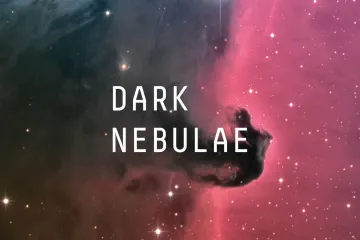
What does the general classification term 'nebula' simply mean?
What process primarily causes an emission nebula to produce visible light?
What type of stars are typically found residing in the vicinity of emission nebulae?
What specific spectral line often results in the characteristic deep red glow seen in hydrogen-rich emission nebulae?
How does a dark nebula primarily achieve its visual classification?
What is the typical composition of a dark nebula according to the text?
Which contrast best summarizes the core distinction between an emission nebula and a dark nebula?
What visual feature often indicates the presence of a reflection nebula, distinguishing it from the other two types?
If an object's darkness is proportional to the apparent density of the dust cloud, what type of nebula is being observed?
How does the application of an $\text{H}\alpha$ narrowband filter affect the visibility of a dark nebula?
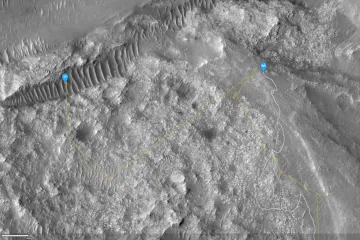
What is the central question driving the current generation of Mars rovers like Perseverance?
Why was Jezero Crater selected as the landing site for Perseverance?
How does the primary objective of Perseverance differ from the established findings of Curiosity?
What do instruments like SHERLOC and PIXL aboard Perseverance primarily aim to analyze?
What is the main scientific reason for prioritizing the return of samples to Earth labs?
What is the key technological function demonstrated by the MOXIE instrument?
What specific capability did Terrain-Relative Navigation (TRN) provide during the mission?
What role does the strategic depositing of sterilized sample tubes on the surface serve for the Sample Return campaign?
How did the historical focus of Spirit and Opportunity differ from that of Curiosity?
What crucial demonstration did the Ingenuity Mars Helicopter provide for future exploration?
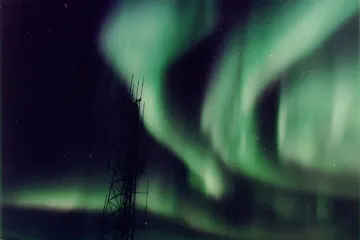
What is the ultimate driver causing the stunning light displays near Earth's poles?
What charged particles primarily constitute the solar wind ejected from the Sun?
What structure forms a protective bubble around Earth, deflecting the majority of incoming solar wind particles?
What feature of the magnetosphere guides solar wind particles toward the polar regions?
Which two gases are primarily responsible for generating the visible light when struck by solar particles?
When an excited atmospheric atom relaxes, what particle is emitted to create visible light?
What is the most common auroral color observed by the human eye, and which gas is responsible for it?
What is the typical altitude range, in miles, where auroral collisions occur?
During very active solar storms, what color light is usually observed resulting from the excitation of nitrogen molecules?
How do the auroral ovals generally behave during periods of low solar activity?
What physical requirement must an oxygen atom meet at higher altitudes to produce the red auroral color?
PreviousPage 2 of 2