What is Florida's Death Beach?
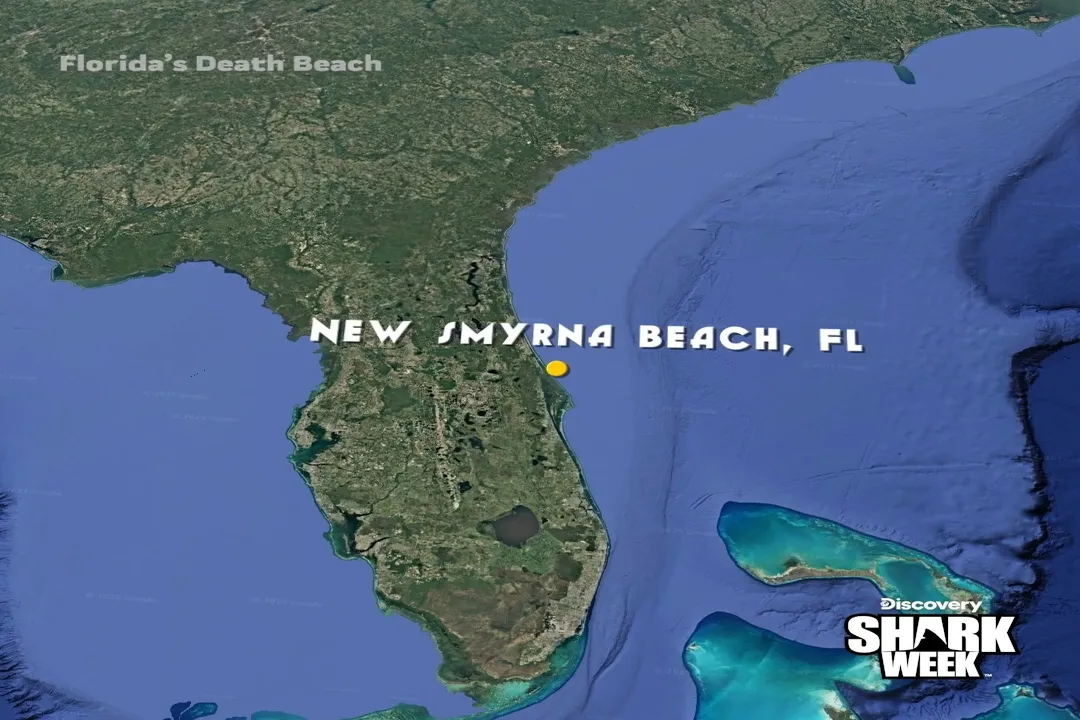
Florida’s Death Beach is a term that gained traction as a dramatic title for a documentary special produced for Shark Week by Discovery. [1][3][8] While the name sounds like a specific geographical location you might find on a map or a warning sign, it is not an official designation for any particular stretch of coastline. Instead, the moniker serves as a media brand, highlighting the reality that specific areas of the Florida coast see a high volume of human-shark interactions compared to other regions worldwide. [6][7]
Understanding this title requires separating television production from the scientific reality of Florida’s coastline. The show focuses on the "Shark Bite Capital of the World," a label frequently applied to Volusia County, Florida, due to the sheer frequency of unprovoked shark encounters recorded in the area. [7] By utilizing the title "Florida’s Death Beach," producers aim to emphasize the inherent unpredictability of the ocean, particularly in regions where environmental conditions favor both shark foraging and human recreation. [3]
# The Show
The concept behind the title originates from Discovery’s Shark Week programming. [1] It is presented as a investigative look into why certain spots in Florida attract so many sharks and, consequently, why shark bites occur there more often than elsewhere. [2][6] For audiences, the show acts as a gateway to understanding the behavior of shark species that frequent the Atlantic seaboard, such as the blacktip and spinner sharks.
Available on streaming platforms like Discovery+, HBO Max, and CityTV+, the special does not merely rely on shock value. [3][5][8] It weaves together interviews with experts, footage of shark activity in the surf zone, and analysis of what makes these specific beaches a hotbed for activity. [1][6] It serves as a reminder that when people enter the water, they are entering a wilderness habitat where apex predators are actively hunting for small fish. [2][4]
# Geographical Reality
While the title sounds ominous, the phenomenon it describes is rooted in physical geography. Florida's eastern coastline, particularly areas near inlets and river mouths, creates an environment that sharks find attractive. [7] These inlets serve as natural highways for bait fish. When schools of fish migrate through these areas, sharks follow, leading to increased activity near the shoreline.
Surfers and swimmers often flock to these same areas because the sandbars near inlets often produce excellent wave conditions. The overlap between human recreation and shark feeding grounds is not a coincidence; it is a direct consequence of shared preferences for the same water conditions. In this context, the "Death Beach" title reflects the heightened risk profile of these popular surfing spots. [7]

# Shark Behavior
To understand why encounters happen, one must look at how sharks interact with their environment. Most shark bites in Florida are considered cases of mistaken identity rather than predation attempts. In murky water, which is common in areas with heavy tidal movement, a shark’s vision is obscured. A swimmer’s hand or foot, splashing on the surface, can visually mimic the erratic movement of a bait fish. [6]
The species most responsible for these interactions—such as the blacktip—are generally smaller and not interested in humans as food. They are hunting small fish, and when they realize they have bitten a human, they typically release and retreat immediately. [1] This distinguishes Florida's incidents from other global regions where larger, more predatory species may be responsible for more severe, unprovoked attacks.
# Risk Assessment
The danger level at any given beach is fluid, changing with the tides, the time of day, and the presence of bait fish. A beach that is safe in the morning can become an area of high activity in the afternoon as currents shift and fish move closer to the shore.
The following table provides a breakdown of environmental factors that typically influence shark activity levels near coastal shorelines.
| Factor | Low Risk Indicator | High Risk Indicator |
|---|---|---|
| Water Clarity | Crystal clear, high visibility | Murky, sediment-heavy, or churned |
| Bait Fish | No visible schools or bird activity | Visible bait balls, diving birds |
| Time of Day | Midday, bright sunlight | Dawn, dusk, or nighttime |
| Topography | Open beach, no inlets | Near jetties, piers, or inlets |
| Human Activity | Solitary swimming | High density of splashing |
This table illustrates that shark interactions are often tied to specific environmental cues. Bird activity is a primary indicator; if pelicans or terns are diving into the water, they are hunting bait fish. Where there are bait fish, there are almost certainly larger predators nearby. Ignoring these signs is the most common reason people find themselves in the wrong place at the wrong time.

# Safety Guidelines
Preventing negative encounters with wildlife in the ocean relies on awareness rather than fear. You do not need to avoid the ocean, but you should adjust your behavior based on the conditions.
- Avoid dawn and dusk: These are the primary feeding times for many shark species.
- Watch the birds: If birds are actively diving into the water to catch fish, avoid swimming in that immediate vicinity.
- Stay in groups: Sharks are less likely to approach a group of people than a solitary swimmer.
- Remove shiny objects: Jewelry or watches can reflect light, mimicking the flash of fish scales and potentially attracting a shark's attention in murky water.
- Check with lifeguards: Lifeguards are the most reliable source of information regarding recent shark sightings or current water conditions.
Applying these steps significantly reduces the probability of a shark interaction. The "Death Beach" moniker, while catchy for television, shouldn't deter anyone from enjoying the coast, provided they treat the water with respect and awareness.
# Public Perception
Social media platforms like TikTok, Instagram, and Facebook have amplified the visibility of these shows, creating a buzz around the concept of "Florida's Death Beach". [2][4][9] This creates a cyclical effect: the media brands a location as dangerous, which drives interest in the show, which in turn fuels the public's perception that specific Florida beaches are uniquely treacherous.
However, it is important to distinguish between dramatic television storytelling and statistical reality. While Florida does lead the nation in shark incidents, millions of people visit these beaches annually without incident. [7] The vast majority of these visitors enjoy the water safely. The danger is not that the beach is cursed or inherently "deadly," but rather that it is a dynamic, wild environment that requires visitors to be observant.
When viewers watch programs like those highlighted in the Shark Week collections, the goal is education disguised as entertainment. [1][8] If the show effectively teaches a surfer to avoid the water near a fishing pier or a swimmer to wait until the sun is fully up before entering the surf, the term "Death Beach" serves a useful, if sensationalized, purpose. It reminds us that we are guests in an aquatic ecosystem.
Related Questions
#Citations
Florida's Death Beach | Shark Week - Facebook
Discover the Secrets of Florida Death Beach - TikTok
Florida's Death Beach - Discovery GO
What makes this beach the "Florida Death Beach?" Find out during ...
Florida's Death Beach - Citytv
10 most dangerous beaches in U.S. are all in Florida | KXAN Austin
Watch Florida's Death Beach | HBO Max