Earth's orbit articles - Page: 3
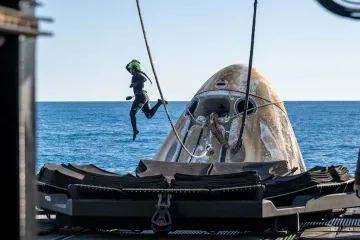
Which specific thrusters are used for the deorbit burn maneuver?
Where is the Starliner typically designated to land on land?
From approximately what speed must the Starliner slow down during the deorbit burn to re-enter the atmosphere?
What component is jettisoned just before the capsule encounters the densest parts of the atmosphere?
How must the spacecraft be oriented during atmospheric interface to manage thermal forces?
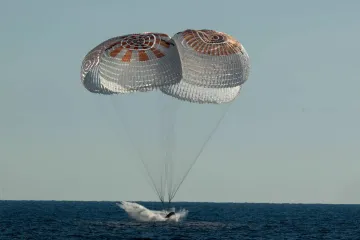
What is the very first action taken in the parachute deployment sequence?
How many large main parachutes are typically used to slow the capsule for landing impact?
Why is the spacecraft’s high degree of autonomy vital during deorbit and entry phases?
What logistical element is specifically required for Starliner's land landing but absent for an oceanic splashdown?
How severely can an error in the deorbit burn timing affect the landing zone?
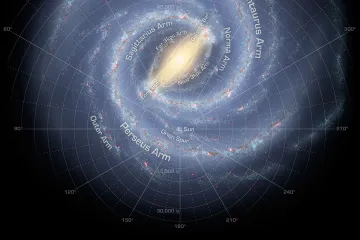
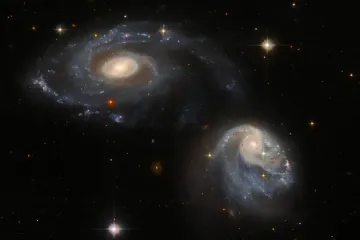
What is the primary physical outcome regarding individual stars during the Milky Way-Andromeda merger?
At what approximate speed is the Milky Way approaching the Andromeda galaxy?
What is the first major observable event expected during the galactic approach phase?
Which component of the galaxies interacts much more frequently, often triggering massive star formation?
What is the predicted final configuration of the merged Milky Way and Andromeda system?
Which galaxy's gravitational influence will dominate the mechanics of the resulting merged structure?
What is a likely consequence for our solar system's orbital path during the merger?
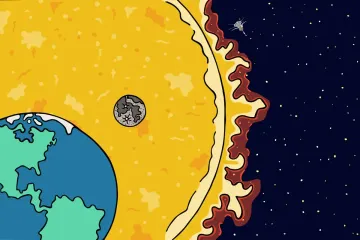
According to the provided timeline comparison, which event poses a more near-term existential threat to Earth's surface habitability?
Why would the light and heat from the merging stars not pose a significant thermal threat to Earth?
What is the average separation between stars in our solar neighborhood compared to their physical size?
If the Sun were the size of a grain of sand, how far away would the nearest star (another grain of sand) be?
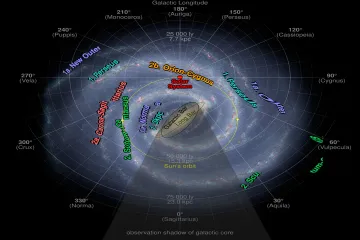
What is the approximate initial distance between the Milky Way and the Andromeda galaxy?
What is the primary organizing principle governing the structure and stability of the solar system?
What percentage of the solar system's entire mass belongs to the Sun?
What must two objects possess in order to exert a gravitational attraction on each other?
What two main components are in constant negotiation to maintain a stable planetary orbit?
If a planet's sideways motion, or inertia, suddenly vanished, what would be the immediate result?
Why is stating that only the Sun's gravity binds the system together considered an oversimplification?
What vital role does Jupiter's gravity play for the inner solar system?
What is the mathematical term for the problem concerning the precise path calculation of three gravitationally interacting celestial bodies?
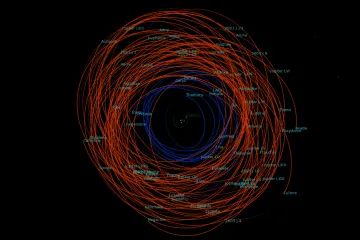
How does the chaos introduced by planetary interactions contribute to long-term stability?
What mechanism involving Neptune creates safe, long-lived paths for smaller, icy bodies beyond it?
PreviousPage 3 of 3