If the inclination ($i$) of an unseen companion's orbit is unknown, what does the mass function establish for the companion's heft?
Answer
A minimum estimate ($M ext{sin } i$).
When the inclination is unknown, $ ext{sin } i$ will be less than one, meaning the calculated mass is always a minimum estimate, establishing a boundary condition for the star’s true heft.
Related Questions
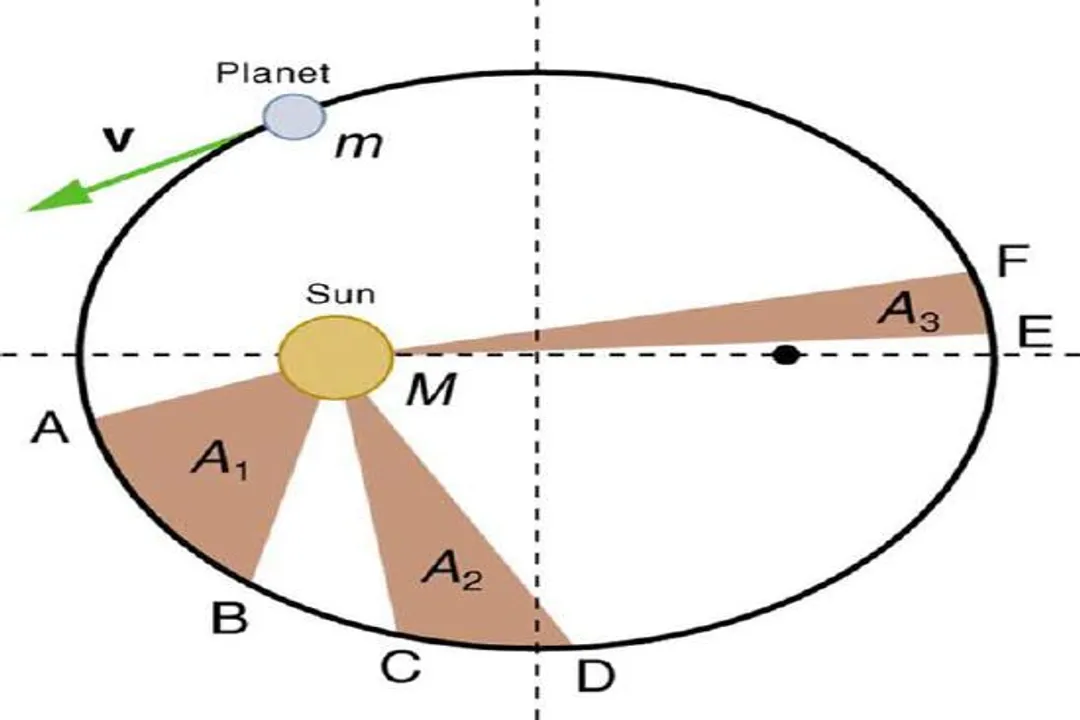
What fundamental property does Kepler’s law of binaries primarily allow astronomers to calculate for a stellar pair?Where is the central body located according to Kepler’s First Law of planetary motion?What is the direct implication of Kepler's Second Law (the law of areas) regarding the speed of an orbiting body?In its simplest form for the Solar System, what proportionality does Kepler’s Third Law establish?What is the term for the common center of mass around which two gravitationally bound stars orbit in a binary system?Why does the standard Solar System proportionality ($P^2 imes a^3$) break down when applied to binary stars?If the total mass of a binary system is known, what second relationship is necessary to determine the individual masses ($M_1$ and $M_2$)?What value does the Binary Mass Function yield for the unseen star's mass if the system is viewed perfectly edge-on ($i = 90^
$)?If the inclination ($i$) of an unseen companion's orbit is unknown, what does the mass function establish for the companion's heft?Which component is explicitly included in the generalized mathematical expression of Kepler's Third Law modified by Newtonian mechanics?