What was the WoW signal really?

The notation itself, a single exclamation scribbled next to a sequence of characters, captured the imagination of the world: 6EQUJ5. This event, forever branded by astronomer Jerry Ehman’s sudden realization, centered on a powerful, narrow-band radio signal detected in mid-August 1977. The observation took place using The Ohio State University's Big Ear radio telescope. While the initial excitement suggested a potential detection of extraterrestrial intelligence, the mystery of the "Wow! signal" persists because it remains unexplained and has never reappeared.
# Signal Discovery
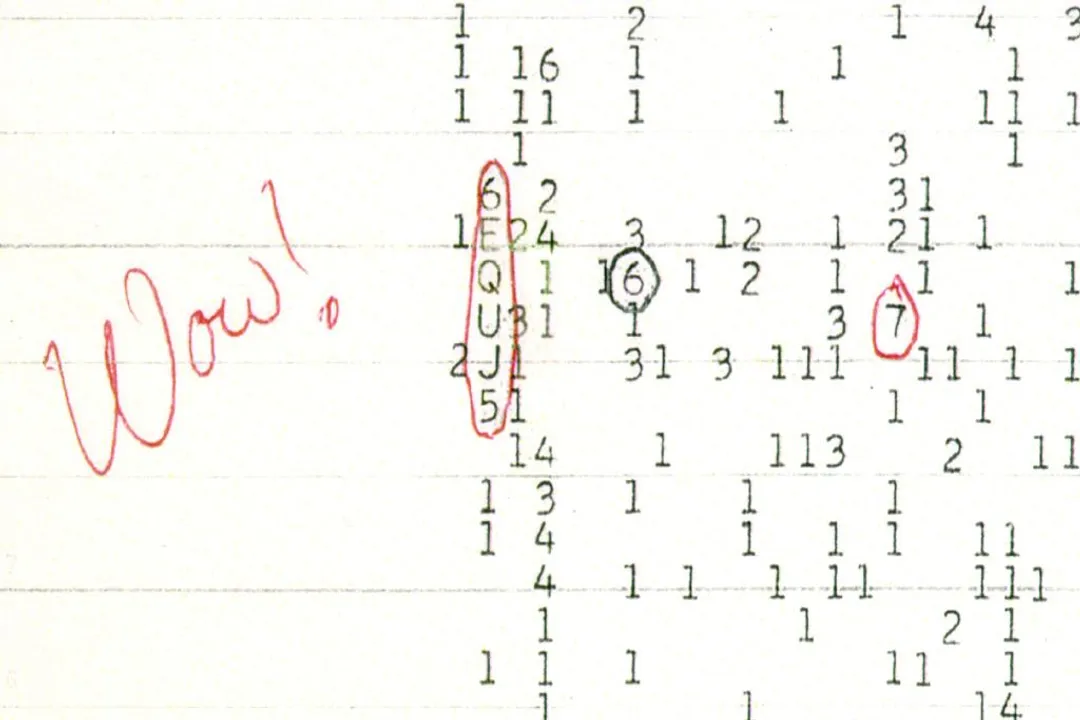
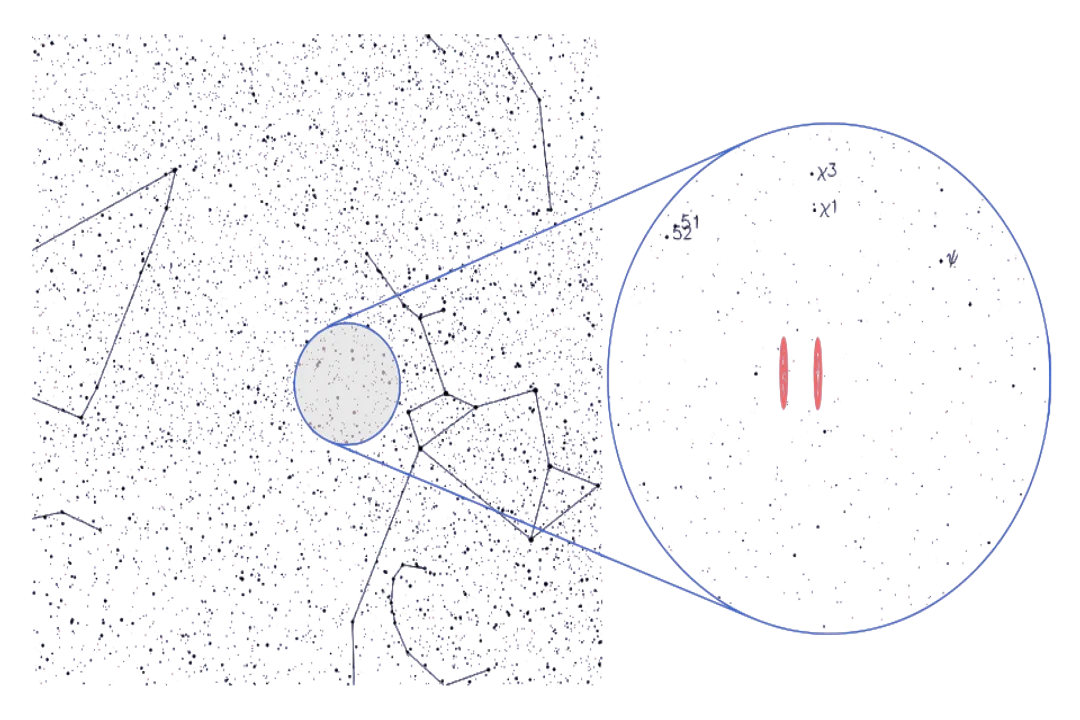
The observation occurred on August 15, 1977, while Ehman was examining printouts of data collected by the Big Ear telescope. The telescope was pointed toward the constellation Sagittarius. Ehman noticed a sequence of alphanumeric characters that indicated an extraordinarily strong signal spike, leading him to circle the data and write the famous annotation. For a fleeting moment, this signal matched the precise characteristics SETI researchers had long hoped to find: a narrow bandwidth and high intensity originating from deep space.
# Data Recording
The Big Ear telescope operated by measuring the energy arriving from a specific patch of sky across a fixed duration before the Earth's rotation carried that region out of the telescope's view. This observation window, dictated by celestial mechanics, lasted approximately 72 seconds. The data recorded, which represented the signal's strength relative to the background noise, was encoded numerically. The sequence 6EQUJ5 represented the signal's intensity over that time frame. The very end of the sequence, the 5, signified that the signal strength was more than 31.9 times the measured background noise, confirming it was immensely powerful compared to typical static.
# Signal Profile
The measured frequency was extremely specific: . This frequency is only slightly offset from the natural emission line of atomic hydrogen, which sits at . This spectral region, often referred to as the "water hole," is considered an ideal channel for interstellar communication because hydrogen is the most abundant element in the universe and its emission line is a universal constant, making it an obvious frequency for any civilization attempting to send a beacon. Furthermore, the signal was narrowband, meaning its energy was concentrated in a very small range of frequencies, which is characteristic of an artificial transmitter rather than the broad-spectrum noise produced by natural astrophysical phenomena like stars or quasars.
The sheer strength and frequency alignment strongly suggested an artificial origin. To contextualize the power, that peak flux density was equivalent to at least at the telescope receiver. If the signal had been detected again, the scientific community would have had a much easier time confirming its nature and tracing its origin.
# The Nonrepeat
The greatest hurdle for the extraterrestrial hypothesis is the signal's singular nature. Despite repeated attempts by Ehman and others to relocate the signal by pointing the Big Ear back to the same coordinates on subsequent rotations, nothing was ever detected again in that specific patch of sky. This lack of recurrence has led many in the scientific community to conclude that the source was likely terrestrial or within our own solar system, as a dedicated, long-range beacon would presumably broadcast continuously or repeat its transmission. The Big Ear telescope itself was part of an opportunistic search program, not a dedicated, long-term monitoring setup for that specific sky region. This means that even if the source was extraterrestrial, our initial observation was perhaps the only time the signal happened to sweep across the narrow receiving beam of that specific instrument.
# Solar System Explanations
When a highly structured signal vanishes immediately, researchers turn inward, searching for natural phenomena or Earth-based interference that could mimic an alien beacon. One compelling explanation centers on the transient nature of comets.
# Comet Theory
Astronomer Antonio Paris put forward a hypothesis suggesting the source was a comet passing through the telescope's field of view. Comets are essentially giant, dirty snowballs that release vast amounts of gas and dust as they approach the sun. This outgassing creates a massive cloud of hydrogen gas surrounding the comet's nucleus. Since hydrogen naturally emits radio waves at the precise 1420 MHz frequency, a sufficiently large and close comet could produce a strong, narrowband signal. Critically, Paris's subsequent research indicated that the frequency drift observed during the 72-second burst matched the expected Doppler shift from an object moving across the sky at a rate consistent with a comet. This frequency shift, caused by the source's movement relative to the Earth, is a signature that an artificial, stationary transmitter would not exhibit in the same way.
Another related idea suggests an active asteroid, such as 3200 Phaethon, could have been involved. Phaethon is known to exhibit comet-like activity, ejecting dust streams despite not being a typical comet, which could account for the necessary hydrogen gas release. While the timing of Phaethon's closest approach in 1977 doesn't align perfectly with the August 15 detection date, the behavior of such objects presents a plausible pathway for a natural source to mimic the extraterrestrial signature.
# Listening Limits
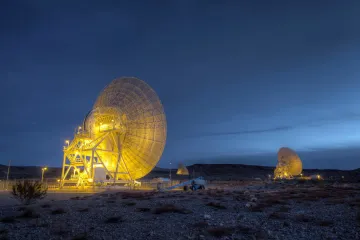
The nature of the Wow! signal detection highlights a fundamental challenge in the Search for Extraterrestrial Intelligence (SETI): the problem of the observational "window". The Big Ear was effectively listening to a needle in a vast haystack, and it only registered the needle once. The fact that the signal lasted exactly 72 seconds is a direct consequence of the telescope's design and the Earth's rotation, not necessarily the duration of the transmission itself.
This single data point, despite its tantalizing characteristics—narrowband, high intensity, and near the hydrogen line—compels us to consider the vastness of the observational space we have covered. If we assume an advanced civilization exists and is broadcasting, they might only be transmitting for brief periods, perhaps targeting specific stars, or using a beacon that sweeps across our galaxy slowly. The original search was incredibly limited in scope, looking at a fraction of the sky with a single instrument for a single instance. The sheer probability that one random 72-second event aligned perfectly with our receiving window, without ever repeating, serves as a powerful, if sobering, argument against the simple "beacon" model for alien communication, suggesting that if they are out there, their signaling methods might be far more subtle or infrequent than early SETI assumed.
Considering the limitations, modern approaches often favor large-scale surveys or the monitoring of exoplanet systems known to orbit stable stars. The Wow! signal, rather than being the proof of alien contact, has functioned as an excellent, albeit frustrating, case study in the statistical challenges inherent in listening to the cosmos. It forces modern researchers to constantly balance the excitement of a perfect match against the crushing reality that the universe has had billions of years to generate natural mimics that can temporarily imitate the signature of intelligence.
#Videos
We Were Wrong About the Wow! Signal - It Was Even More Bizarre
Related Questions
#Citations
Wow! signal - Wikipedia
The Wow! Signal Isn't a Mystery—We Just Barely Listen : r/SETI
The Wow Signal - SETI Institute
Have astronomers finally found the true cause of the Wow! signal?
We Were Wrong About the Wow! Signal - It Was Even More Bizarre
The Wow! Signal | Houston Astronomical Society
The “Wow! Signal,” not surprisingly, was a dud - Astronomy Magazine
Was the “Wow! Signal” Emitted from 3I/ATLAS? | by Avi Loeb - Medium
Wow! signal explained after 40 years? | Space - EarthSky
New Explanations for the Enigmatic Wow! Signal - Centauri Dreams