What is an aurora short answer?

The glow paints the night sky in ethereal curtains of green, pink, and violet, a natural phenomenon so breathtaking it seems almost unreal. At its simplest, an aurora is the visible result of charged particles streaming from the sun colliding with gases in Earth's upper atmosphere. These spectacular light shows occur primarily near the planet's magnetic poles, manifesting as the Aurora Borealis in the north and the Aurora Australis in the south. Far from being a static, simple glow, the aurora is a dynamic interaction involving solar physics, planetary magnetism, and atmospheric chemistry. Understanding what creates this celestial display requires looking both millions of miles away toward the sun and right here in the air above our heads.
# Light Display
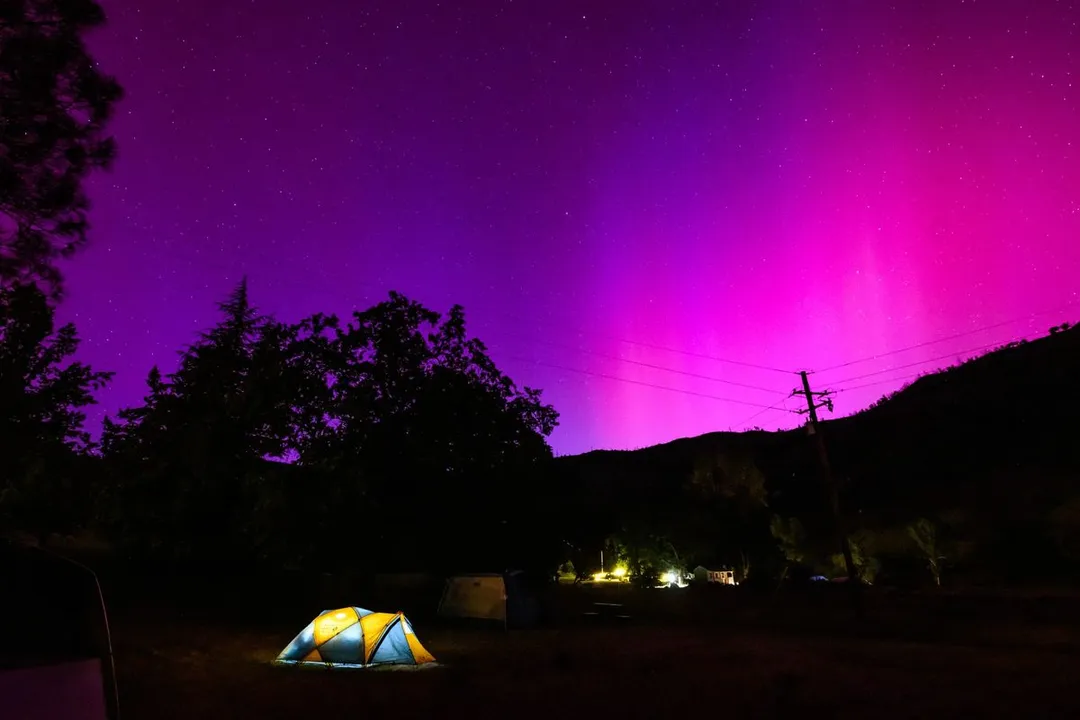
The visible aurora is essentially energized air. It is a light display created when energized particles from the sun successfully navigate the Earth's protective magnetic shield and crash into atmospheric gases like oxygen and nitrogen. When these fast-moving, charged particles strike atoms and molecules in the upper reaches of the atmosphere, they excite them, temporarily boosting their energy levels. As these excited atoms return to their normal, lower-energy state, they release that excess energy in the form of light—photons—which we observe as the aurora. This process is similar to how a neon sign works, where electricity excites gases sealed inside a tube to produce light, though the scale and source here are vastly different. The light itself is what defines the aurora; it's not reflected light, but light generated on the spot by this collision process.
# Solar Driver
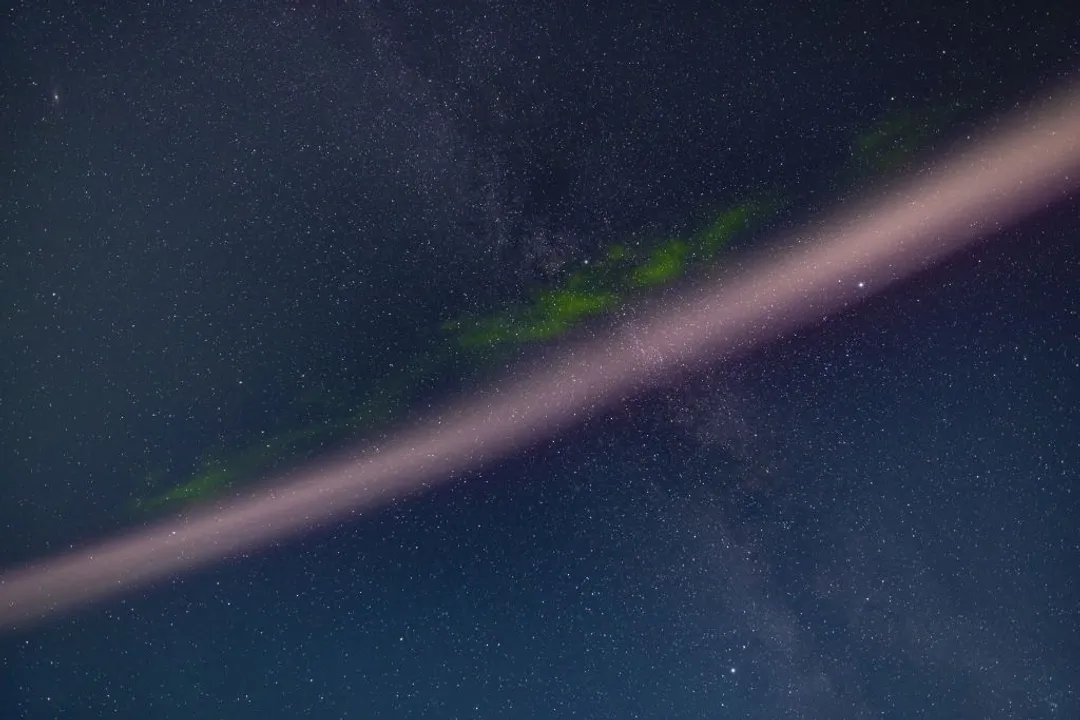
The process begins far from Earth, specifically on the sun. The sun constantly emits a stream of charged particles, a kind of solar wind, flowing outward into space. This solar wind is not uniform; it waxes and wanes in intensity, driven by various solar events. Sometimes, the sun releases massive bursts of plasma and magnetic field, known as a coronal mass ejection (CME), which can significantly amplify the intensity of the particles heading toward Earth. Even without a major CME, faster streams of solar wind can cause noticeable auroral displays. The energy required for a brilliant show is carried across the vast distance of space by this constant outflow of solar material.
# Magnetic Funnel

If the sun bombards Earth with charged particles, why doesn't this energy constantly bombard the entire planet, lighting up the sky everywhere? The answer lies in Earth's magnetosphere. This magnetic bubble, generated by our planet’s molten core, acts as a shield, deflecting the vast majority of the solar wind around the Earth. However, the magnetic field is weakest and most open near the North and South magnetic poles. The incoming charged particles are guided or funneled by these magnetic field lines, much like iron filings align around a bar magnet. This funneling effect directs the particles down into the ionosphere, the upper atmospheric layer where the collisions that create the aurora take place. It is this magnetic focusing mechanism that concentrates the light show specifically around the polar regions.
# Color Spectrum

The resulting light display is famous for its color variations, yet the most frequently seen hue dominates the visual experience. The specific color emitted depends almost entirely on two factors: which type of gas is being struck, and the altitude at which the collision occurs.
- Oxygen atoms are responsible for the most common auroral colors. When oxygen is struck at lower altitudes, typically around 100 to 300 kilometers up, the light produced is a distinct, vibrant green. Higher up, above 300 kilometers, oxygen can sometimes produce a rare red glow.
- Nitrogen molecules generally produce colors in the blue and purple range. These colors are often seen at the very bottom edges of the auroral curtains, sometimes appearing as a faint, purplish fringe.
A curious aspect of observing auroras is the visual dominance of green light. While red, blue, and purple are certainly present, especially during very intense solar storms, the green emission from oxygen at lower altitudes is extremely efficient and easily perceived by the human eye. This means that even when the atmosphere is producing a cocktail of colors, the green tends to overwhelm the observer's vision, making it the signature color of the phenomenon.
Here is a quick comparison of the primary components:
| Component Gas | Typical Altitude (km) | Observed Color |
|---|---|---|
| Oxygen | Below 300 | Green |
| Oxygen | Above 300 | Red |
| Nitrogen | Lower Altitudes | Blue/Purple |
# Naming Regions
The phenomenon is named based on the hemisphere in which it appears. When the lights are seen in the Northern Hemisphere, they are appropriately termed the Aurora Borealis, derived from the Roman goddess of dawn, Aurora, and Boreas, the Greek name for the north wind. Conversely, in the Southern Hemisphere, the light show is known as the Aurora Australis. While the mechanisms driving both displays are identical—solar particles hitting the atmosphere channeled by the magnetic field—the visual experience for observers in the far south is much rarer due to the limited landmasses located within the prime viewing latitudes.
# Seeing the Show
Auroras are most reliably seen from high latitudes, generally between 60 and 75 degrees north or south latitude. Locations like Alaska, northern Canada, Scandinavia, Iceland, and the Antarctic regions fall within this prime viewing zone. For those living further away from the magnetic poles, seeing an aurora requires a significant increase in solar activity, such as a strong G3 or G4 level geomagnetic storm. When a powerful solar event pushes the auroral oval—the ring where the lights are most common—outward, observers hundreds of miles south of the usual viewing areas can be treated to a rare display. To maximize viewing success, one needs clear, dark skies, meaning avoidance of city light pollution is crucial, and the best viewing times are typically around local midnight. If you are planning a trip specifically to chase the lights, remember that the magnetic poles are not perfectly aligned with the geographic poles, so checking local magnetic latitude maps, rather than just geographic latitude, can sometimes give you a slight edge in finding the best spot, especially if you are near the edge of the expected zone.
# Energy Release Forms
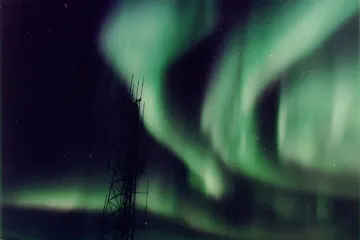
While the aurora is famous for its gentle, waving curtains, the energy transfer can manifest in different visual forms. The display is often described as having shapes like arcs, rays, bands, or even coronas, where the light appears to radiate directly overhead. These shapes reflect the structure of the magnetic field lines that are guiding the incoming particles. An arc is often the simplest, most stable form, appearing as a curved band of light across the sky. Rays are vertical structures caused by the particles following near-vertical field lines. The beautiful, flowing curtains result when these structures undulate due to varying magnetic field intensity or turbulence in the solar wind hitting the atmosphere. Experiencing the aurora requires patience; sometimes, the light will transition from a faint, static glow to rapid, dynamic movement—often called a "coronal breakup"—when the atmospheric energy input suddenly intensifies. This rapid transition is the visual signature of the plasma interaction becoming highly energetic and disorganized within the magnetotail, right as the particles reach their destination to excite the air.
#Videos
What Is an Aurora? - YouTube
Related Questions
#Citations
What Is an Aurora? | NASA Space Place – NASA Science for Kids
Aurora - Wikipedia
How does the Aurora work? The... - Indiana Weather Online
What are the Northern Lights (Aurora Borealis)?
Space Place in a Snap: What Is an Aurora? - NASA+
What Is an Aurora? - YouTube
Northern lights (aurora borealis) — What they are and how to see them
Aurora - National Geographic Education
Auroras - NASA Science