What are the limitations of astrometry?
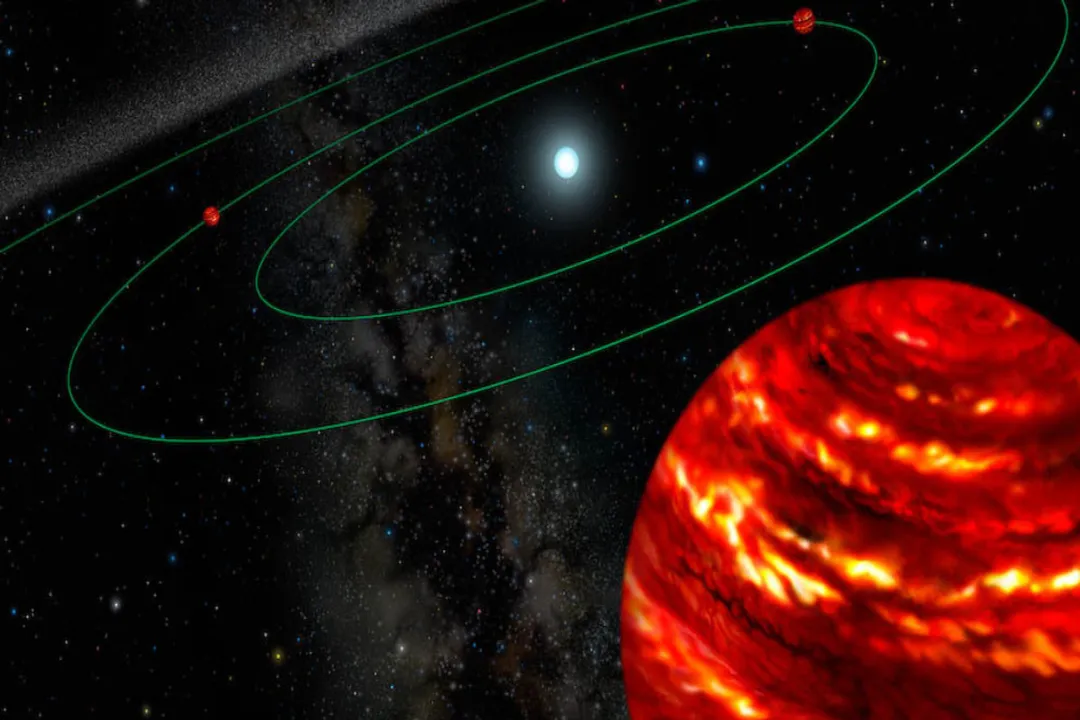
Astrometry, the precise measurement of the positions and motions of celestial objects, underpins much of modern astronomy, from mapping our galaxy to finding exoplanets. [2] While instruments have achieved incredible accuracy, moving from milli-arcseconds down toward micro-arcseconds, the physical reality of observation imposes fundamental limitations on what we can know about a star's location and movement. [5] These constraints are not merely engineering hurdles waiting for better mirrors or detectors; they are inherent challenges rooted in the environment, the geometry of measurement, and the reference systems we rely upon. [8][9]
# Air Turbulence
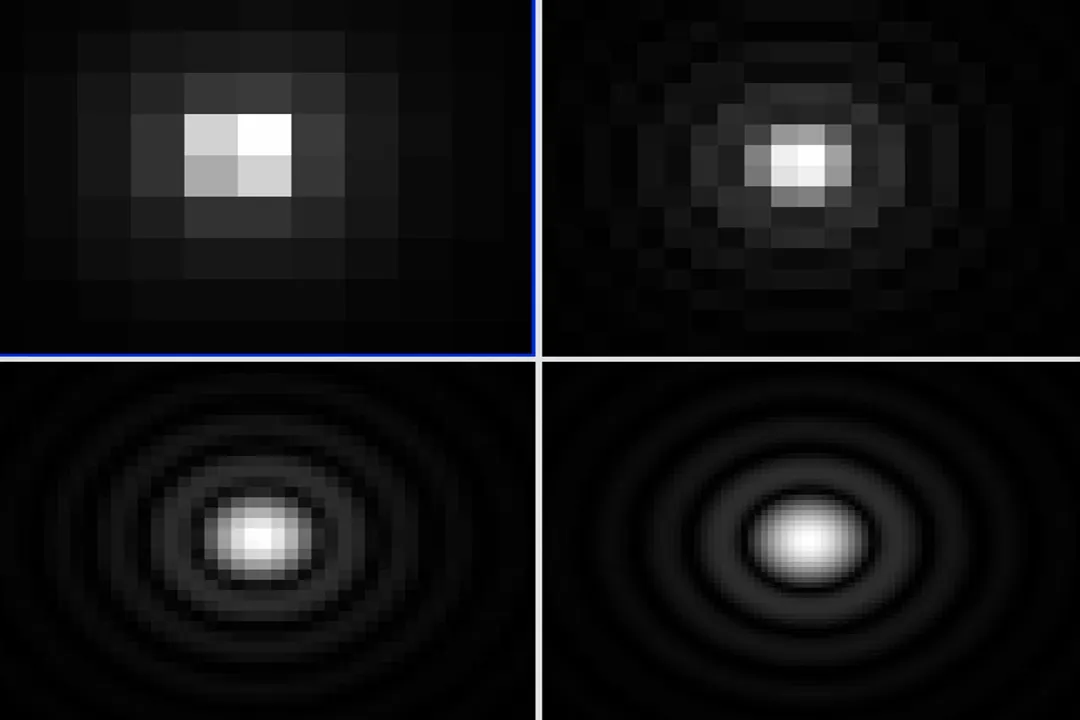
For ground-based telescopes, the single greatest adversary to achieving high astrometric precision is the Earth's atmosphere. [10] The ever-shifting layers of air create refractive effects that cause starlight to wander, an effect commonly known as "seeing". [2][10] This atmospheric turbulence smears out and blurs the apparent position of a star on the detector, introducing errors that can easily swamp the subtle shifts we are trying to measure for nearby stars. [10]
While advanced techniques like speckle interferometry or adaptive optics exist to try and mitigate these distortions, they are complex and often tailor-made for specific observational scenarios, such as measuring high-contrast images or wide binaries. [10] Even when applying these corrections, the atmospheric path length changes constantly, meaning that measuring the relative position of two stars separated by a large angular distance (a significant baseline) is exceptionally difficult if the measurement must be taken nearly simultaneously. [9] The precision of ground-based measurements often plateaus when the required accuracy dips below the milli-arcsecond range, simply because the atmosphere is too chaotic to provide a consistently stable optical path over long periods. [5]
When we think about this from an instrumentation standpoint, consider this: for a ground observer, the atmosphere introduces a time-varying error profile. A measurement taken at 10:00 PM might have a different atmospheric weighting function across the sky than one taken at 10:05 PM, meaning even the most sophisticated difference imaging relies on the assumption that the error profile affecting the target star and the reference star are perfectly correlated, which is rarely the case over large angular separations. [9]
# Instrument Drift
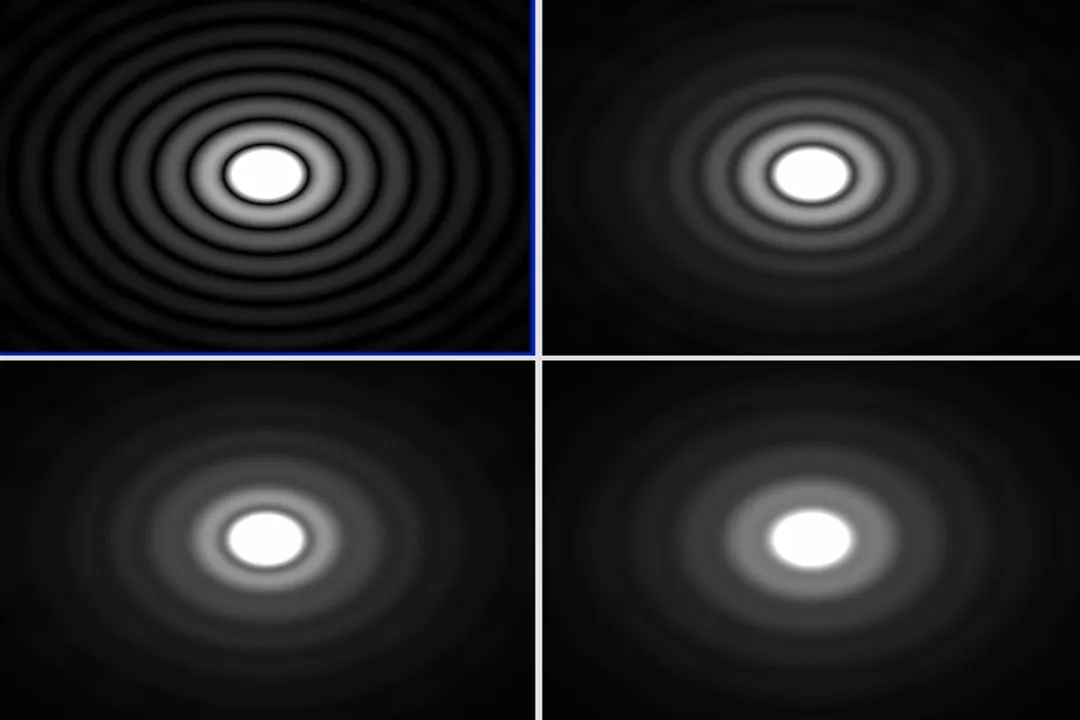
Even escaping the atmosphere by placing instruments in space does not eliminate all positional errors; it merely shifts the source of the systematic noise. [8] In space, the primary limitation shifts from dynamic atmospheric distortion to the stability of the telescope itself. [5]
Astrometric precision relies on measuring tiny angular displacements over long observational periods. If the structure supporting the optics, the detectors, or the focal plane shifts even minutely due to thermal expansion/contraction, micrometeoroid impacts, or internal stresses over the course of weeks, months, or years, this physical drift translates directly into a systematic error in the measured angles. [5][9]
These systematic errors, often related to the stability of the instrument's internal geometry, are particularly insidious because they are often constant or slowly changing, making them difficult to distinguish from a star's actual, slow proper motion. [5] For instance, a slow, steady warping of the primary mirror cell over the five-year mission duration will create a spurious long-term trend in the catalog positions of every star observed, masquerading as valid proper motion data. [5] Overcoming this requires exceptional mechanical and thermal engineering, demanding that the spacecraft maintain a dimensional stability better than the desired final measurement accuracy, sometimes requiring stability at the level of nanometers over months. [8]
# Observation Span
The fundamental goal of astrometry is often twofold: determine the instantaneous position (parallax measurement) and determine the long-term velocity vector (proper motion). [2] Determining proper motion—the apparent sideways movement across the sky—requires observing the target star across a long arc of time. [1]
If an astronomer wants to measure a proper motion accurately, they must wait. The error in proper motion is inversely proportional to the total observation span, meaning longer baselines yield better results for velocity. [1] This creates a practical limitation: highly precise proper motion measurements for objects with very small apparent velocities cannot be obtained quickly; they require decades of dedicated observation from the ground or the duration of a long-term space mission. [1] Conversely, if an instrument is only operational for a short period, say one or two years, the error bars on the calculated proper motion will remain large, even if the instantaneous position measurement is perfect. [7]
This trade-off is crucial for mission planning. A mission designed for micro-arcsecond parallax (which needs a baseline equal to Earth's orbit, or 1 AU) might achieve excellent distance estimates, but deriving meaningful proper motion for a distant, slow-moving star might require waiting for the next generation of instruments to accumulate enough data points over many years. [2][1]
# Reference Frame
Astrometry is inherently relative. We do not measure a star's position in absolute space; we measure its angle relative to other, presumably known, background objects. [8] This means the accuracy of any single measurement is tethered to the accuracy and stability of the entire reference frame being used. [8]
The current realization of the celestial reference frame relies heavily on observations of very distant, extragalactic radio sources (quasars), which are assumed to have negligible proper motion. [8] This frame, known as the International Celestial Reference Frame (ICRF), is the gold standard for defining the celestial coordinate system. [8]
However, the ICRF itself is not perfectly realized or static. It is defined by a finite set of sources, and the measurement techniques used to define the frame (e.g., Very Long Baseline Interferometry, VLBI) have their own inherent uncertainties. [8] If the quasars used as anchors exhibit any subtle, long-term movement that has not yet been modeled, or if the processing of the VLBI data introduces a systematic bias, this error will be propagated into the optical star catalogs derived from it. [7] In essence, the limitations of the reference frame set the absolute floor on how precise any astrometric catalog can ever become, regardless of how good the new optical telescope is. [7]
# Parallax Error
The most famous application of astrometry is determining distance via stellar parallax, which relies on observing an object from two points separated by a known baseline, typically the diameter of Earth's orbit. [2] The measured shift is inversely proportional to the object's distance. This geometric relationship inherently imposes the most severe scaling limitation: distance errors grow exponentially as the target moves farther away. [7]
For very nearby stars, the parallax angle is large enough that measurement errors are small fractions of the total angle, leading to high accuracy in distance determination. [2] However, as the target moves to greater distances, the parallax angle shrinks dramatically. An object twice as far away will have half the parallax angle, meaning the same instrumental noise or calibration uncertainty results in a much larger relative error in the distance calculation. [7]
If an instrument can measure positions to an absolute precision of (), this translates to an excellent distance error for a star 100 parsecs away. But for a star 10,000 parsecs away, that same measurement error results in an enormous, perhaps useless, relative error in its calculated distance. [7] This means that while techniques like astrometry are fantastic for charting the solar neighborhood, their direct utility for measuring distances to objects in other galaxies (where parallax shifts are impossibly small) is effectively zero, forcing astronomers to rely on secondary distance indicators. [2]
The practical challenge here is distinguishing between the geometric parallax shift and the stellar object's actual physical movement (proper motion) over the observing period. [1] The two components of motion must be meticulously separated. If an object has a significant proper motion over the course of the parallax baseline (i.e., it moves considerably while the Earth moves from one side of its orbit to the other), the resulting positional data cannot be simply fitted to a clean ellipse; the motion must be modeled as a complex trajectory, increasing computational complexity and the potential for modeling errors. [1] For bright, nearby stars, this separation is achievable, but for faint, distant targets, the faintness exacerbates measurement noise, while the distance makes the resulting distance uncertainty enormous. [7] The reliance on a fixed orbital geometry—Earth's path—is itself a boundary condition, limiting how baseline extension can improve measurements beyond the scope of our solar system's dimensions. [8]
#Videos
What Are The Limitations Of Astrometric Exoplanet Searches?
Related Questions
#Citations
What Are The Limitations Of Astrometric Exoplanet Searches?
Wobbly Stars: The Astrometry Method | The Planetary Society
Spectro-astrometry: The Method, its Limitations, and Applications
Limits of ultra-high-precision optical astrometry - Stellar surface ...
[PDF] Accuracy of Space Astrometry - NExScI
What is limiting near-infrared astrometry in the Galactic Centre?
Challenges and Innovations in Measuring Distances to Celestial ...
space astrometry prospects and limitations
Atmospheric limitations on speckle astrometry with large telescopes
Appendix A: Fundamental limits - Olivier Guyon's webpage