Is spaceflight a word?
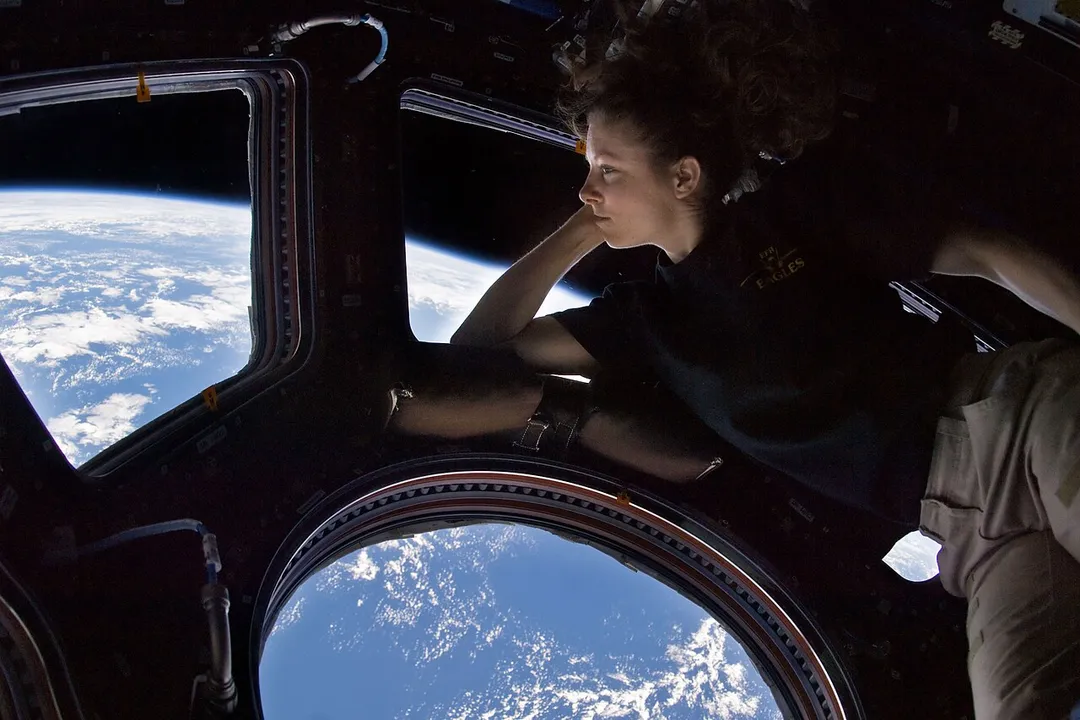
Yes, spaceflight is a standard English word, recognized by all major dictionaries and linguistic authorities as a valid compound noun. It refers to the physical act of traveling into or through outer space, as well as the scientific and engineering systems designed to achieve that movement. [1][2] While it may sound technical, it functions as a common term in both academic and casual conversations to describe the transition from terrestrial environments to the vacuum of space. [3][4]
# Linguistic Status
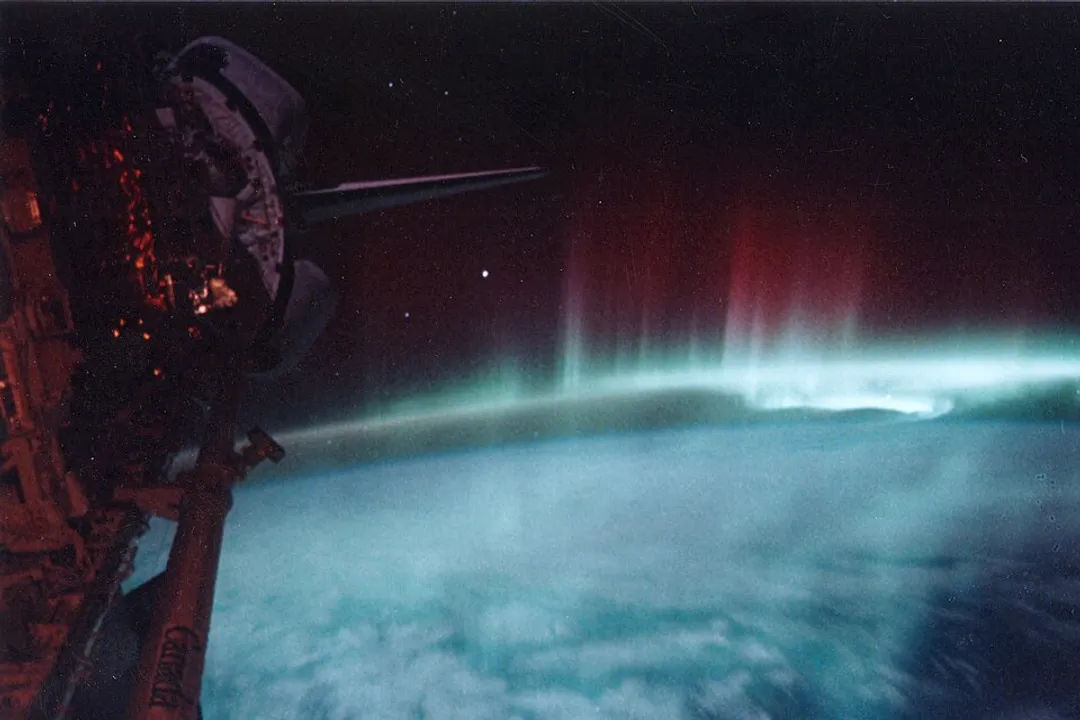
The term is widely accepted and documented, appearing in the lexicon of organizations such as Merriam-Webster, Dictionary.com, and Britannica. [1][3][6] Its structure is a straightforward combination of two distinct nouns: "space" and "flight." By merging these, the language accommodates a specific concept that aviation alone does not cover. While "aviation" implies operation within an atmosphere, "spaceflight" specifically accounts for the unique challenges of the vacuum. [7][8]
Dictionaries generally offer two primary interpretations of the word. First, it identifies the act itself—the voyage of a vehicle through space. [3][4] Second, it defines the field of study or the collection of systems that make such travel possible. [1] This dual meaning is essential for understanding how the term functions. When someone mentions "spaceflight," they might be referring to a specific mission, such as an Apollo lunar landing, or they might be discussing the engineering discipline that encompasses rocketry, orbital mechanics, and life support systems. [5]
# Technical Definitions
The technical meaning of the word has evolved alongside human progress. According to standard definitions, it involves traveling through outer space. [7] This is distinct from standard aeronautics. Aeronautical engineering focuses on flight within the Earth's atmosphere, relying on aerodynamic lift and air-breathing engines. Spaceflight, by comparison, requires propulsion methods capable of operating in a vacuum, where there is no air to provide lift or oxygen for combustion. [2][5]
For many, the distinction between "aerospace" and "spaceflight" is where the definition becomes interesting. Aerospace is a broad category that includes both atmospheric and extra-atmospheric operations. Spaceflight is the subset of aerospace that specifically targets movement outside the planet's gravitational well or atmosphere. [5] This distinction is critical for engineers and scientists who classify hardware based on its operating environment. A vehicle designed for spaceflight must endure challenges like extreme thermal cycling, radiation, and the absence of atmospheric pressure, which are not primary concerns for standard aircraft. [5]
# Comparative Analysis
To better understand why "spaceflight" exists as a separate word from "aviation" or "travel," it is helpful to look at the operational differences. The nature of the environment changes the engineering requirements entirely. The following table highlights the operational differences that necessitate the specific use of the term.
| Feature | Aviation | Spaceflight |
|---|---|---|
| Primary Medium | Earth's Atmosphere | Vacuum of Space |
| Propulsion | Air-breathing (Jet/Prop) | Rocket / Non-air breathing |
| Lift Source | Aerodynamic surfaces | Momentum / Orbital velocity |
| Navigation | Landmarks / GPS / Radio | Inertial / Star tracking |
| Environmental Stress | Pressure / Temperature | Radiation / Microgravity / Vacuum |
This table illustrates why a single word is necessary to distinguish the two. The engineering requirements are fundamentally different. A plane cannot perform spaceflight because it lacks the capability to operate outside the atmosphere, and a spacecraft is largely ineffective or inefficient when flying as an airplane. [5]
# Mission Categories
When discussing spaceflight, it is useful to categorize missions to appreciate the breadth of the word. Not all spaceflight looks the same, and the term applies to several distinct types of operations:
- Sub-orbital flight: This involves reaching space and returning without completing a full orbit around the Earth. It provides a taste of microgravity and high-altitude views but lacks the velocity required for long-term orbital stay. [2]
- Orbital flight: This is the most common form of long-duration activity. Vehicles maintain a specific velocity to perpetually "fall" around the Earth. This is the realm of communication satellites, the International Space Station, and crewed missions that last weeks or months. [2]
- Deep space flight: This category encompasses missions that leave Earth's immediate influence. This includes lunar exploration, probes sent to other planets, and interplanetary trajectories that require precise gravitational assists. [2]
- Robotic versus Crewed: The word applies equally to both. Whether a vehicle carries humans or scientific sensors, the act of moving through space is still classified as spaceflight. Robotic missions often allow for more aggressive maneuvers because they do not require life support or complex re-entry systems for biological cargo. [5]
# Scientific Applications
The term extends into the realm of science and industry. When researchers discuss "spaceflight" in a professional capacity, they are often referring to the effects of the environment on systems or biological organisms. [5] This is an area where the word takes on a research-heavy connotation. For example, studies on "spaceflight-induced bone density loss" or "spaceflight propulsion dynamics" treat the word as a variable that creates specific conditions.
This usage demonstrates that the word is not merely a dictionary entry but a descriptor of an environment. Because space is a hostile environment, any vehicle designed for it must have features that are unique to the mission. These include radiation shielding, specialized thermal coatings to reflect solar heat, and life support systems that scrub carbon dioxide from the air. The word "spaceflight" serves as a shorthand for this entire suite of engineering requirements. [5]
# Historical Evolution
The inclusion of "spaceflight" in the English language tracks with the mid-20th-century development of rocketry. Before the 1940s, the concept was largely the domain of science fiction, where terms like "interplanetary travel" were common. As the science became reality, the need for a precise, concise term grew. [2]
The transition from "travel" to "flight" is significant. "Travel" implies a general movement from point A to point B. "Flight" implies a more specific mechanical process involving propulsion and navigation. By adopting "spaceflight," society solidified the idea that going into space was not just a destination, but a specific mode of transportation requiring its own set of rules and technologies. [6]
# Practical Usage
Understanding when to use the word can improve communication. It is appropriate to use "spaceflight" in any context involving the movement of objects outside the atmosphere.
Consider the following scenarios where the term is applied:
- News Media: When a launch occurs, the event is described as a "spaceflight mission" to distinguish it from a rocket test or an aeronautical flight.
- Academic Writing: Engineering papers use the term to categorize the sector, such as "advancements in spaceflight technology."
- Casual Conversation: Someone might ask, "Are you interested in spaceflight?" to gauge curiosity about NASA, SpaceX, or general astronautics.
It is rare to see the term used incorrectly because it is quite specific. Using it as a synonym for "traveling by airplane" would be incorrect, as would using "aviation" to describe orbital mechanics. Maintaining this distinction helps clarify the conversation, especially when discussing the limitations of current technology. For example, claiming that a supersonic jet is capable of spaceflight would be factually incorrect because supersonic flight typically occurs within the atmosphere, whereas spaceflight requires orbital mechanics. [2]
# Safety and Reliability
An important aspect of spaceflight, which sets it apart from other forms of transit, is the risk profile. Because space is a vacuum, there is no "pulling over" if a system fails. This reality has defined the culture of the field. Every component involved in spaceflight is subject to rigorous testing because the environment is unforgiving.
When discussing the safety of spaceflight, industry experts often point to the high level of redundancy required. Unlike a car, which can stop on the side of the road, a spacecraft must maintain its momentum. If a propulsion system fails, the trajectory changes immediately. This inherent danger is part of what makes the history of spaceflight so compelling to the public. [2] It is also why the term itself carries a sense of gravity and significance that "aviation" sometimes lacks. The barrier to entry for spaceflight is much higher, both financially and technically, which influences how the word is perceived in popular culture.
# Future Considerations
As the industry shifts toward commercialization, the way we use the word may also adapt. We are moving from a state where spaceflight was only for government-funded astronauts to one where private individuals may participate. This change is impacting the public's relationship with the term.
Previously, spaceflight was a noun associated with heroic exploration and massive government budgets. Now, it is increasingly associated with private enterprise, tourism, and satellite deployment. The word remains the same, but the context is expanding. We are likely to see it used more frequently in discussions about cost-per-kilogram, reuse of launch vehicles, and sustainable lunar outposts.
Regardless of these shifts, the core definition remains firm. It is the movement through the space beyond our atmosphere. [4][6] It is a word that encapsulates the ingenuity of engineering, the harshness of the environment, and the persistent human desire to leave the planet's surface. Whether one is reading a technical paper on propulsion or watching a rocket launch on the news, the term serves as a reliable label for one of humanity's most complex activities. [5]
#Videos
Pronunciation of the word(s) "Spaceflight". - YouTube
Related Questions
#Citations
SPACEFLIGHT Definition & Meaning - Merriam-Webster
Spaceflight - Wikipedia
SPACEFLIGHT Definition & Meaning - Dictionary.com
SPACEFLIGHT definition in American English - Collins Dictionary
Spaceflight - an overview | ScienceDirect Topics
Spaceflight Definition & Meaning | Britannica Dictionary
Spaceflight - Definition, Meaning & Synonyms - Vocabulary.com
spaceflight - WordReference.com Dictionary of English
Pronunciation of the word(s) "Spaceflight". - YouTube